Ambassador Rockefeller
Open to Guests
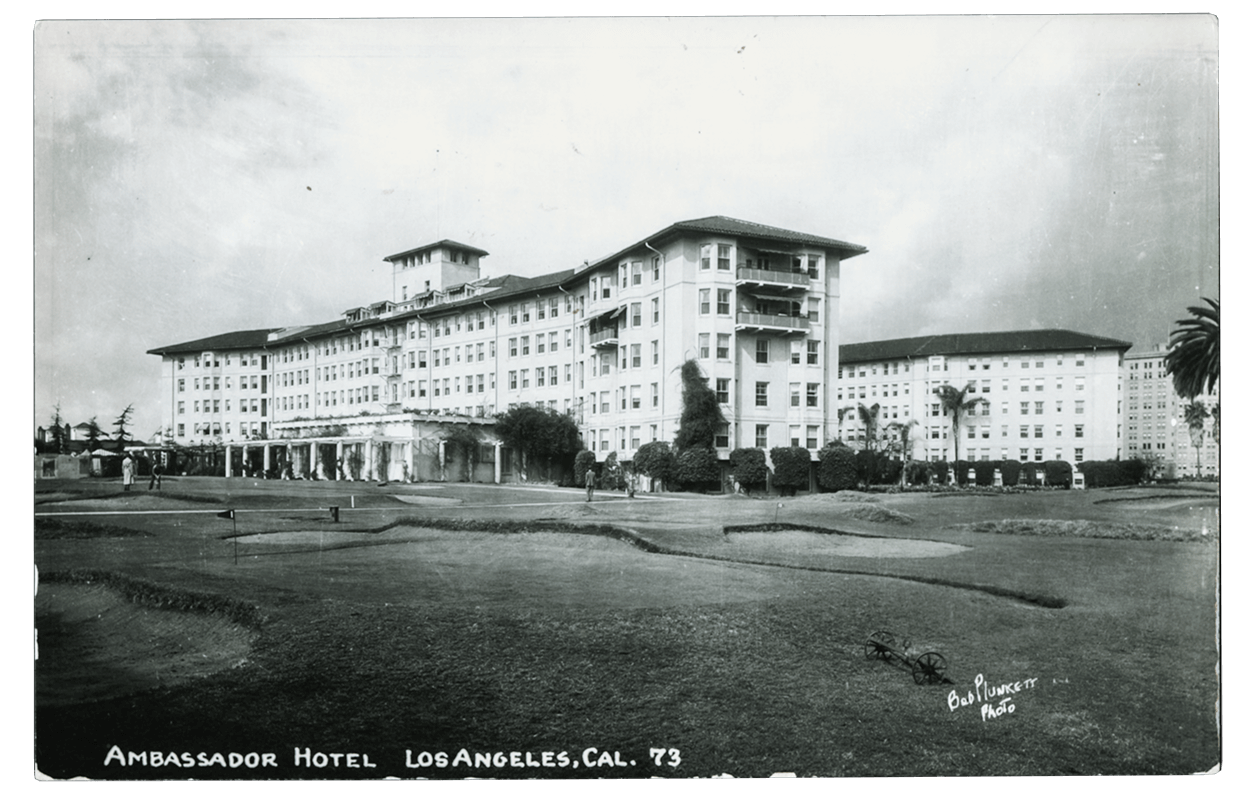
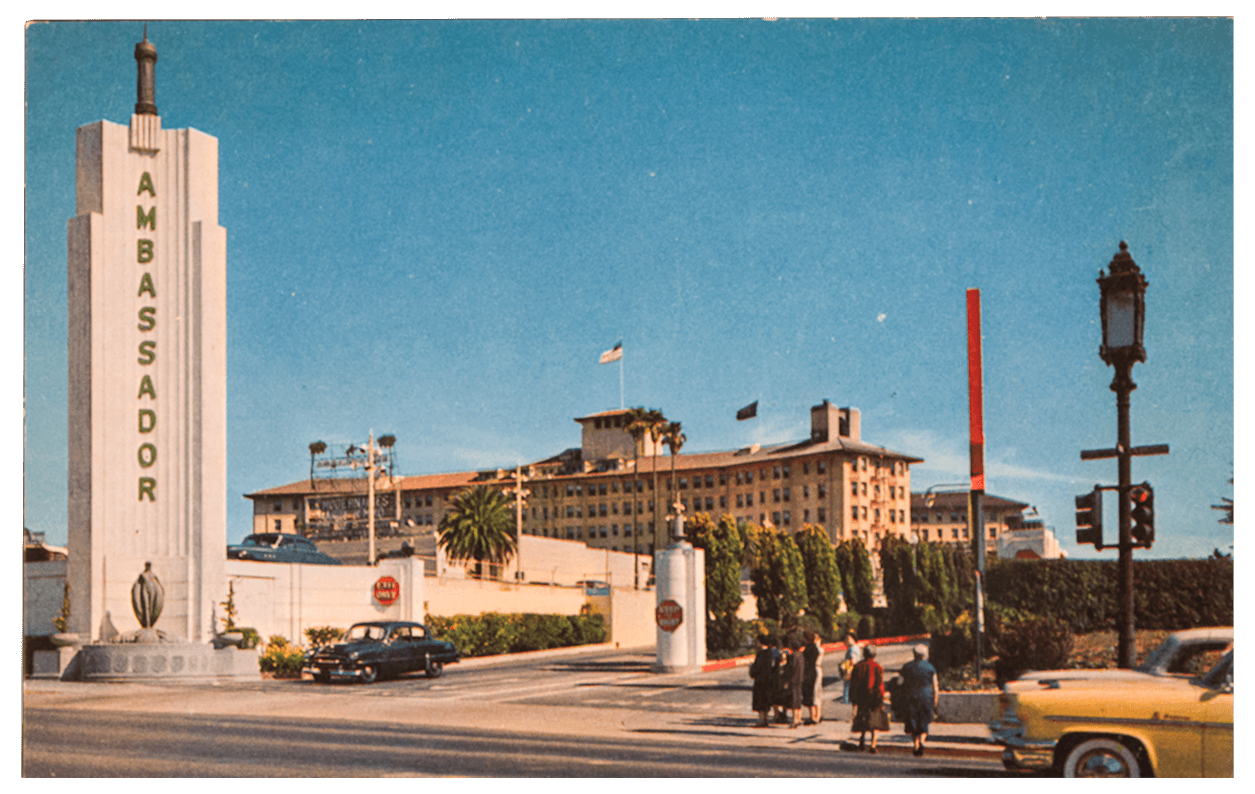
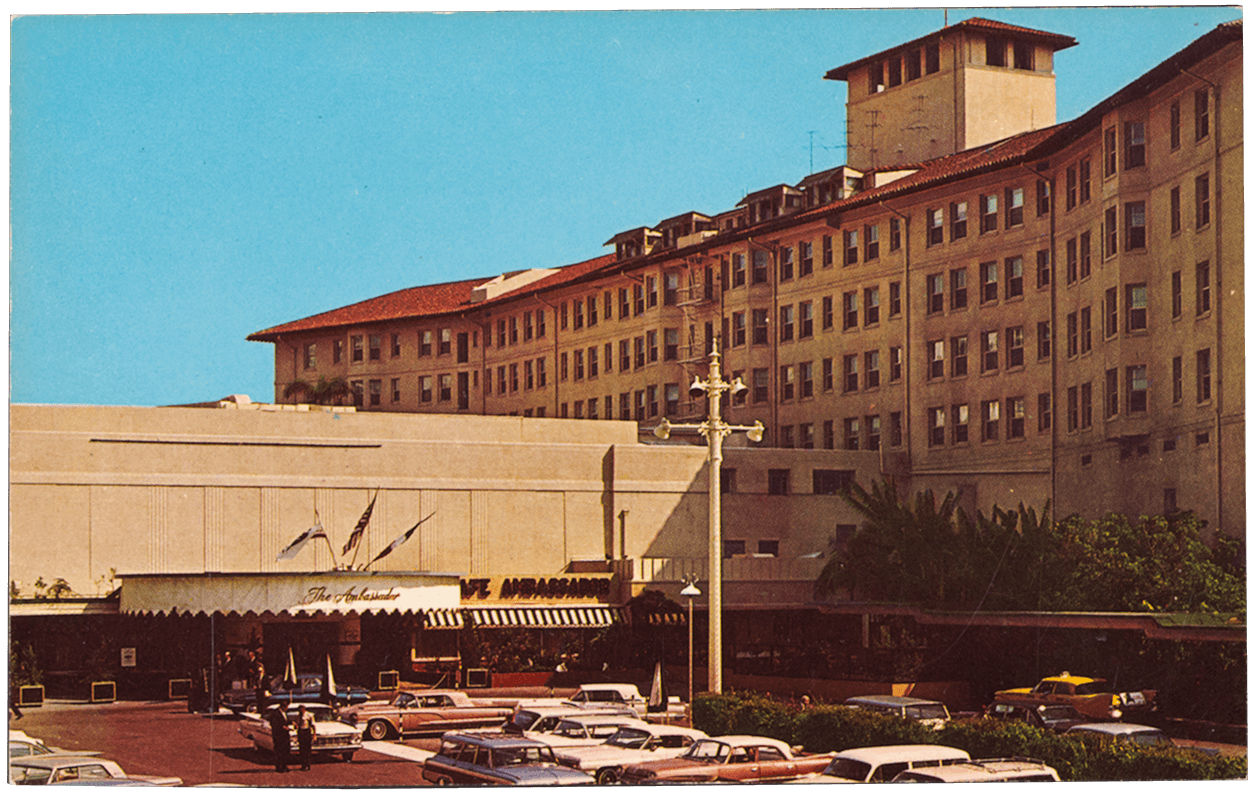
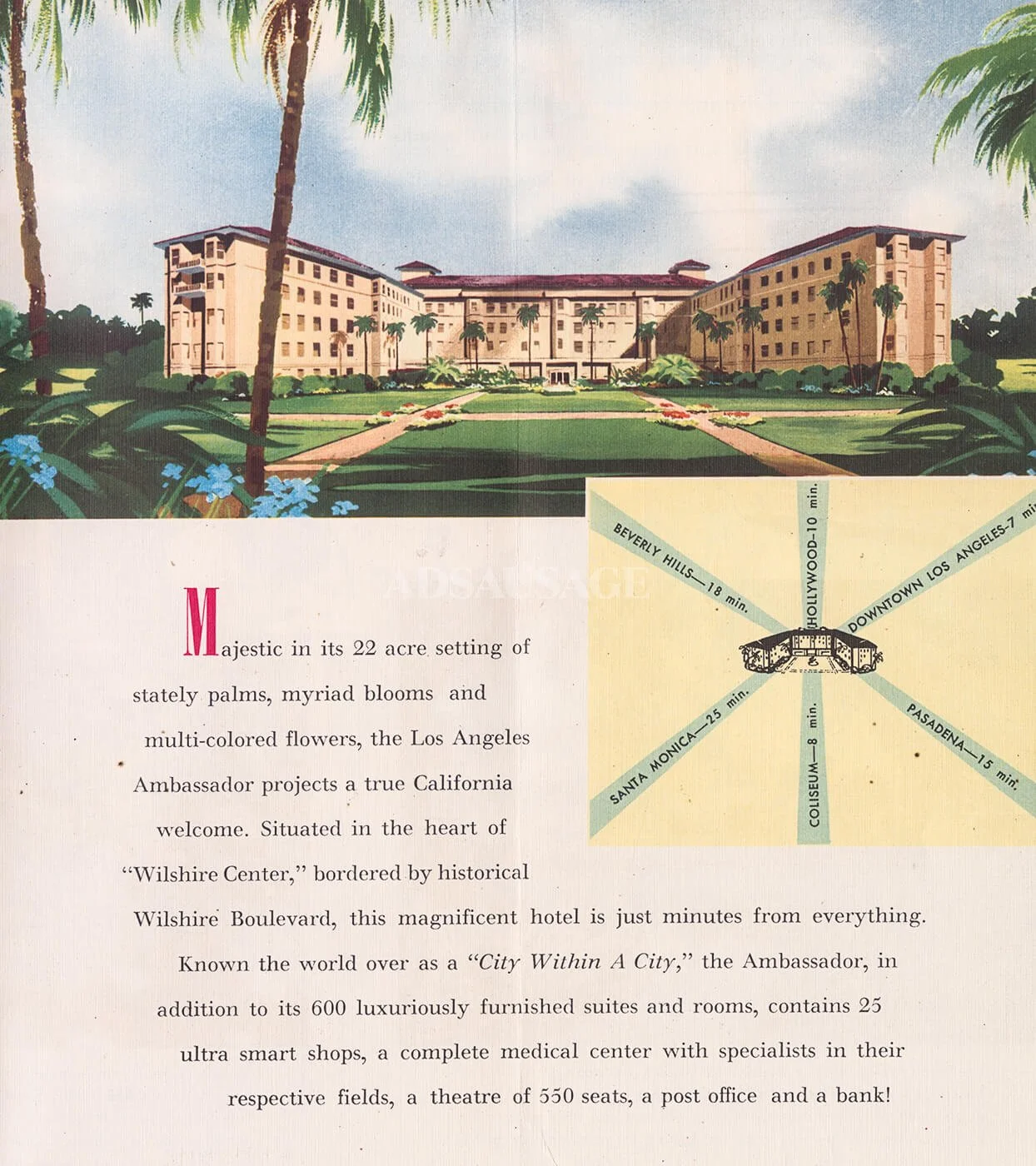
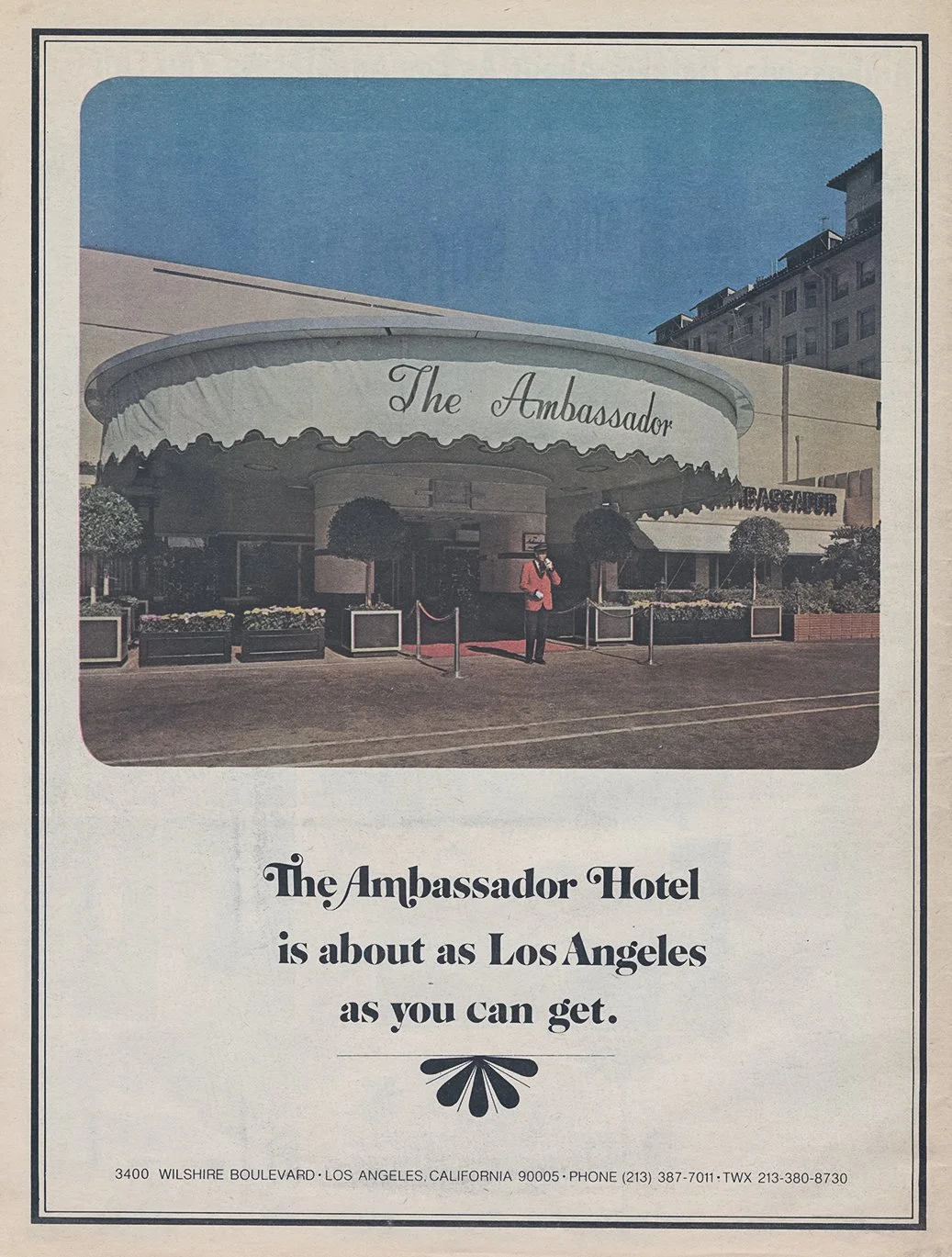
When the Ambassador Hotel opened in January 1921, it was referred to as the 'House of a Thousand Rooms'. Designed by Myron Hunt, the massive hotel on fashionable Wilshire Blvd. was first operated by the Ambassador Hotels System/Ambassador Hotel Corporation of California, which managed several hotels on both coasts. Founded in 1919 and headed by New York financier Simon William Strauss, the firm rebranded in 1934 as Ambassador Hotel Company of Los Angeles. Strauss passed away in 1930.
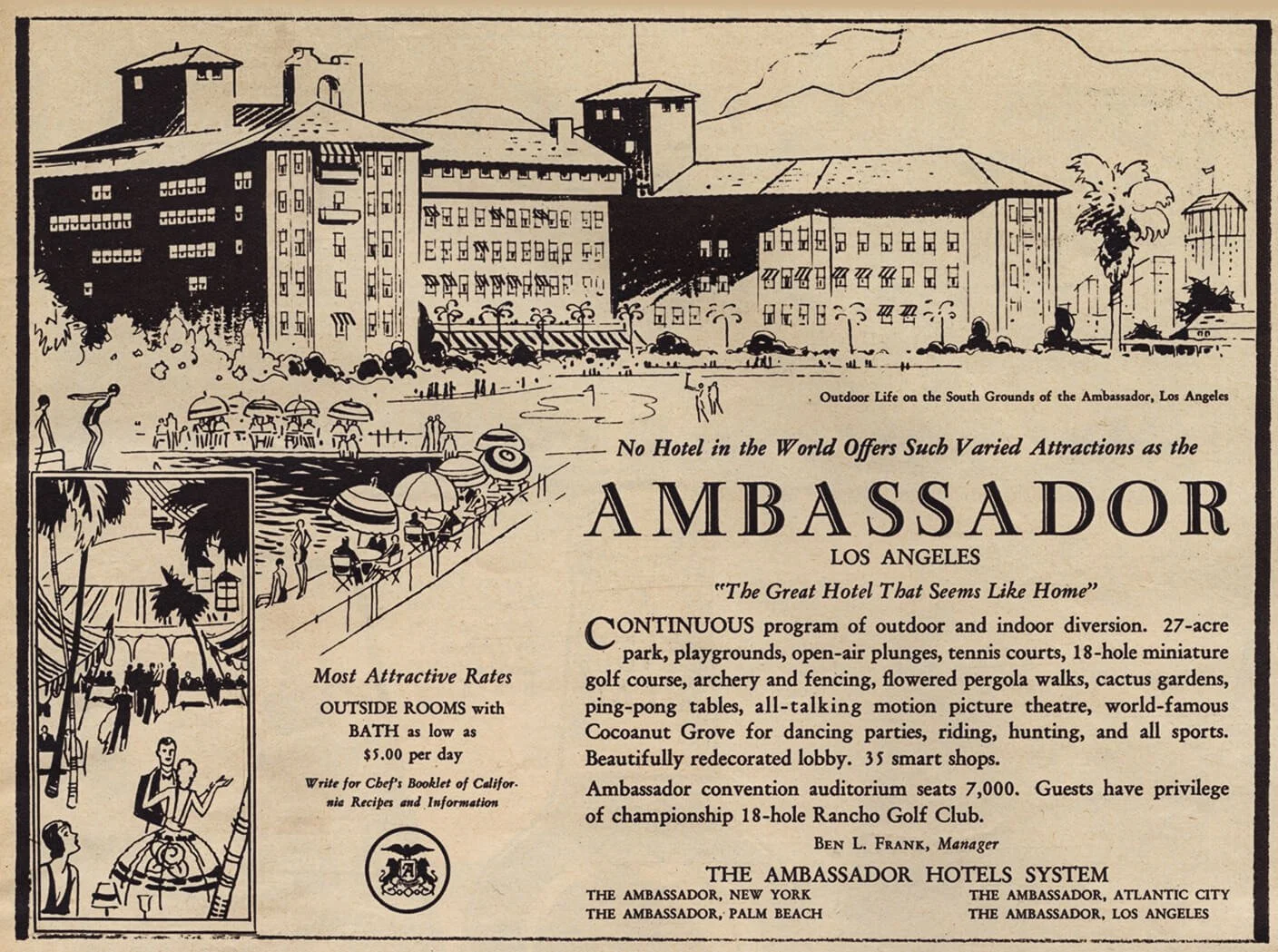
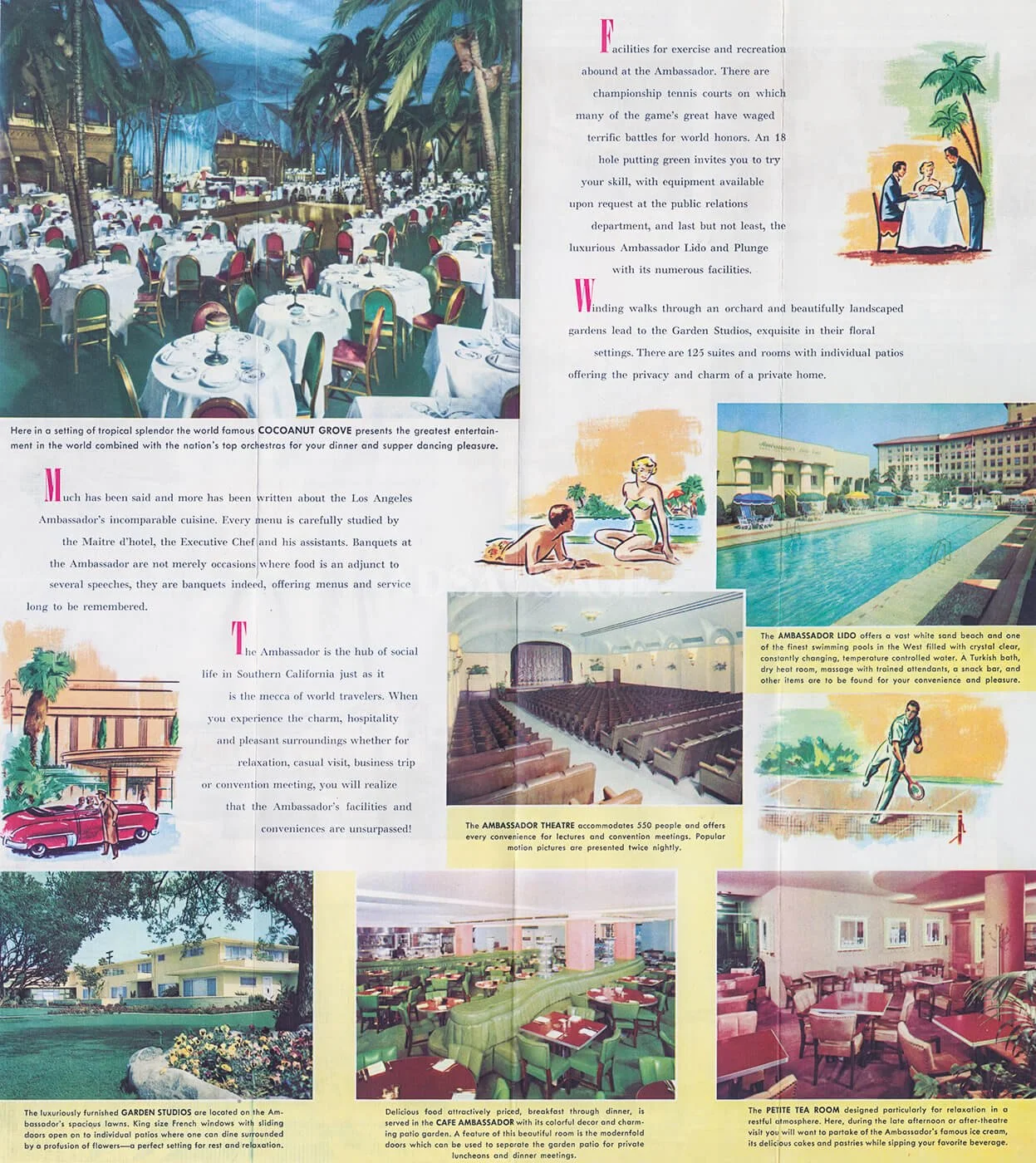
Nestled among a vast playground resembling Shangri-La, the hostelry became a favorite of the entertainment world, hosting six Academy Award events beginning in 1930. Amenities were not overlooked, hosting tea and supper dances at its famed Cocoanut Grove ballroom, and added numerous dining rooms and lounges.
But the story of the Ambassador Hotel in Los Angeles took an interesting turn in the late 1950s.

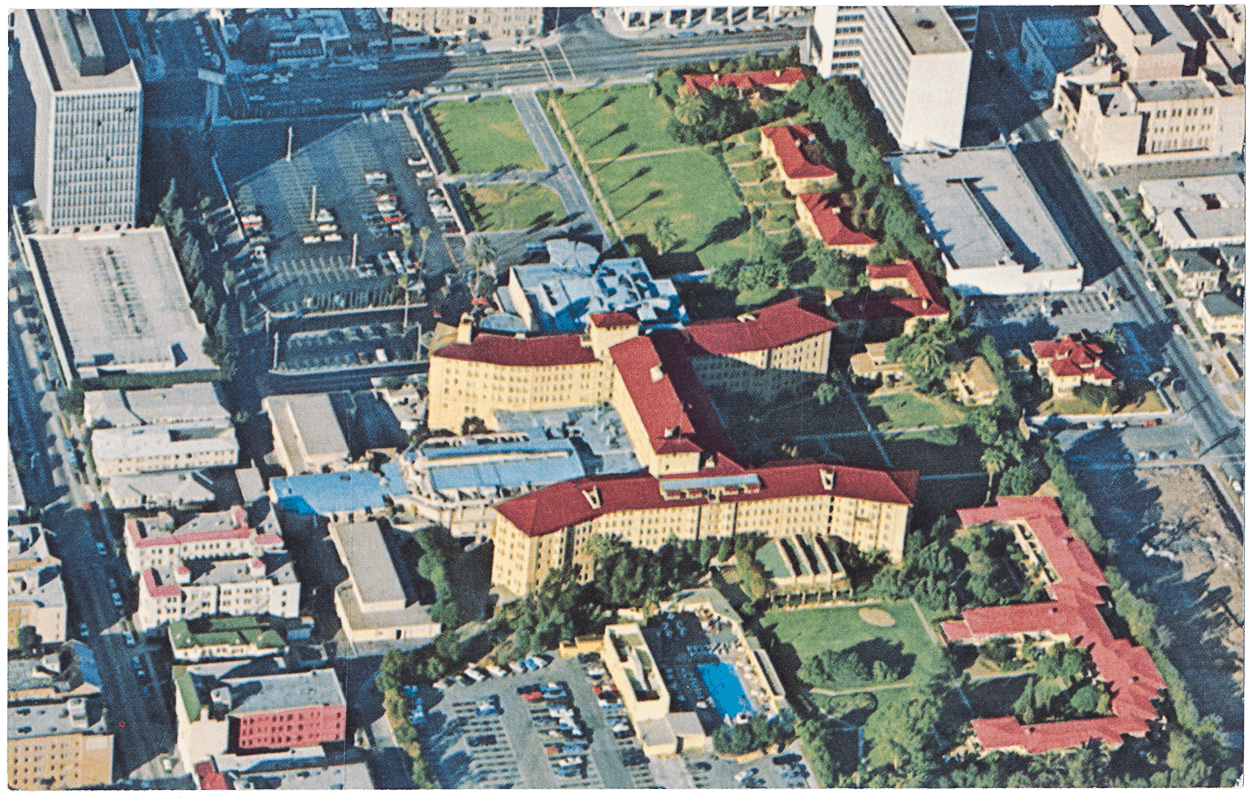
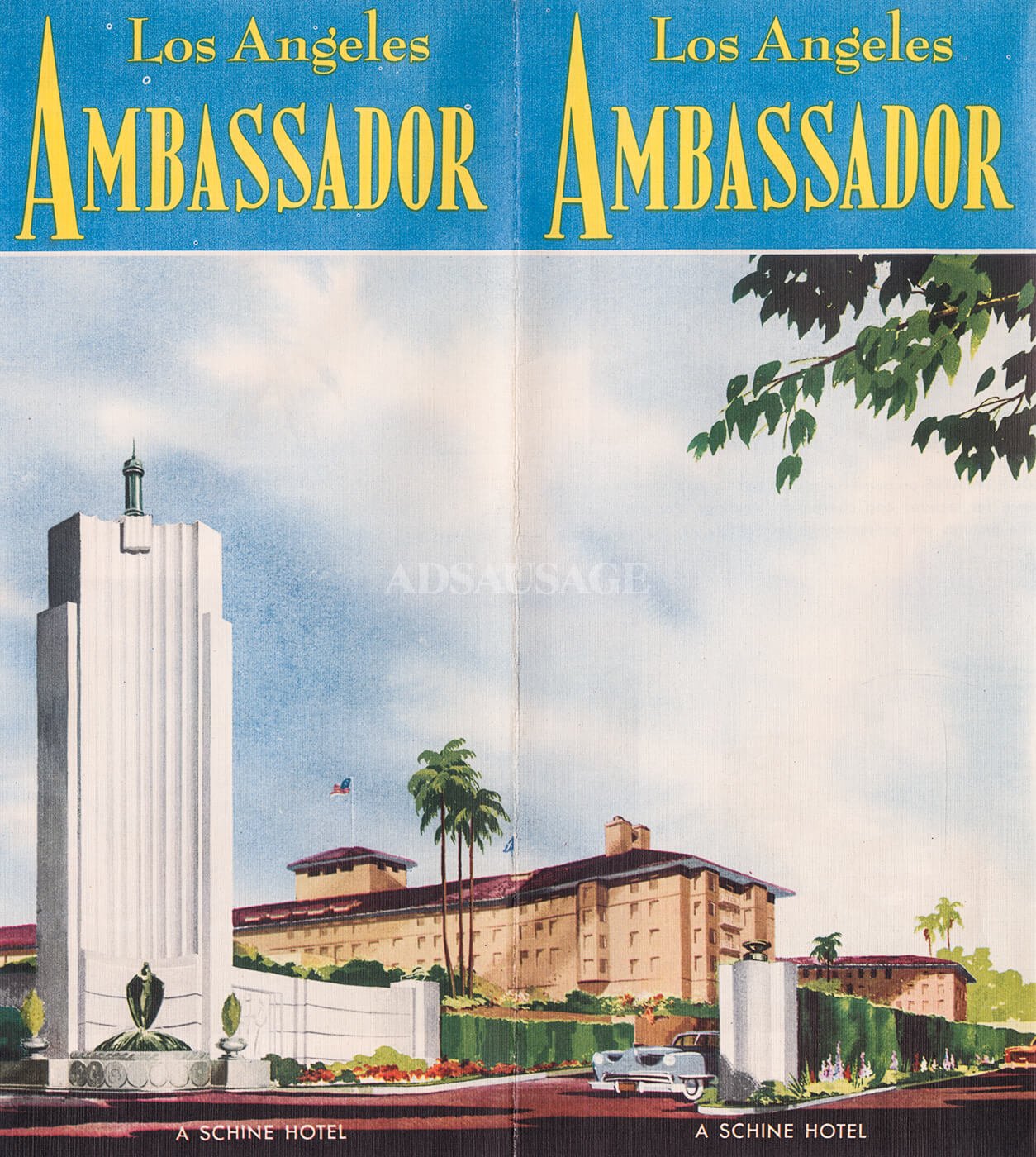
In mid-1957, owners Schine Enterprises — a major American entertainment and hospitality company, known for building one of the largest independent movie-theater chains, announced they would make "an unrivalled hotel, convention and office facilities" on the 21-acre site.
The new owners planned an expansive, multimillion-dollar project on the site to reshape the landscape. Hoping to develop one of the world's largest commercial cultural centers, the bold plans had the backing of Mayor Norris Poulson. The venture had already completed a year-long study by Daniel, Mann, Johnson, and Mendenhall, a local architectural and engineering firm.
We are fully convinced that by 1970, Los Angeles’ population will be 8,000,000. It will be the economic and transportation center of the West, and it will demand the biggest and the best possible commercial development that we can plan.- G. David Schine. July 1957.
It was estimated that the work would take several years and cost up to $350M. The project, according to G. David Schine — the company president and the son’s founder, would one day dwarf New York's Rockefeller Plaza.
Plans included seven office buildings, a convention hall, a three-level underground garage, an additional wing, and a 32-story tower that required zone changes to allow construction.
More ambitiously, Schine predicted the current hotel would be replaced within 15-20 years. The new complex for the air-minded world of tomorrow would be called Ambassador International. Work on the initial seven skyscrapers was set to begin in the fall of 1957.
Bidding
Valued at just over $6M, bidding wars for the sale of the 25-year-old hotel began in 1945, when the Ambassador was operated by J. E. Benton on behalf of stockholders.
The hotel saw offers coming in from Hilton Corporation of Chicago, Edward Trainor and Edward Glatt from Chicago, and J. F. Strauss of San Francisco. However, Hilton's bid, which included paying off the hotel's bondholders plus a good-faith deposit of approximately $582,000, was rejected by the stockholders.
Ultimately, the Ambassador's controlling interest was sold in 1946 to Russian immigrant, Junius Myer Schine. His firm, the New York-based Schine Enterprises, was known for motion picture exhibition, and operated several East Coast hotels, including the McAllister and Roney Plaza Hotel in Miami Beach, and the Boca Raton Club in Florida (sold in 1956 to Arthur Vining Davis).
New Owner
At a cost of approximately $7M, Schine Enterprises — now operated by G. David Schine, gained complete control a year later. Expansion plans began in 1949 and included a 10-story tower, new cottages, and extensive cosmetic improvements. Architects involved included Paul R. Williams, Norman Bel Geddes, and designer Don Loper for interiors.
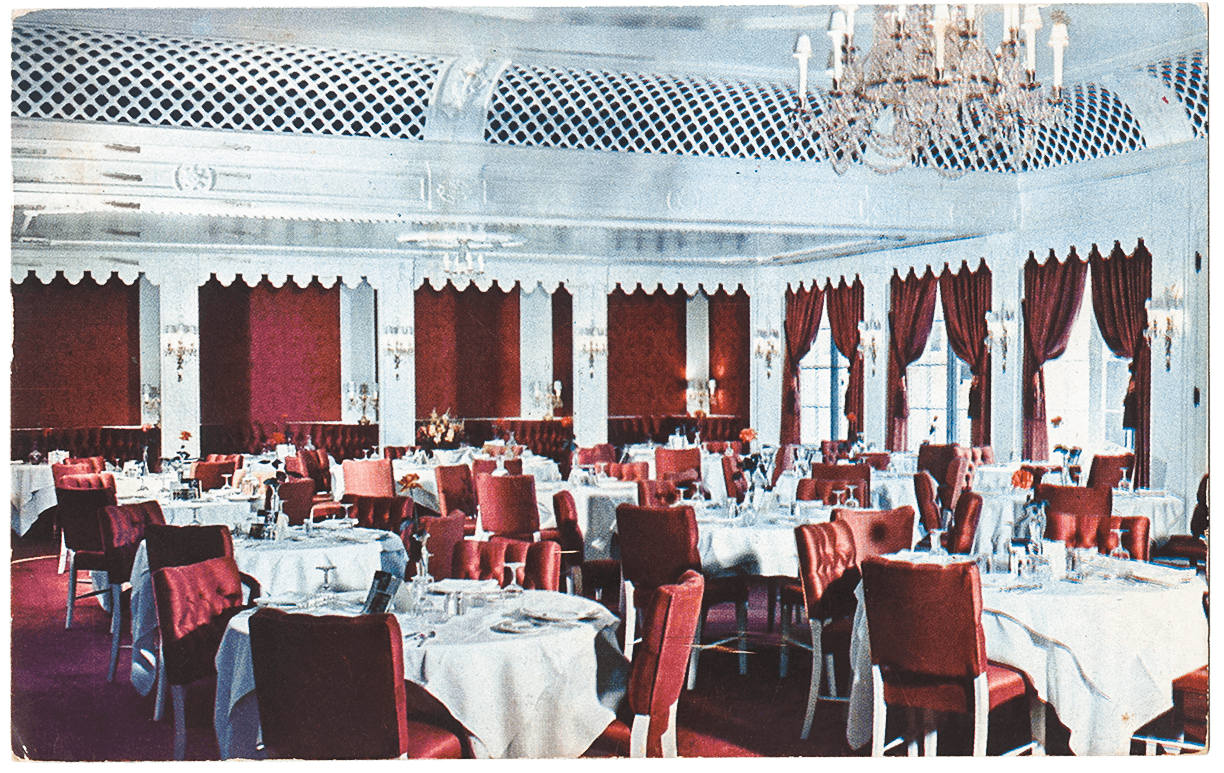
Modernization continued in 1951, with the lobby receiving a makeover and upgrades to the Palm Room, the Casino Grill, and the Regency Room. The famed Cocoanut Grove received enhancements six years later, courtesy of East Coast designers Tom Lee and Henry End.
Time for Change
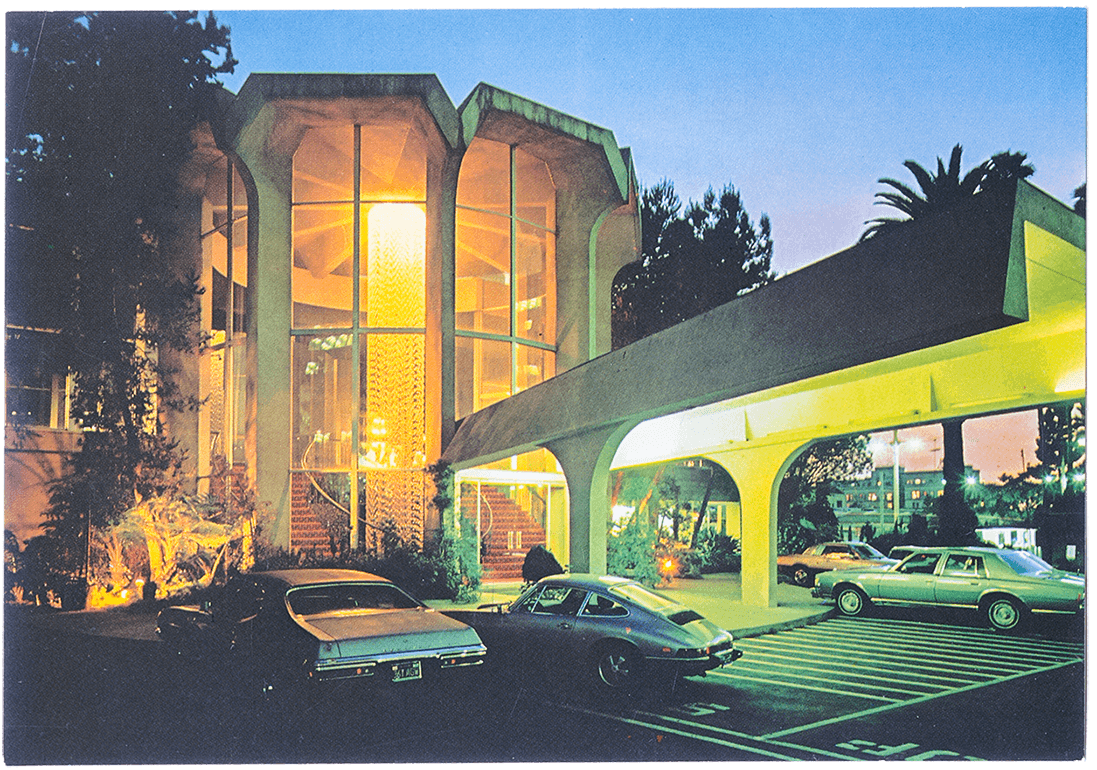
The hotel spruced up parts of the interior again in 1965, retaining Integrated Design Associates. The Beverly Hills firm focused on guest rooms and suites. In addition, the new "Continental design" would carry through to the arcade and coffee shop.
Despite the contemporary upgrade, and Robert Goulet entertaining punters at the Cocoanut Grove, the venerable hotel changed hands. The latest owners were part of a New York real estate firm, led by Harry Helmsley and Lawrence A. Wein; owners of, among other properties, the Empire State Building in Manhattan.
A spokesman for the owners speculated on potential expansion, saying, "Perhaps a major shopping center would be part of the development. It could be the making of a Rockefeller Center."
However, the deal with Helmsley fell through — Schine referred to the fallout as "fundamental differences." Regardless, Helmsley continued with other local real estate ventures, later purchasing the Sierra Towers and the Wilshire Comstock Towers.
In late 1965, another East Coast entity entered the fray: Realty Equities Corporation. Led by Morris Karp, the firm purchased several Schine entities for around $75M — a package deal that included the Ambassador. However, contract disputes delayed the key component for two years.
But the deal sparked renewed discussion of the once-dormant expansion plans. Although details were scant, Realty Equities Corporation prematurely said the massive 10-year development would cost close to $250M.
The Ambassador deal soured in 1967, when Realty Equities Corporation accused Schine Enterprises of trying to back out of the sale. In response, Schine accused Realty Equities Corporation of being unable to cough up the remaining $50M by the closing date.
The company was delisted from the American Stock Exchange on Sept. 26, 1973, after suffering substantial losses for three consecutive years.
With the hotel back under Schine's control, the Ambassador underwent a $3M renovation in 1967. Of course, the hotel witnessed its darkest era on June 4, 1968, with the assassination of Sen. Robert F. Kennedy in the hotel’s kitchen.
In 1970, a last-ditch effort with help from Sammy Davis Jr. to rebrand the Cocoanut Grove to the Now Cocoanut Grove, did little to help.
Plans that Come to Naught
As for the perennial "Rockefeller of the West" project, nothing materialized. The original architects, Daniel, Mann, Johnson, and Mendenhall, continued with other work, including schools and hospitals.
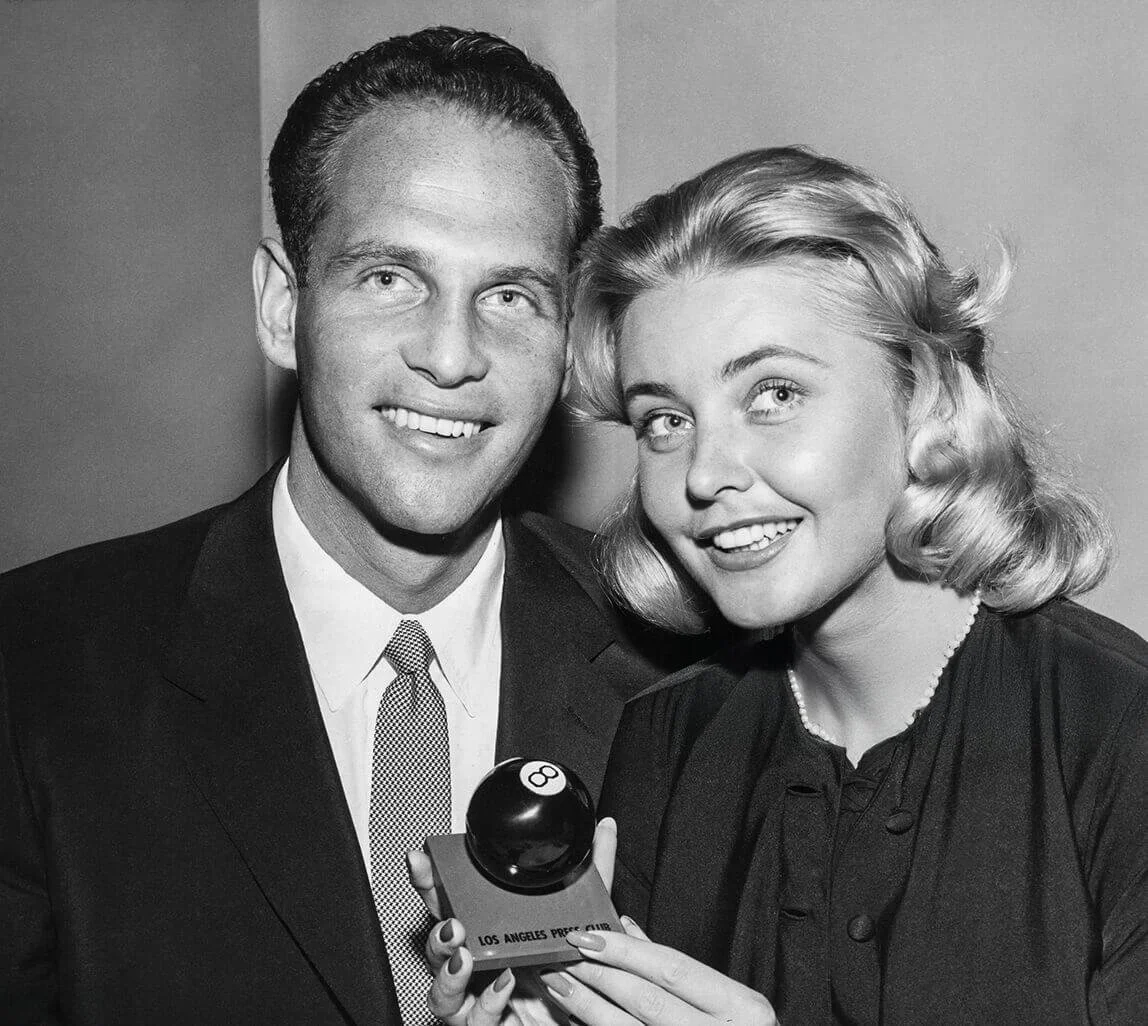
The project's figurehead, G. David Schine, married Swedish beauty Hillevi Rombin in October 1957 and moved to Florida. Two years later, the couple returned to the Southland and purchased Ann Sheridan's former estate in Encino (since demolished). The hotel heir achieved great success in 1971, producing The French Connection.
Trump Era
Already struggling with low occupancy rates, the hotel closed several rooms in 1987 — the same year the City Council discussed granting landmark status to the Ambassador. Despite being voted against, the hotel was later added to the National Register of Historic Places.
After shutting its doors in 1988, the ailing hotel — under the Schine family trust, was up for sale again in 1989. Despite the hotel's decline, the owners boldly sought to renovate. Exorbitant costs, running between $10M and $30M, led to those efforts ending.
The 23.5-acre site was available for purchase through a sealed-bidding process. Valued between $65M and $75M, interested parties included the Los Angeles Unified School District, seeking a new high school site, but walked away due to soaring costs.
However, staving off the school board was Wilshire Center Partners. The international consortium closed escrow in late-1989, and hired two architectural firms to design a site plan.
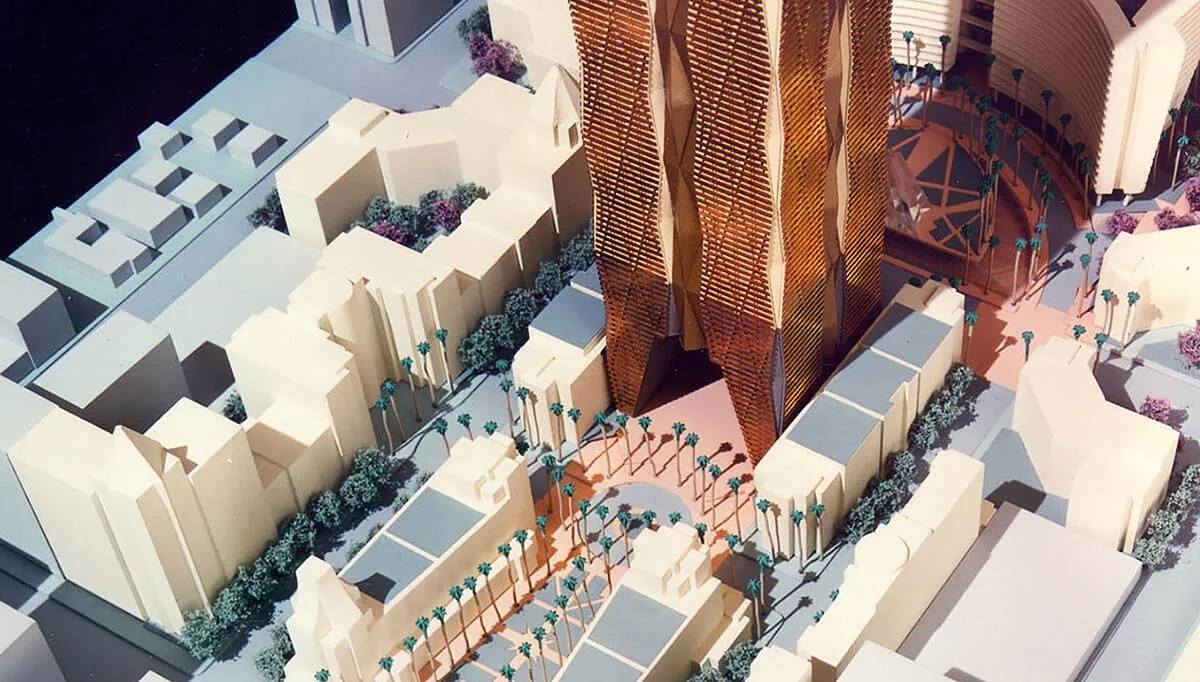
The hotel came under Donald Trump's radar when the hotel magnate revealed his elaborate mixed-use plans at a press conference at the hotel in 1990: new offices, apartments, condominiums, retail space, and a 125-story office building. Demolition was likely.
In early 1990, the Los Angeles firm of Johnson Fain and Pereira were hired to design the towering monument.
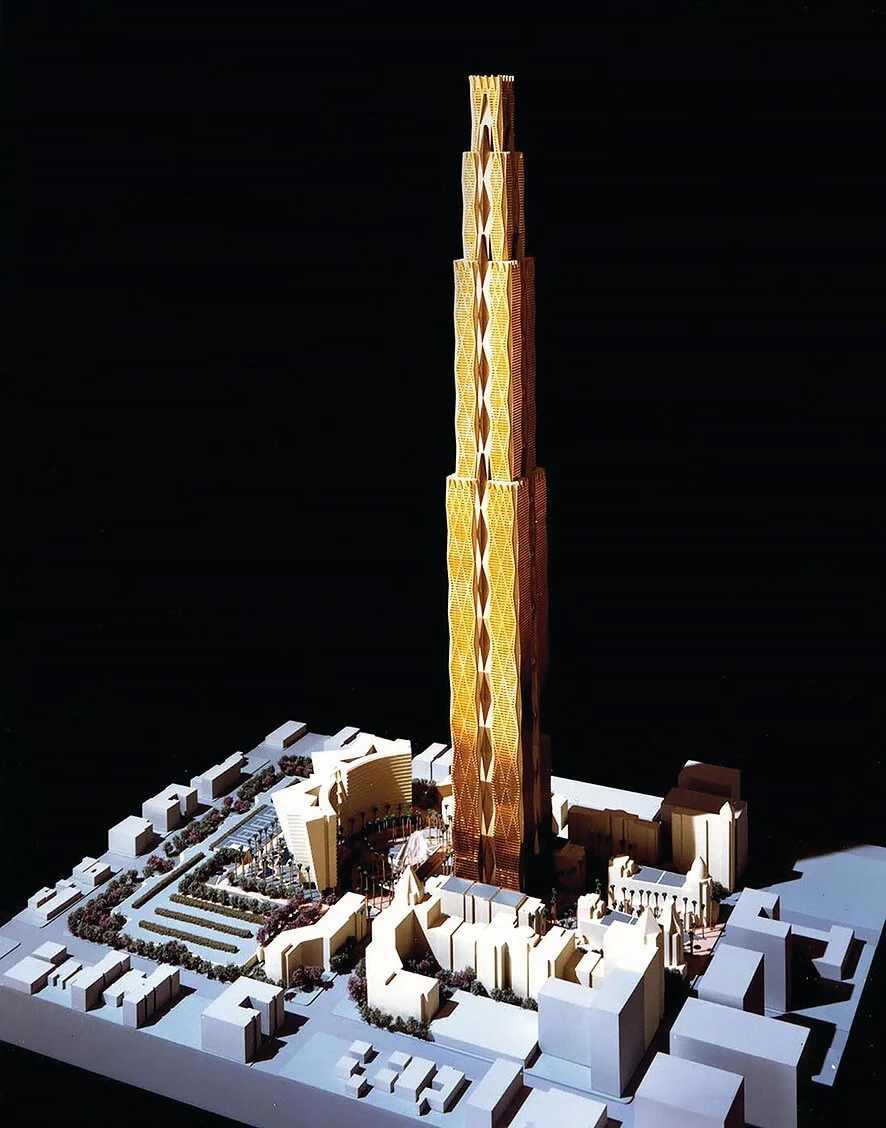
Having acquired an interest in Wilshire Center Partners, renamed Trump Wilshire Associates, the cost was put around $1B. Of course, not everyone was pleased with the idea of the world's tallest building landing on Wilshire Boulevard, including Mayor Tom Bradley.
After unsuccessfully trying to negotiate a voluntary sale, the LAUSD sought to condemn the property under eminent domain. It deposited $48 million (the estimated value of the rear 17 acres of the property) with Ambassador Associates as part of that legal process.
The district allocated nearly $48 million to acquire the property, but after a significant real estate market downturn in the mid-1990s, it sought to withdraw from the deal.
LAUSD purchased the property in the U.S. Bankruptcy Court for $76.5 million in 2001, and by 2004, the Los Angeles Board of Education had selected the site for a high school that would serve 3,000 students—the board said the plan for the school was a key piece of its efforts to relieve overcrowding in the district.
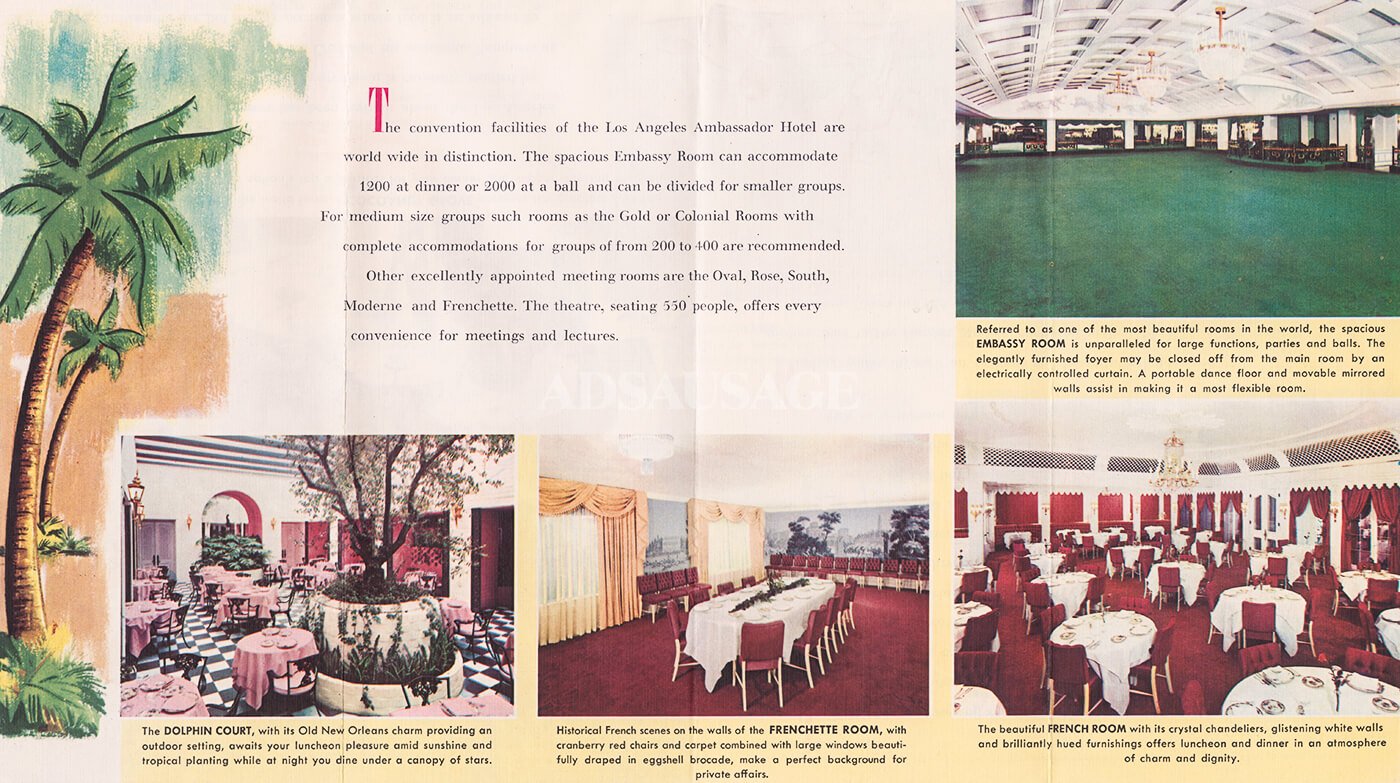
While the main hotel building was torn down, several components of the complex were salvaged and reused. The Cocoanut Grove nightclub was converted into an auditorium and performance space. A coffee shop designed by noted architect Paul Williams was later converted into a faculty lounge. The revered architect also designed the Ambassador’s new bungalows and a remodel of the Embassy Ballroom.
When all was said and done, seven separate schools, accommodating 4,000 pupils, occupied the new campus. The main entrance lined with palm trees.
At the age of 79, Russian-born J. Myer Schine passed away in 1971 in New York. Among his other achievements, the hotel magnate created the Mrs. Wiggins Candy Store chain. The Schine Student Center at Syracuse University is named for J. Myer and his wife, Hildegarde.