The Vagabond Theatre
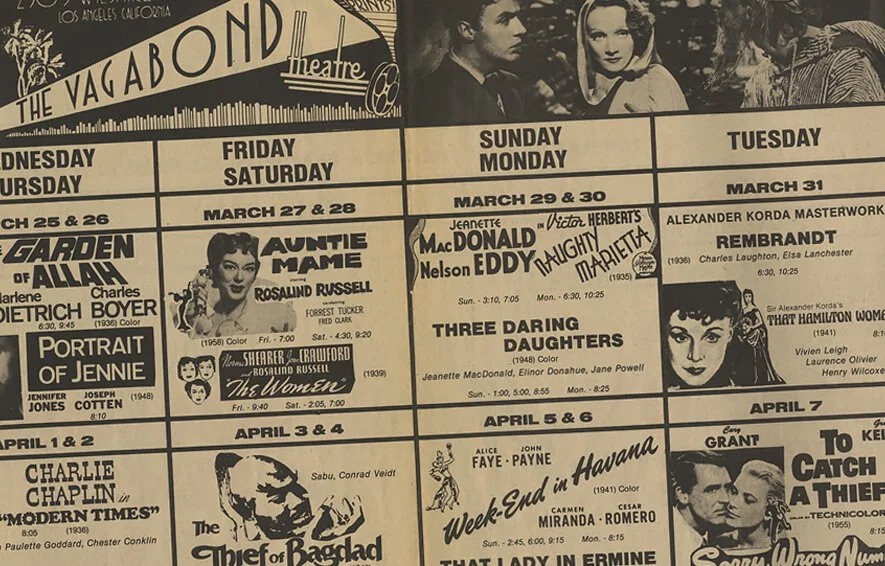
From the 1920s, multiple businesses occupied this Wilshire District building by Morgan, Walls, & Clements, including; the Paul Smith Portrait Studios, the Martini Grill, the Institute of Religious Science and Philosophy, and the Jean Carol School of Beauty.
After several conversions, the building operated as The Masque Theater in May 1946, operated by Michael Mark — who later moved his productions to West Hollywood, under the name Players Lab.
By 1949, news reports noted theater exhibitor and new proprietor Herbert Rosener included the new luxury cinema to his chain, using the name Masque Theater, intending to rename the place, Park Theater.
With the offering of foreign and unusual pictures, the Vagabond officially opened in 1950. Its inaugural attraction was the British movie, "Saints and Sinners", which also played the Laurel Theatre on Beverly Blvd.
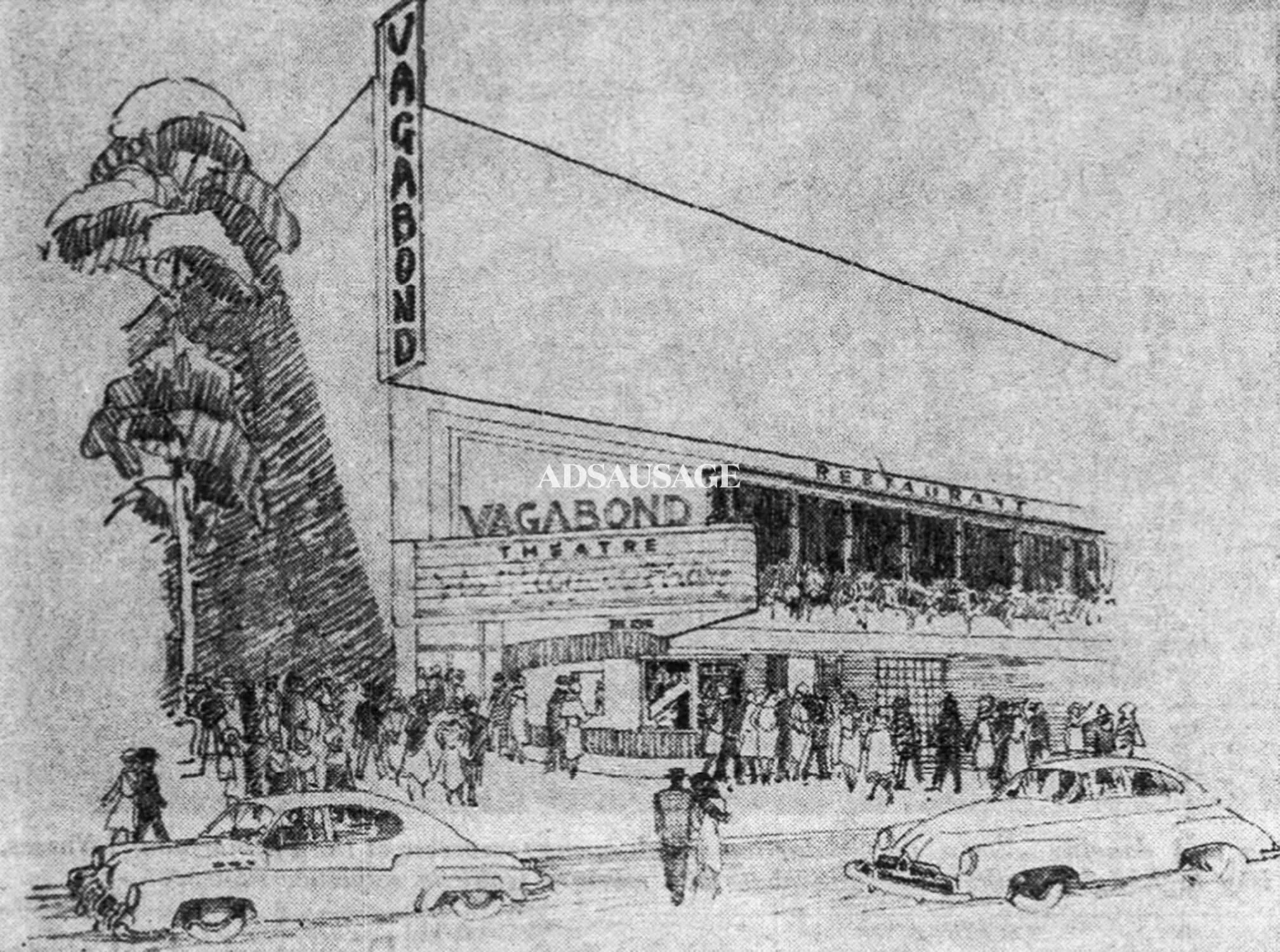
An early sketch of the Vagabond. In 1950, the theatre was renovated by architect Dwight Gibbs.
The Los Angeles Times wrote, "the new art house offers beauty and comfort and fills a reported long-felt need for a motion picture theater in the Wilshire-Town House district."
Herbert Rosener’s circuit included; Music Hall, Beverly Canon, Esquire and Laurel on Beverly Blvd, which became a synagogue (since demolished). Rosener continued to helm the Vagabond until the late-1960s, when he formed a joint venture with the Walter Reade Organization.
Although known for programming foreign and "unusual pictures," The Vagabond hosted the 1966 Gala World Premiere of Weekend of Fear, written, produced, and directed by Joe Danford, “A Film by the New Talent of Hollywood.”
One synopsis stated, "The actors do not speak in this low-budget film: narration is dubbed through a stream-of-consciousness device. The plot centers around a middle-aged woman who hires a deaf-mute to kill the girlfriend of the man she desires."
Over time, X-rated programming attracted the raincoat brigade. Patrons were required to be at least 18 years old, or to bring their marriage license.
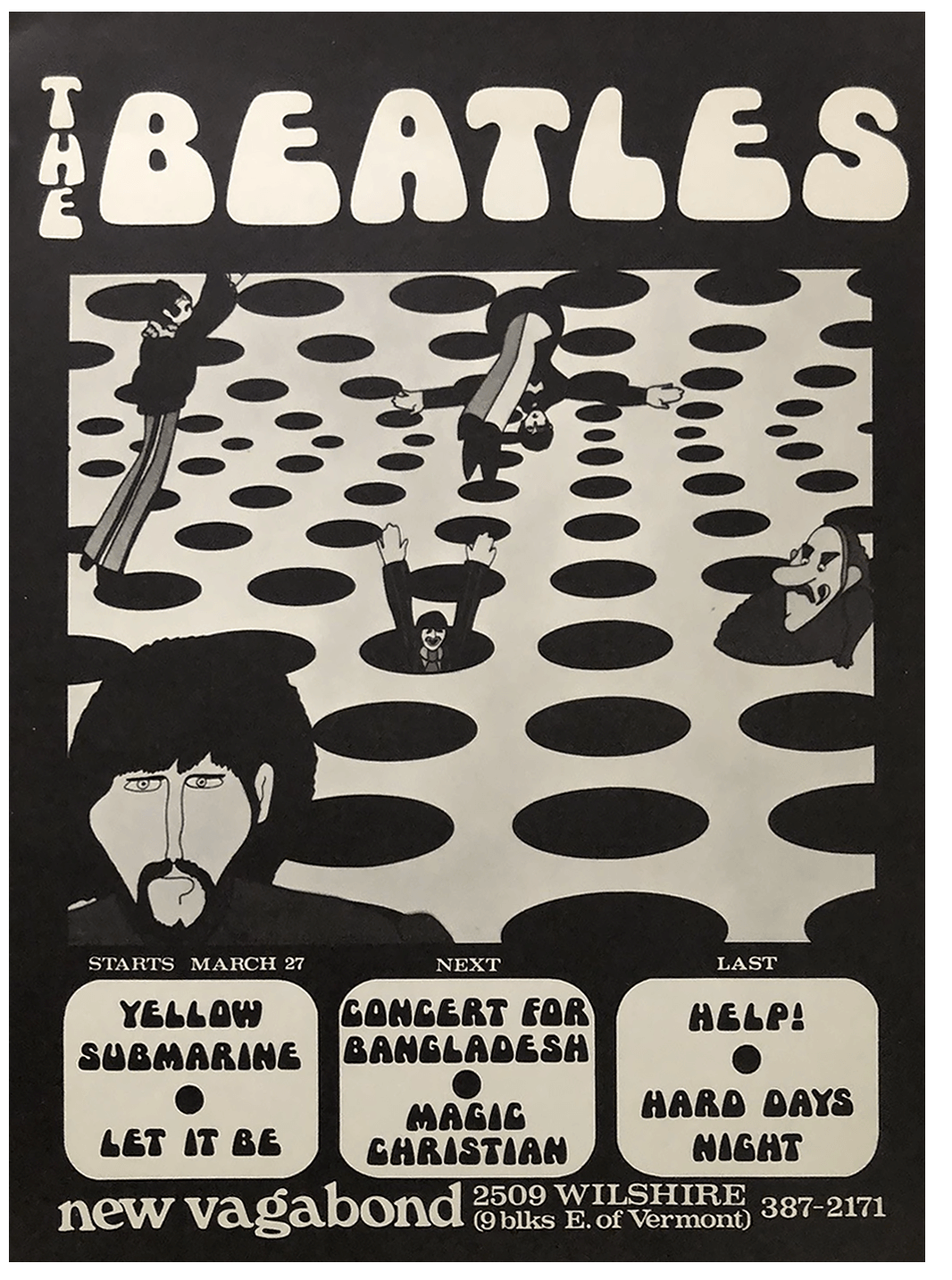
Afraid of losing the 'Cahiers du Cinema' crowd, the theatre introduced fresh, New Wave programming; Godard, Fellini, Kurosawa, Oshima, Malle… and was renamed The New Vagabond as early as 1971. Admission was around two dollars.
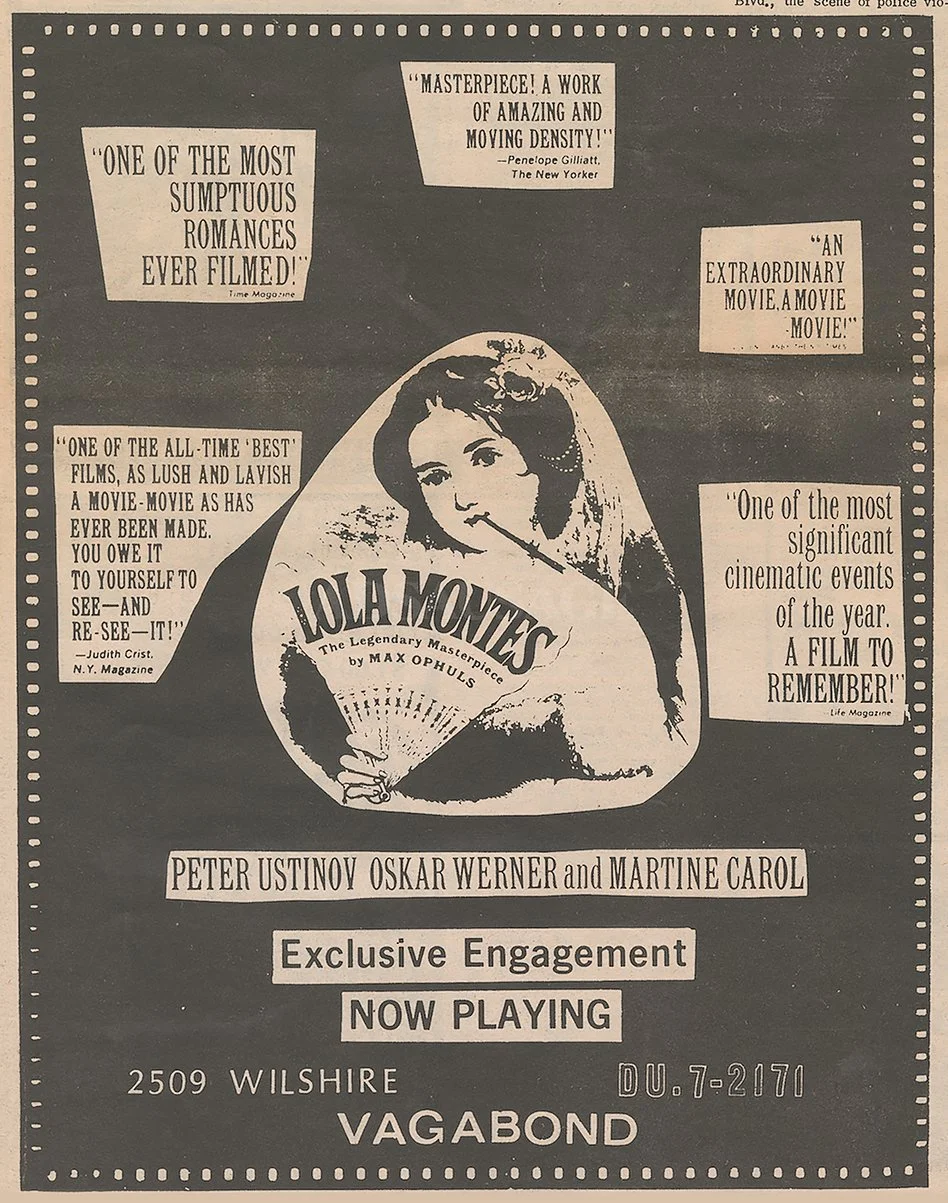
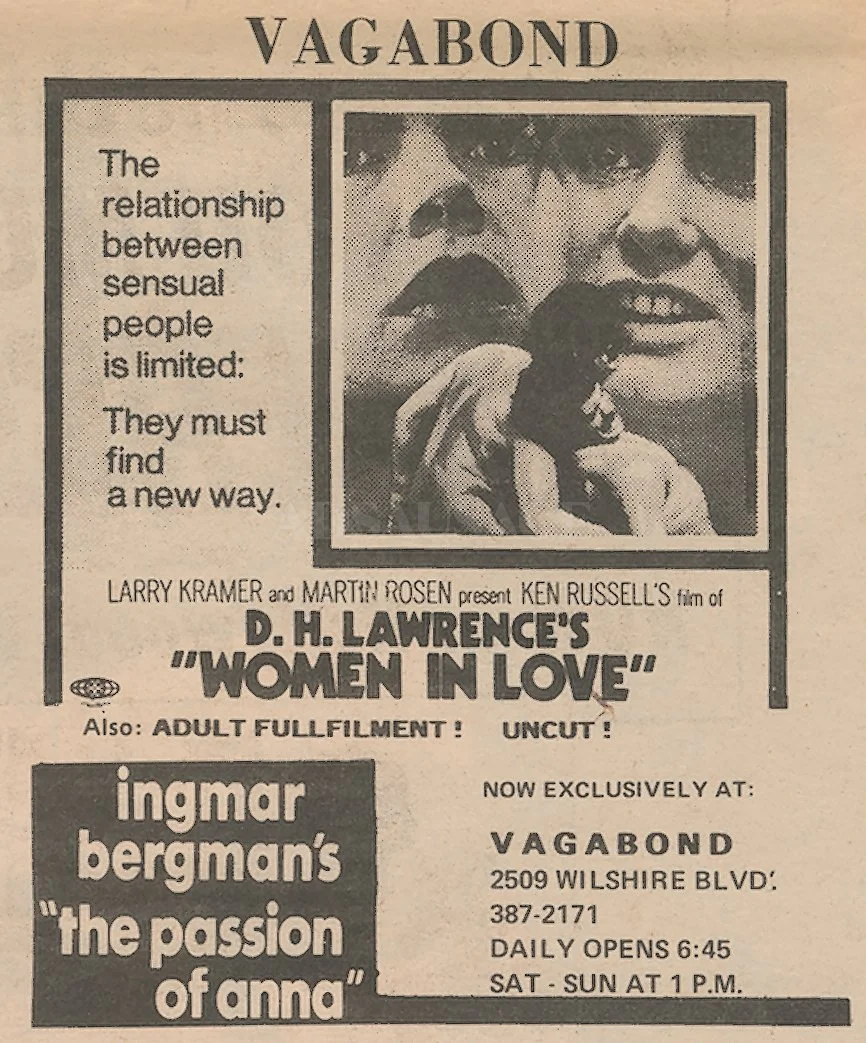
Above: Los Angeles Free Press advertising from 1970.
By 1975, the theatre was running XXX fare, and lucky punters could meet adult film star Georgina Spelvin for the premiere of Wet Rainbow.
Soon after, with modified address and updated moniker, the New Downtown Vagabond announced a Grand Re-Opening. The Vagabond’s new owner was Tom Cooper. The former Northwestern University student, part-time singer and teacher, was then running the Tiffany Theatre on Sunset. After the Tiffany went legit in 1983, Cooper focused his attention on the Vagabond.
In 1983, when the city designated the building as a historic cultural landmark, the 350-seat Vagabond bid farewell to erotica and returned to heavy arthouse programming, striving for the best 35mm prints. However, with the advent of videocassette and cable, the theatre was hurting. Cooper’s lease on the building was ending and concluded his time in 1985 with The Best of Warner Bros. Cartoons.
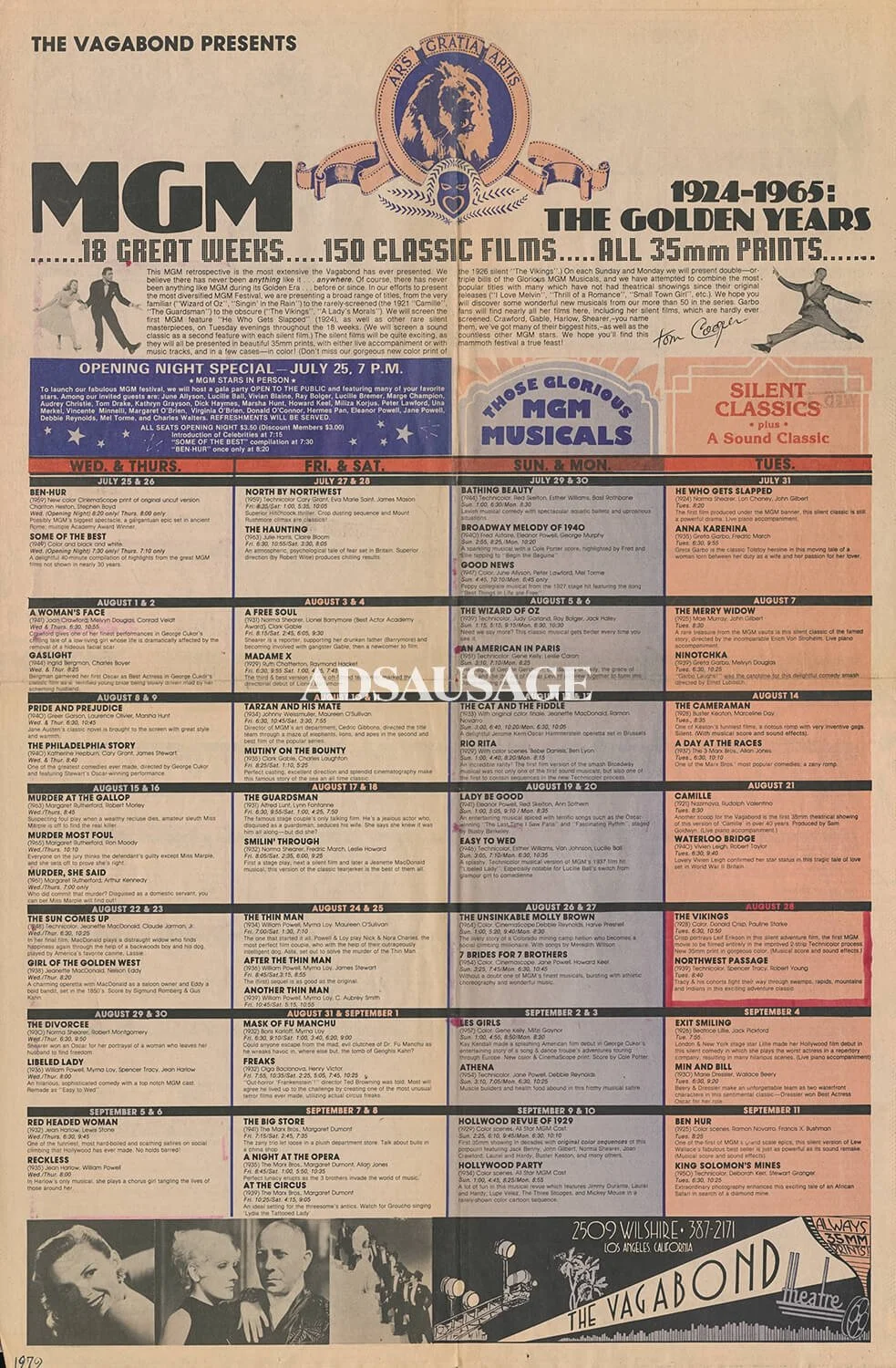
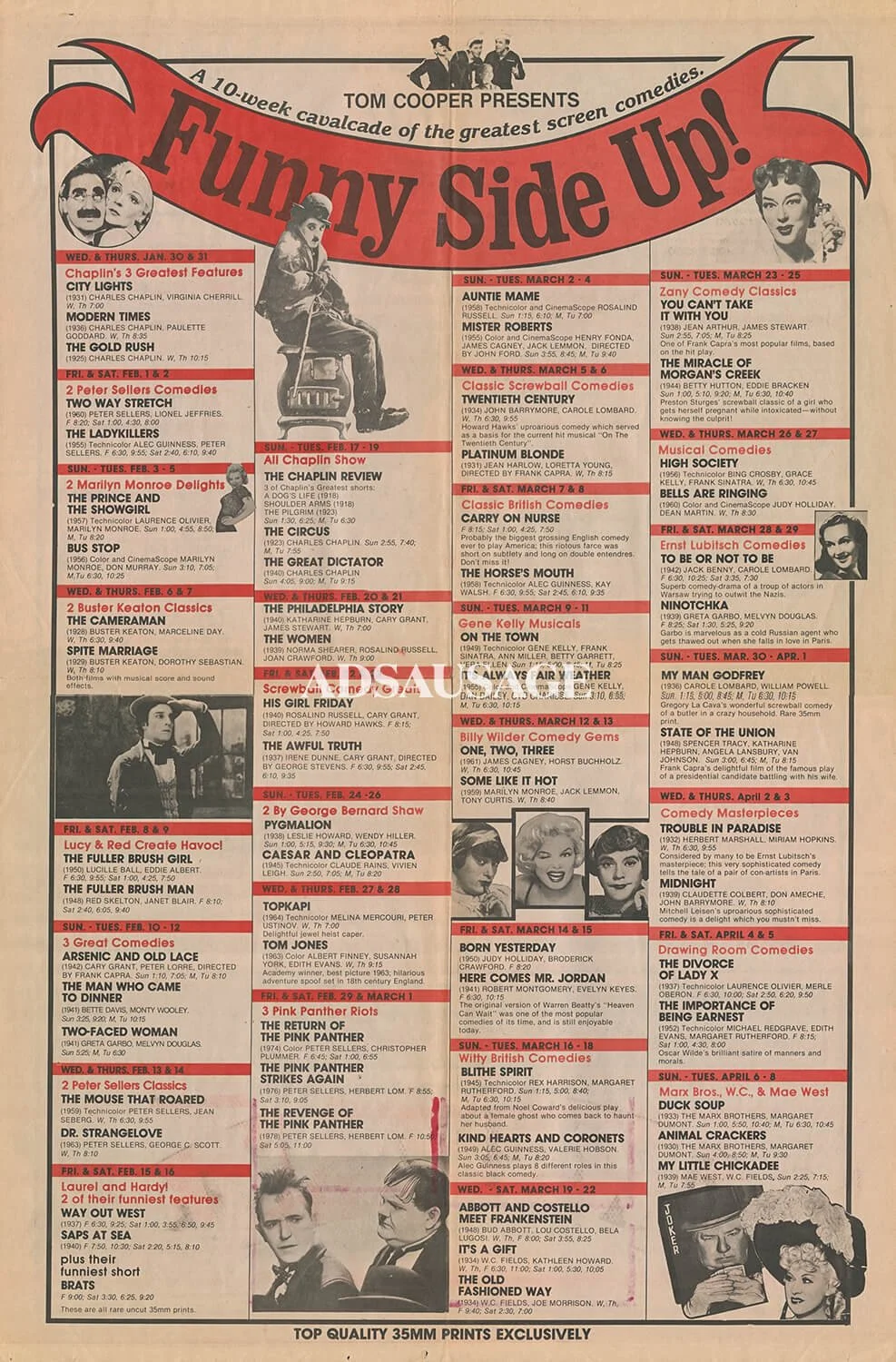
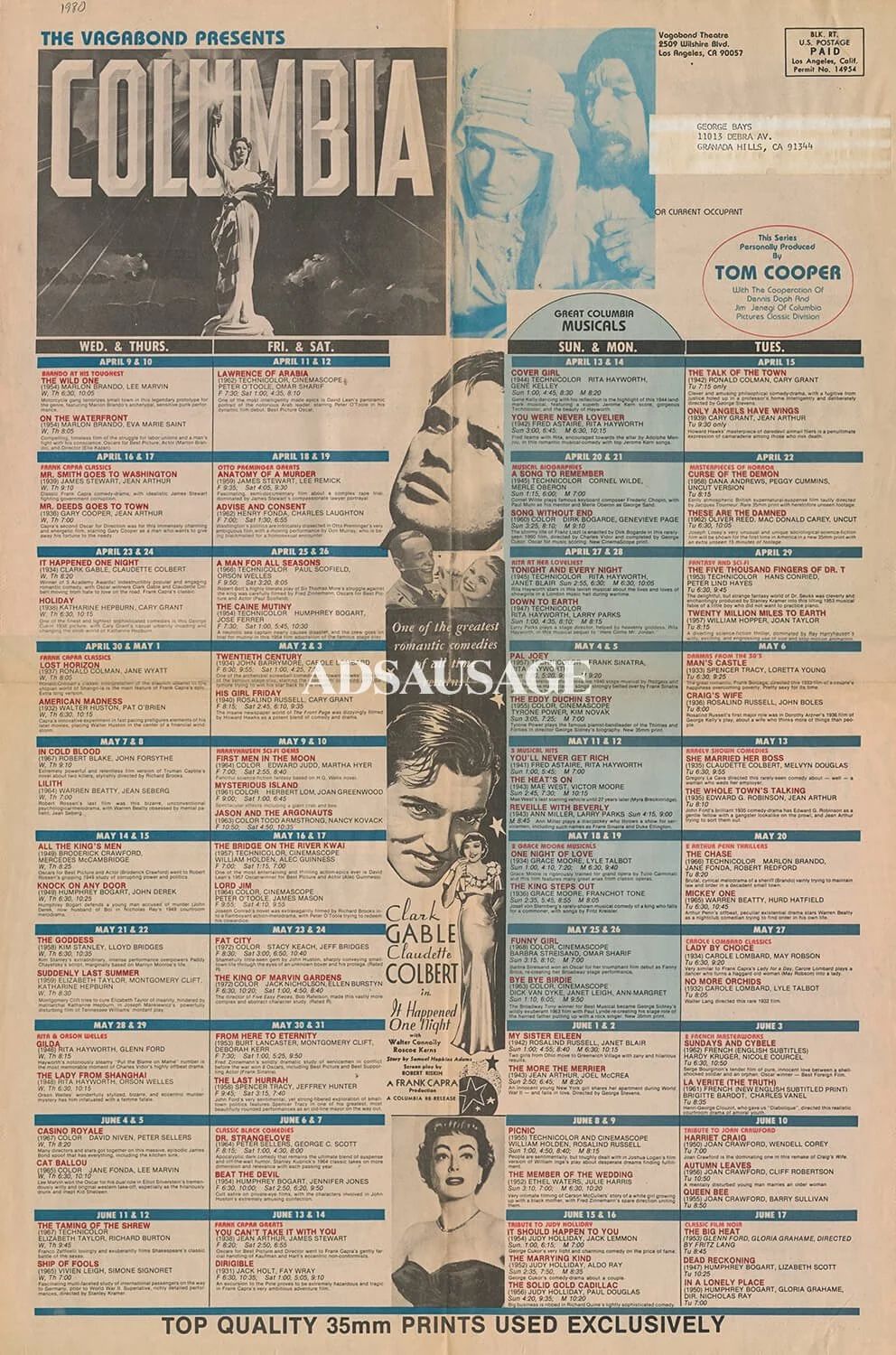
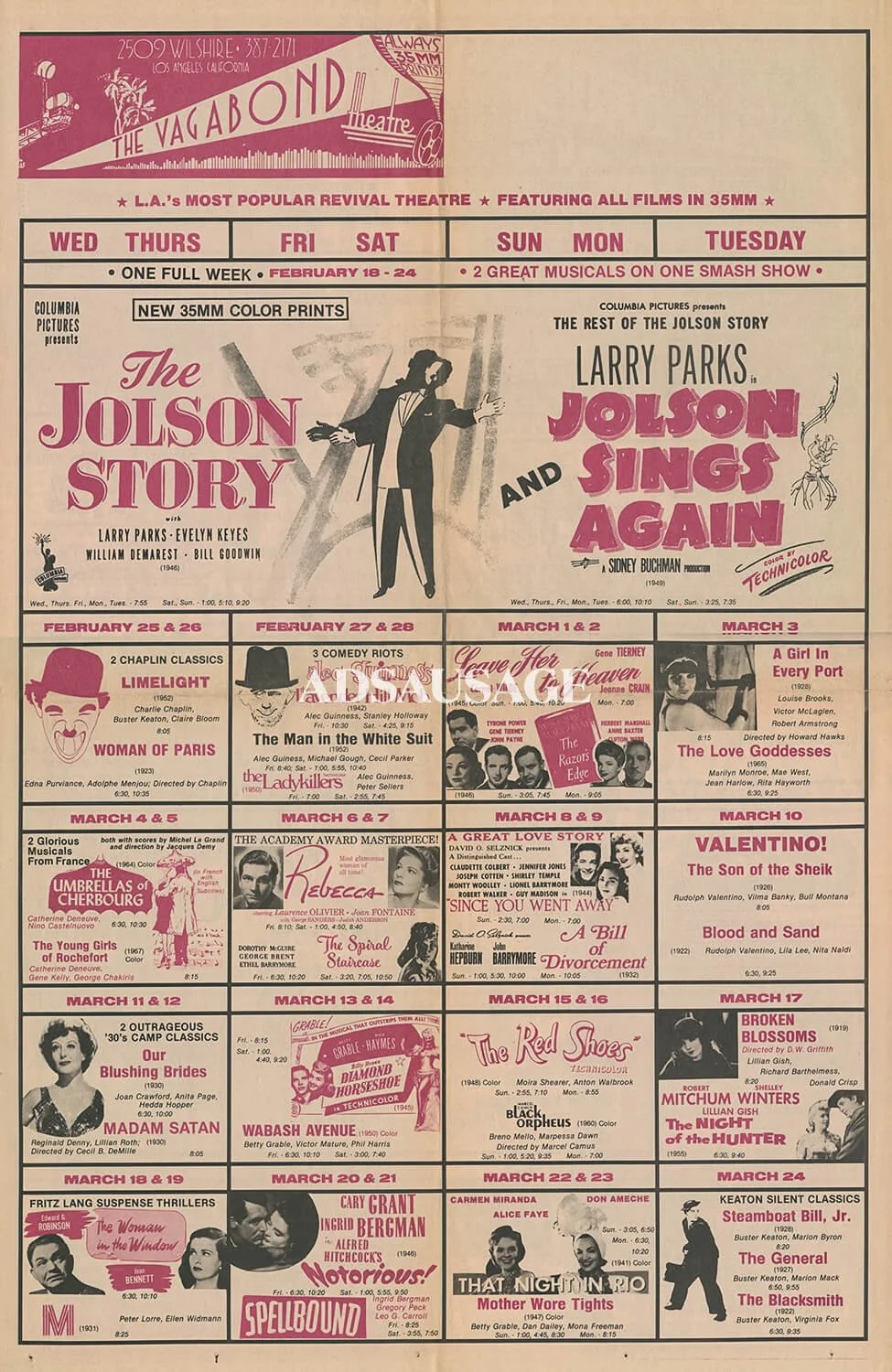
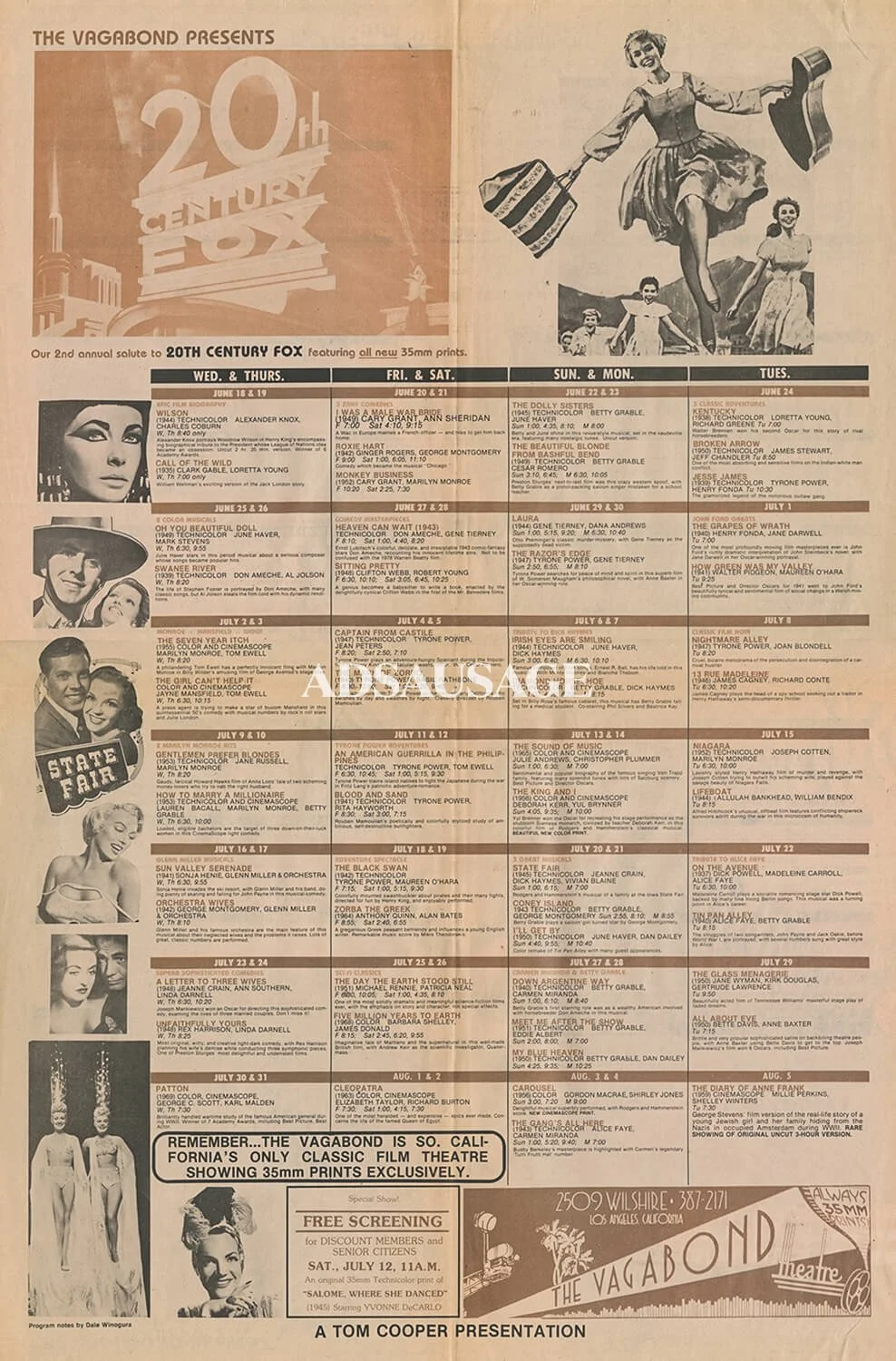
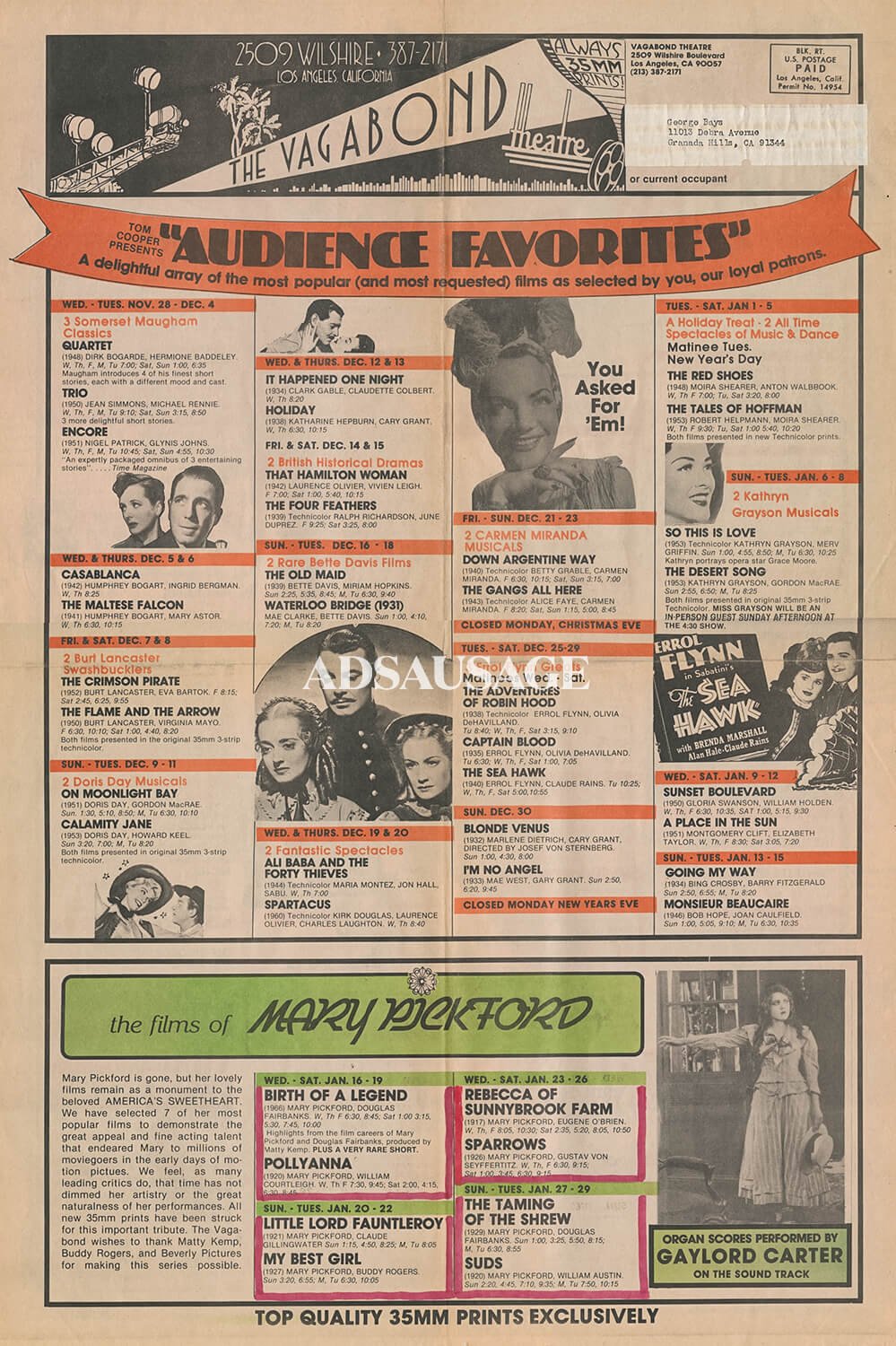
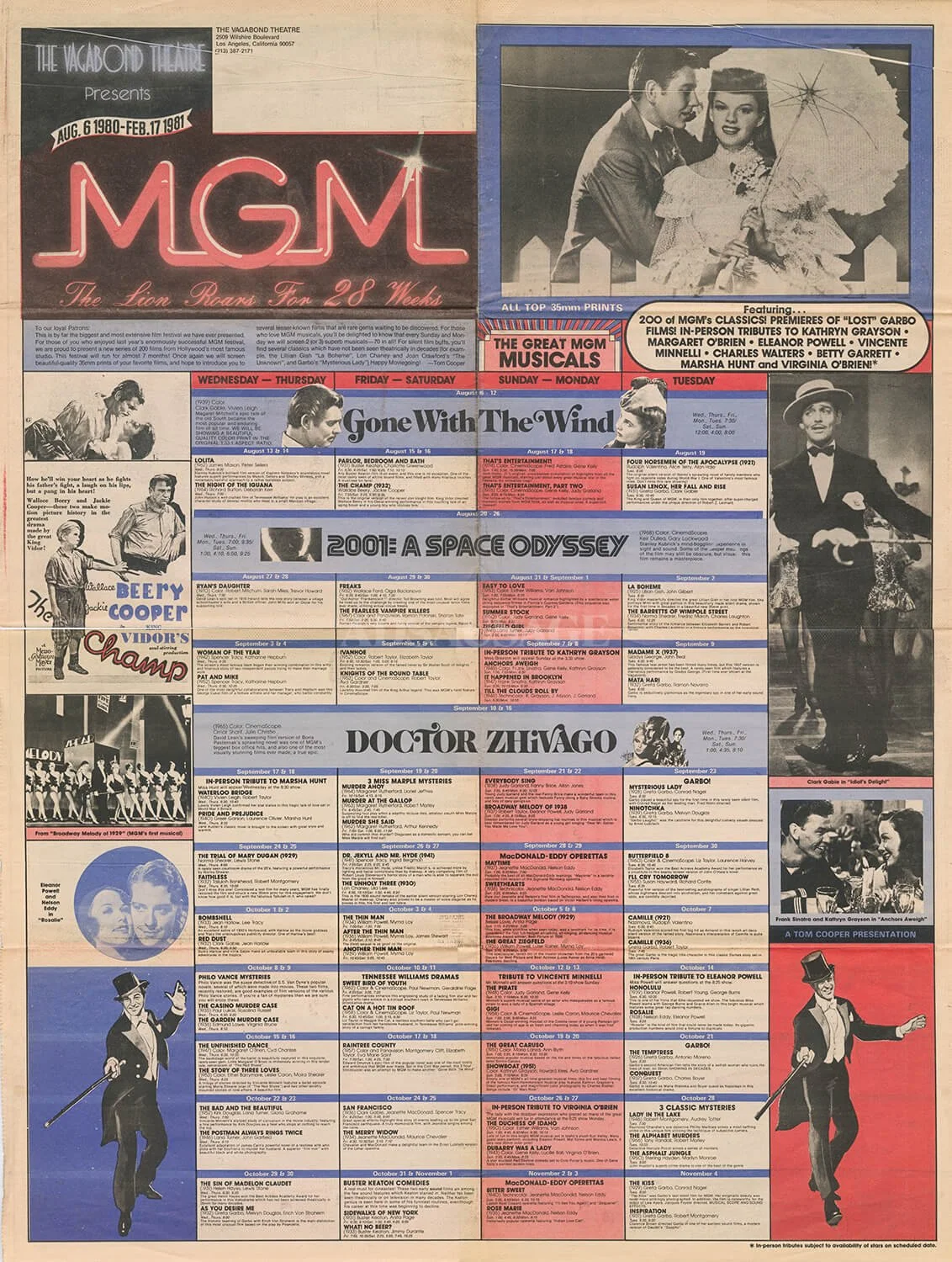
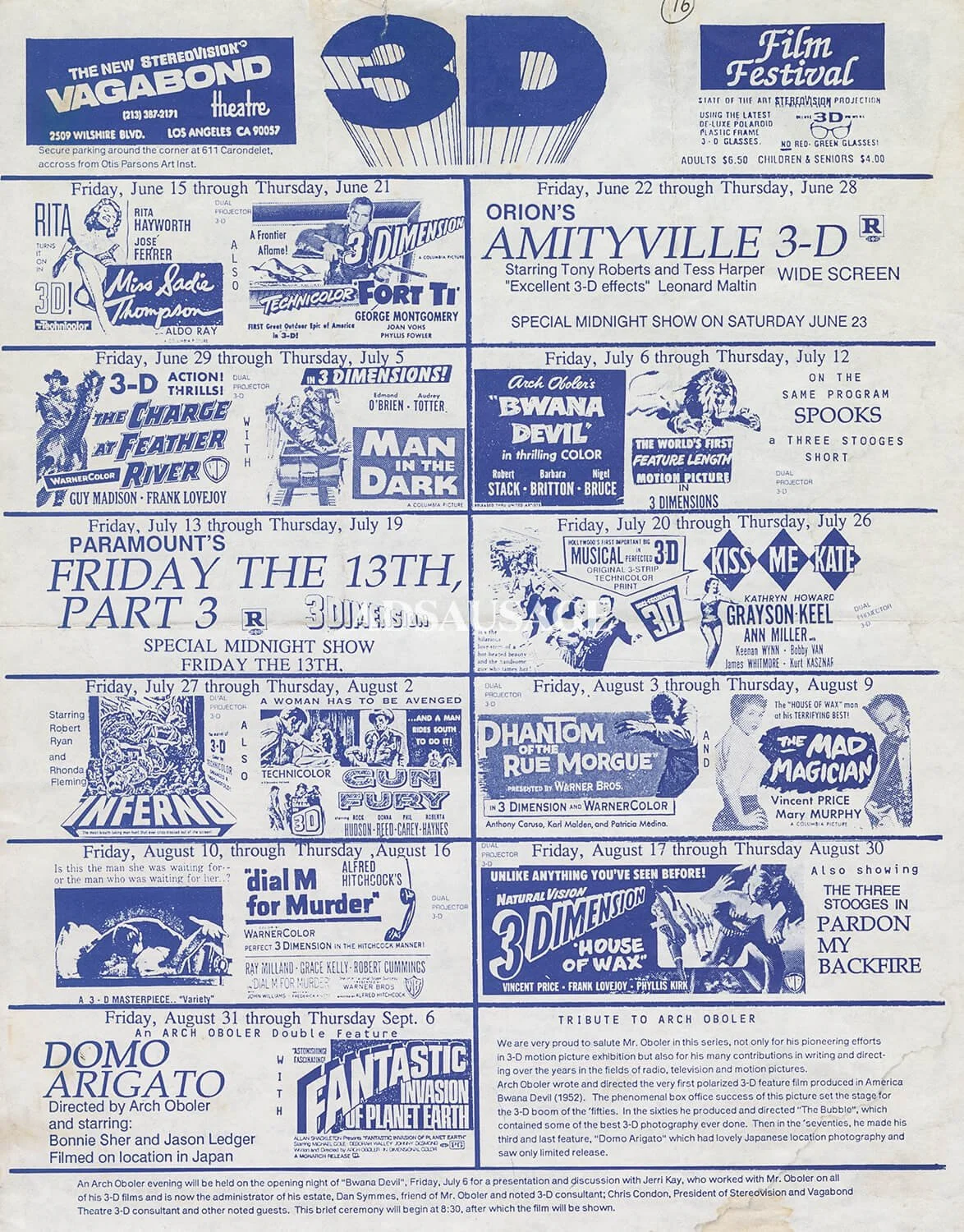

Original flyer’s in author’s collection. Movie programming descriptions credited to Dale Winogura.
A New Decade
A month after Tom Cooper called it quits, the Vagabond had new management. Set to reopen in 1986, new owner Sid Kurstin told the Los Angeles Times, “It’s going to be fixed up, remodeled, with new carpeting added… Everything is going to be first class.”
Kurstin previously ran the Las Palmas Theatre in Hollywood. After years of decline, the Las Palmas was remodeled in 1961 by Bill Swanson, who sold the place to Kurstin. Unable to operate the place as a legit theatre, Kurstin showcased adult programming, before selling to Great Western in 1975.
Along with his son Chris, Kurstin later operated the Brentwood Twin in the early 1980s.
Rediscover Vintage Cinema
In 1987, the Vagabond was refurbished again by veteran film exhibitor Louis Federici. The upgrade included a new sound system, projection, and seating.
A decade earlier, Federici oversaw several adult theaters in Hollywood, including Cinema on Western. In 1963, Federici opened the Encore on Melrose Avenue. The former television theatre was refurbished and initially showcased foreign films, but became known as a revival cinema.
In addition, Federici operated the Four Star on Wilshire — an art deco house that ran XXX movies during the mid-1970s, before Federici took over around 1978. During the 1980s, Federici managed the State Theater in Pasadena, which programmed both adult films and arthouse movies.
In 1991, the venue was leased to new owners and reopened with Chinese-language cinema. Originally associated with Lippert Theatres, the longtime exhibitor passed away in 2005, at the age of 92.
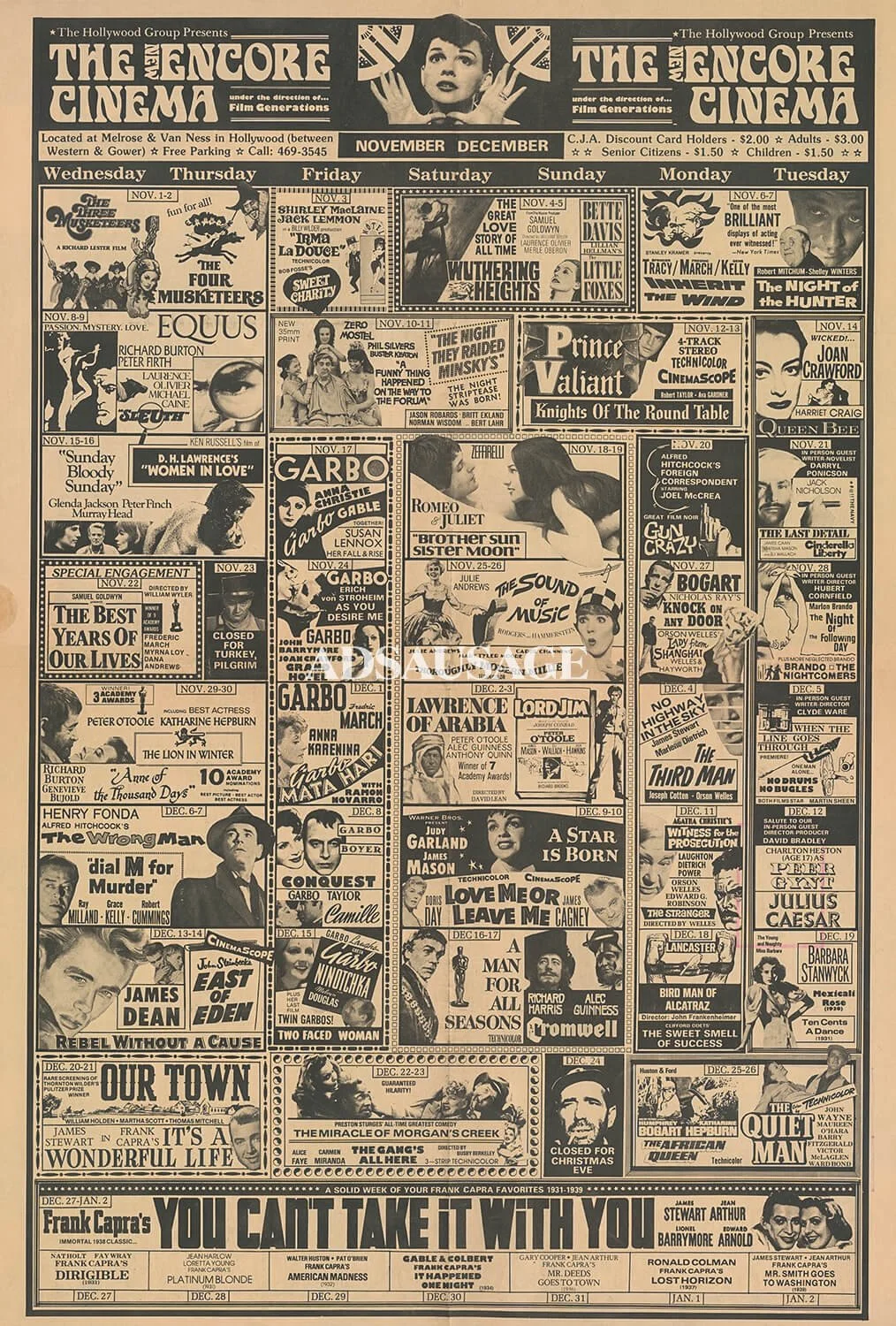
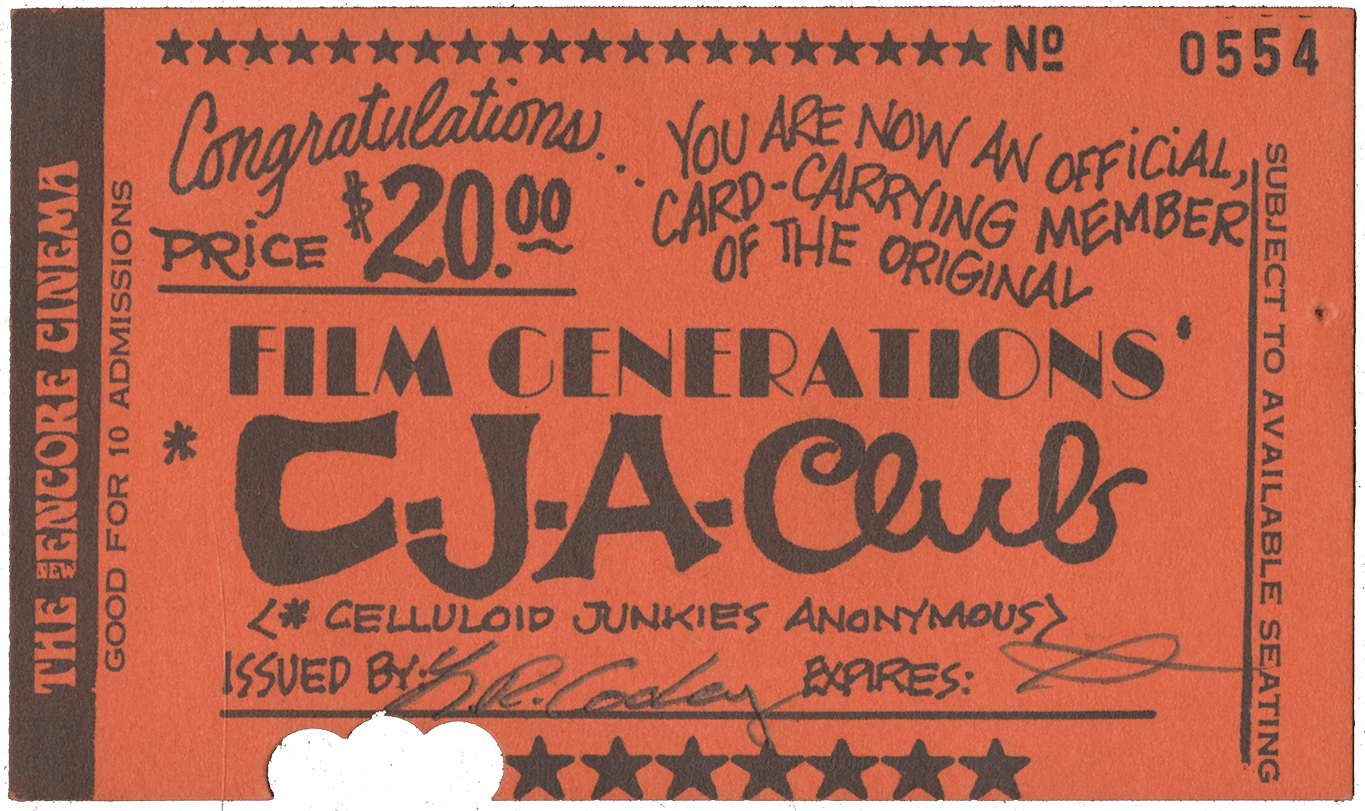
Last Reel
Around 1987, The Vagabond’s former proprietor Tom Cooper, stepped in to programme the
Los Feliz Theater on Vermont Avenue. After acquiring the lease from Laemmle Theatres, Cooper soon faced difficulties, telling the Los Angeles Times, the theatre “was too big for revivals…”.
In business since the late 1940s, the neighborhood theatre faced bigger issues, namely an excessive rent increase from new owners, Denley Investment Company. The privately held real estate firm, headed by Mehdi Bolour, had hopes of turning the Los Feliz Theater into either a performing arts center or retail space.
But despite the 11th-hour reprieve by Cooper, including an unsuccessful bid to purchase the theater (managed by Eric Case), the lack of demand for noir meant a switch from arthouse to first-run features.
Make Coffee, Not War
Interestingly, the beloved Los Feliz Theatre had a last gasp in 1988, when its lease was acquired by Fred Hicks, thanks to Cooper handing over the lease. To the delight of locals, the ambiguous new owner pledged to continue the artsy, foreign programming. During this time however, the genial businessman was busy enjoying a legal victory over two cafe owners, John Leech and Fumiko Robinson.
The owners of the cherished Onyx Cafe in Silverlake were embroiled in a nasty rent dispute with Hicks, who happened to own the adjacent Vista Theatre.
His four-year-old company, Plaza Entertainment, had purchased a long-term lease in 1985 from the Landmark Theater chain (then overseeing the Nuart and The Rialto). The company sold the lease, citing the incursion of cable TV and home video, as well as evolving tastes.
Fred Hicks boldly hoped to expand the 1923 Vista with two additional screens and a new ticket booth (and a promise to preserve the architecture).
Despite a hard-fought battle supported by local council members, coupled with a grass-roots rallying cry, it was last call for the Onyx Cafe. After being given 60 days to vacate, Leech and Robinson lost their lengthy eviction fight with Hicks. The lawsuit included their upstairs, rent-controlled apartment.
Fred Hicks was awarded an estimated $20,000 and attorney fees. The Vista remained untouched, and Fred Hicks vanished.
Nearing the End
Undeterred by the fallout at the Los Feliz, Tom Cooper returned to The Vagabond in September 1991 — fresh from a stint programming the Academy Theater in Pasadena.
The Vagabond’s inaugural attraction: a Frank Capra retrospective. The return was short-lived.
A year later, taking advantage of the suddenly available lease, the Vagabond had new owners: Eric Nelson, a screenwriter from Glendale, and Ron Lockyer, "a bohemian in a blue suit." The duo took the venerable theater in a different direction: independent features. The rejuvenated programming included a Monte Hellman retrospective, Laws of Gravity, Dandy,
The Great Rock 'n' Roll Swindle, and Gift, directed by musician and boxer, Perry Farrell.
With substantial investment, the Vagabond benefited from several improvements, including a new marble floor in the lobby, new curtains, a revamped concession stand, and fresh artwork.
But despite the edgier programming, including a worthy Russ Meyer Festival in April 1992, their tenure was brief. A year later, the Vagabond went tits up.
Pretty Much The End
The Westlake Park cinema re-emerged around 2005 as the Hayworth Theatre Center — a four-space venue. By 2014, the Spanish colonial-style building was purchased by TV writer Jenji Kohan (“Orange Is the New Black”) for approximately $4M.
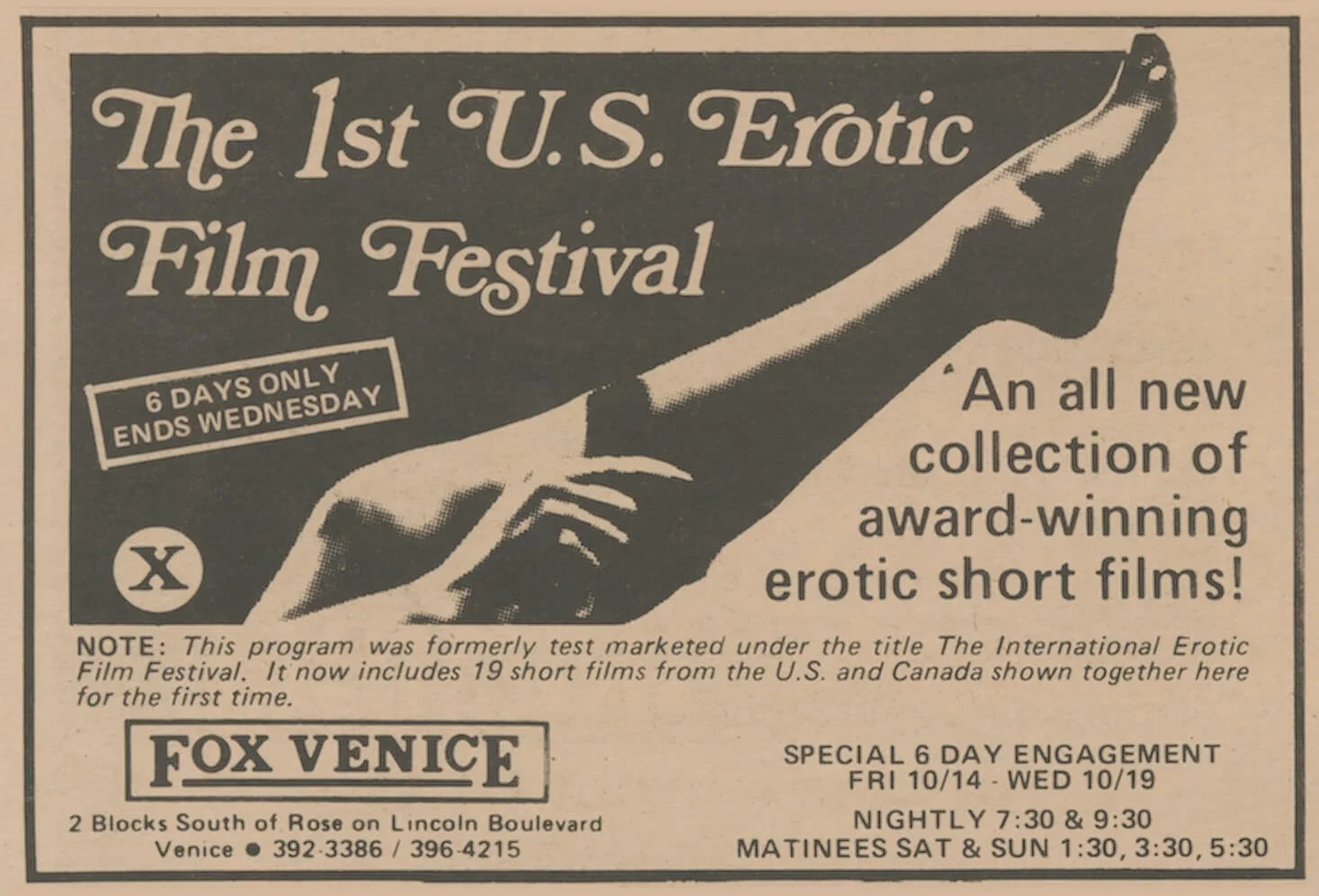
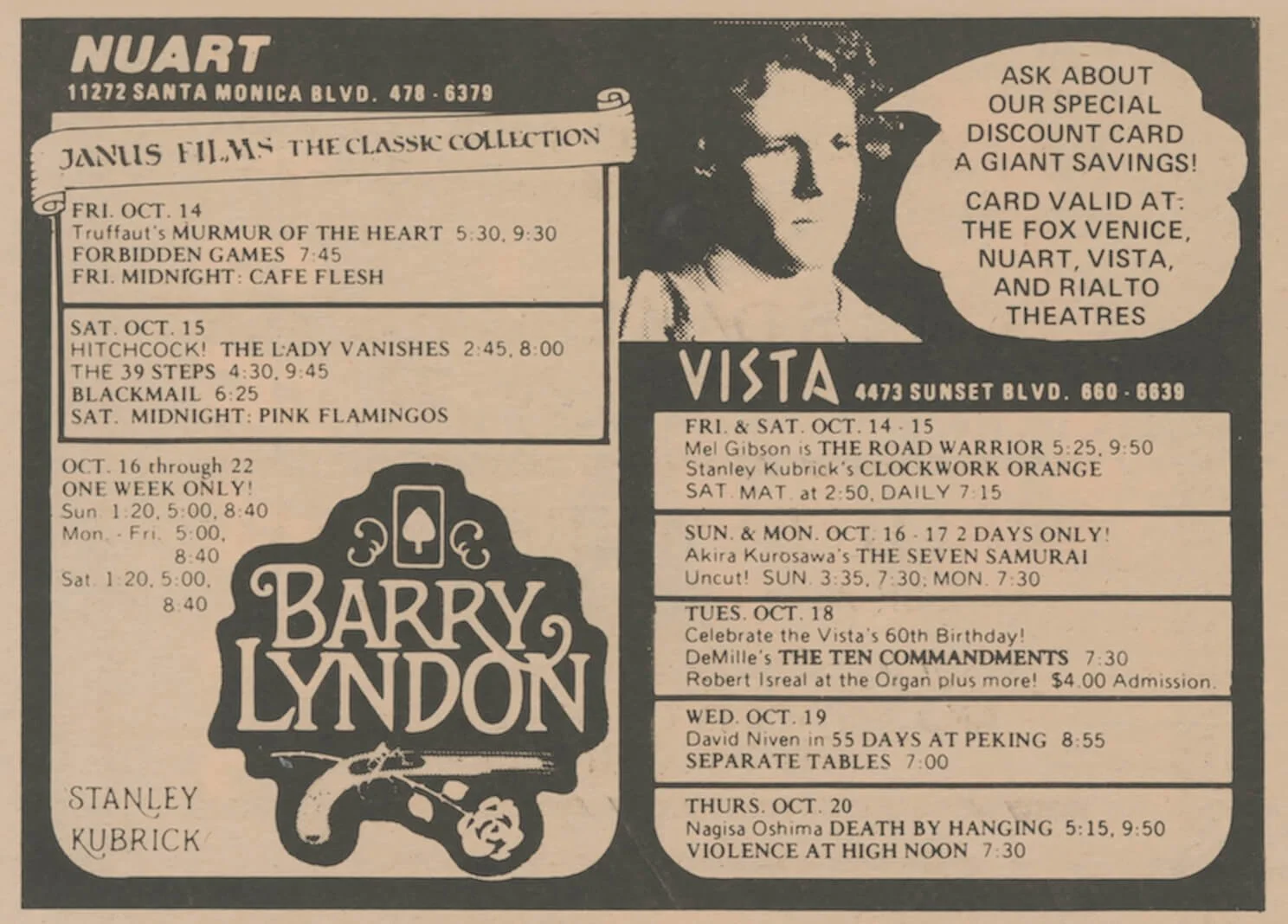
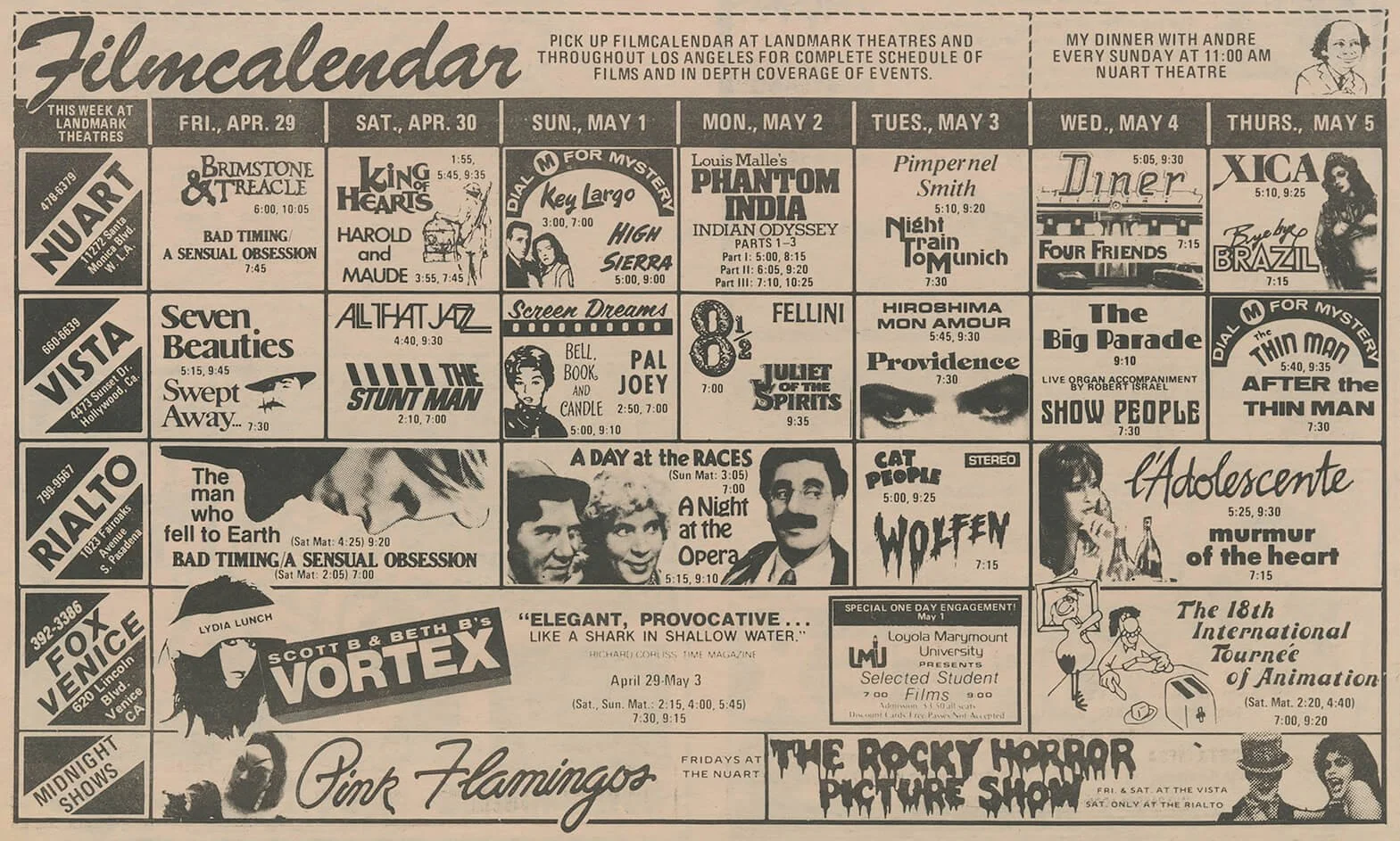
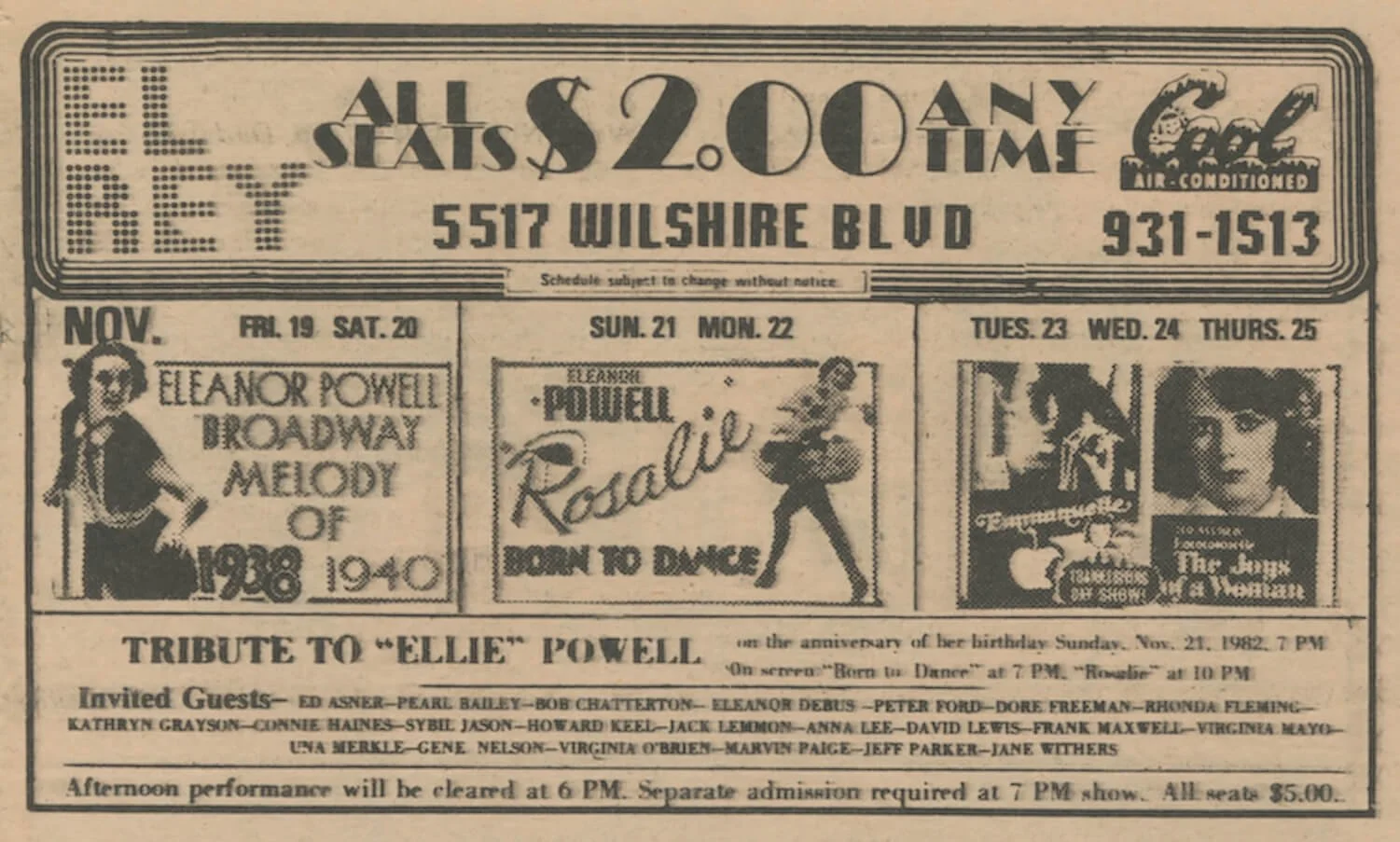
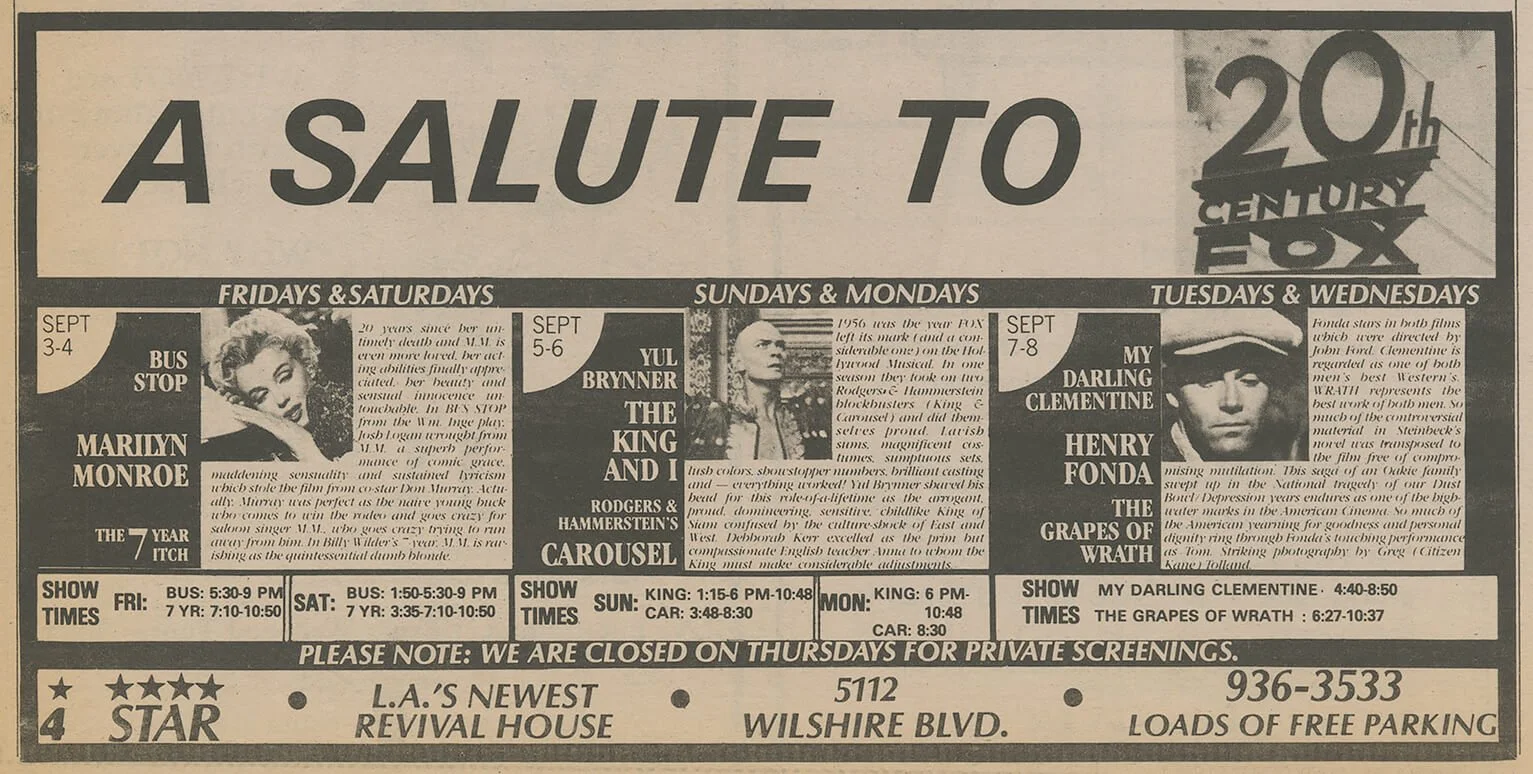
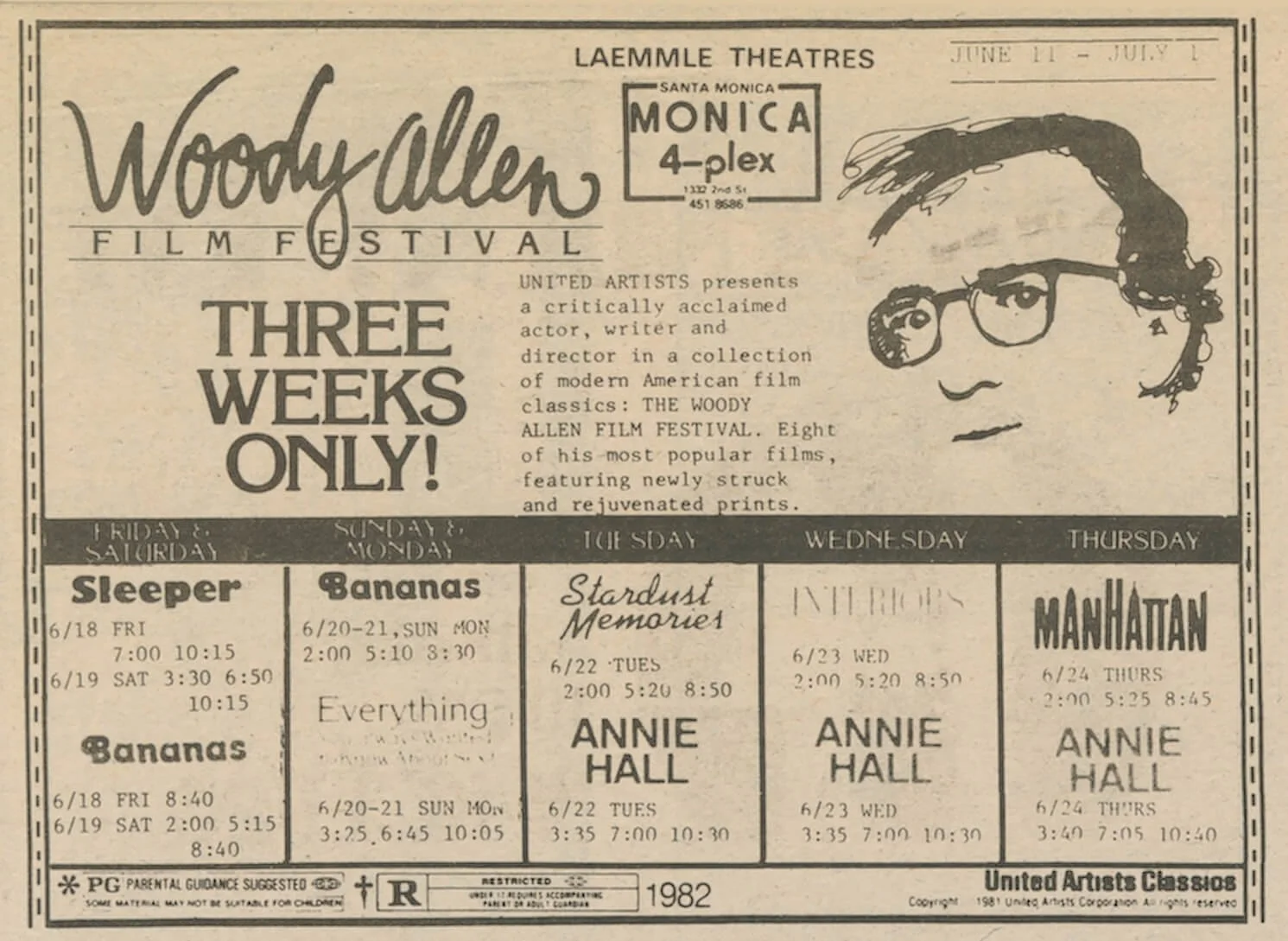
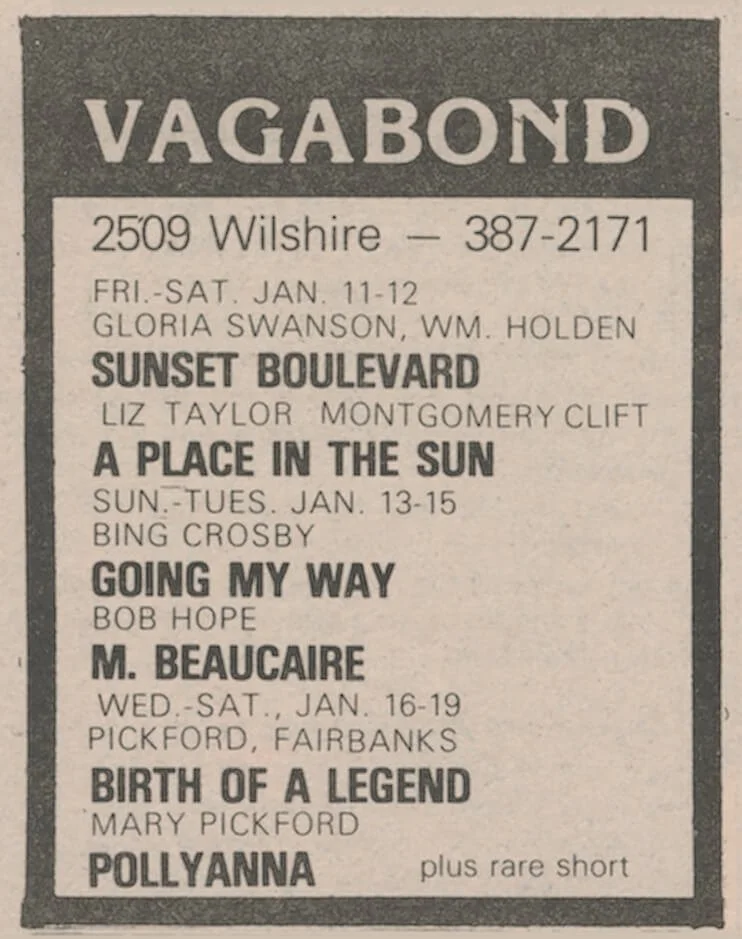
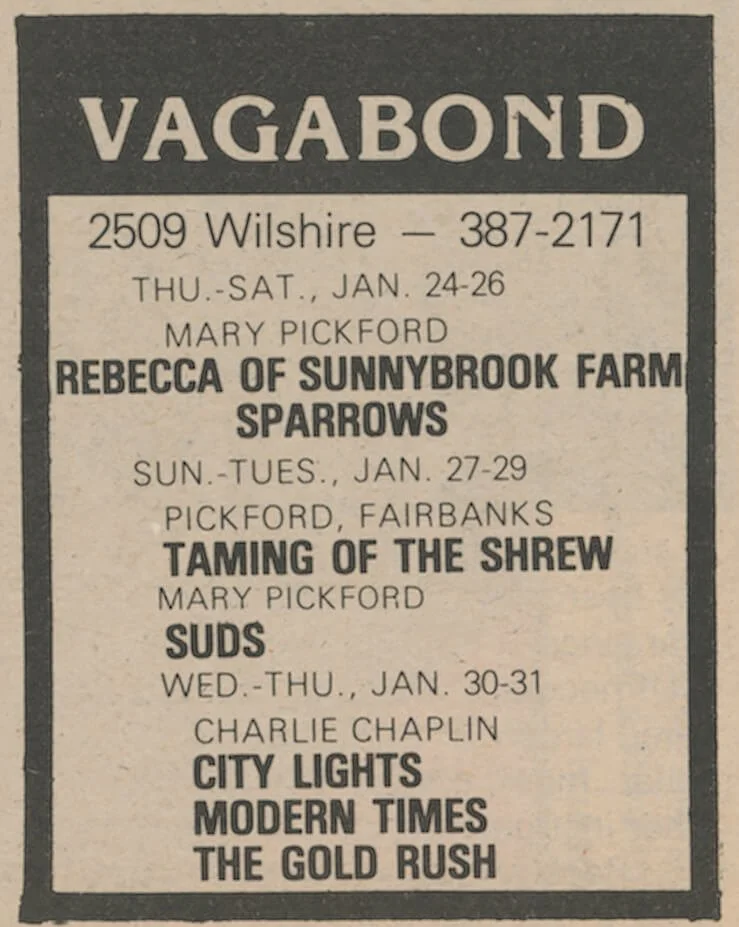
Rare selection of original LA Weekly ads from 1980-1983.