Aquarius to Hollywood
A decade before Oakland-born Gary Charles Essert helped spearhead the Los Angeles Film Exposition (Filmex), the Santa Monica college student — already interested in sound design, became involved in making trailers at UCLA’s Motion Picture Division, and began programming student films at UCLA’s Theatre Arts Department around 1964. Two years later, Essert was busy discussing cinema production at University of California, Santa Barbara (UCSB), alongside Philip Chamberlain; coordinator of the arts program.
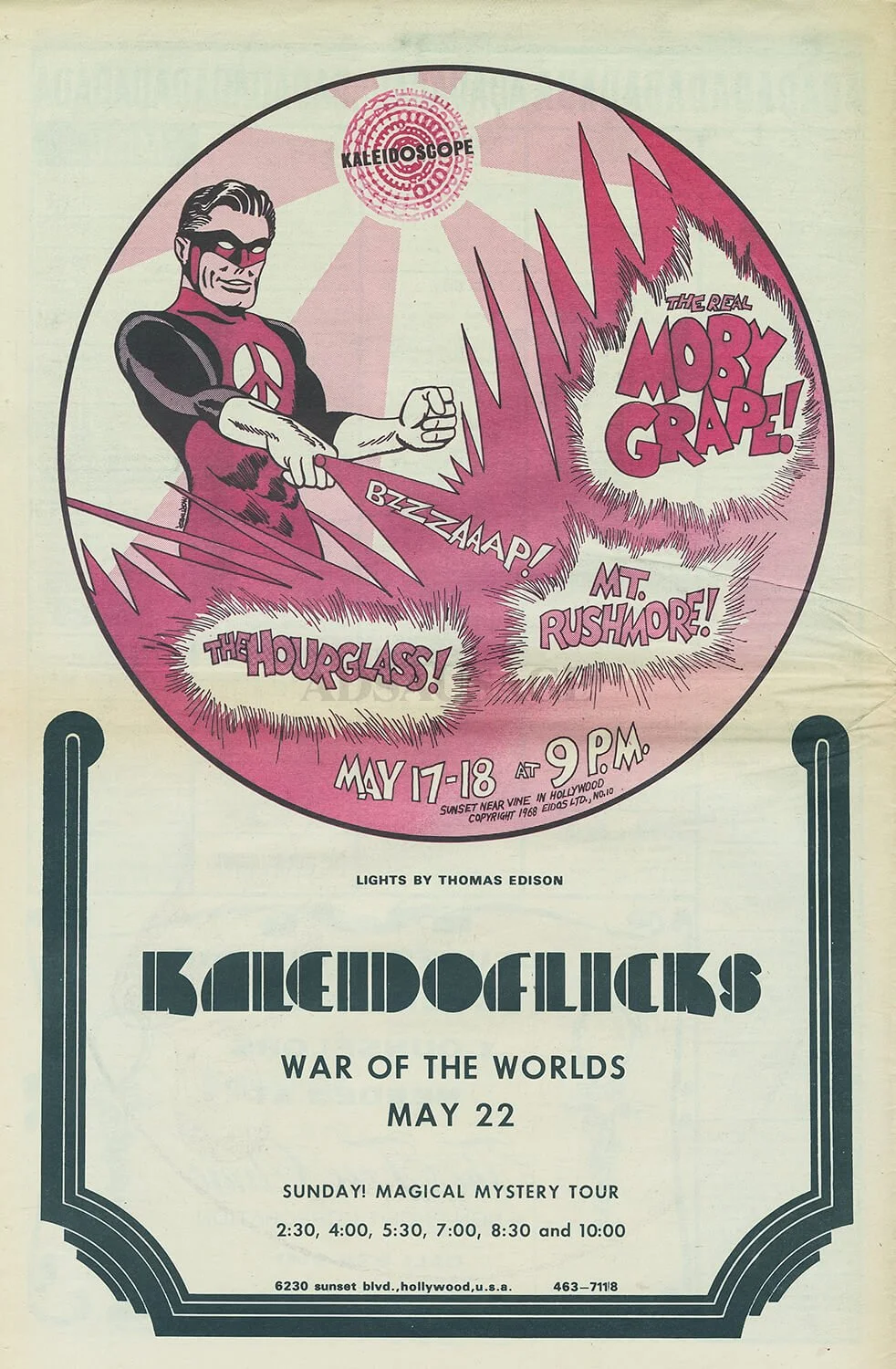
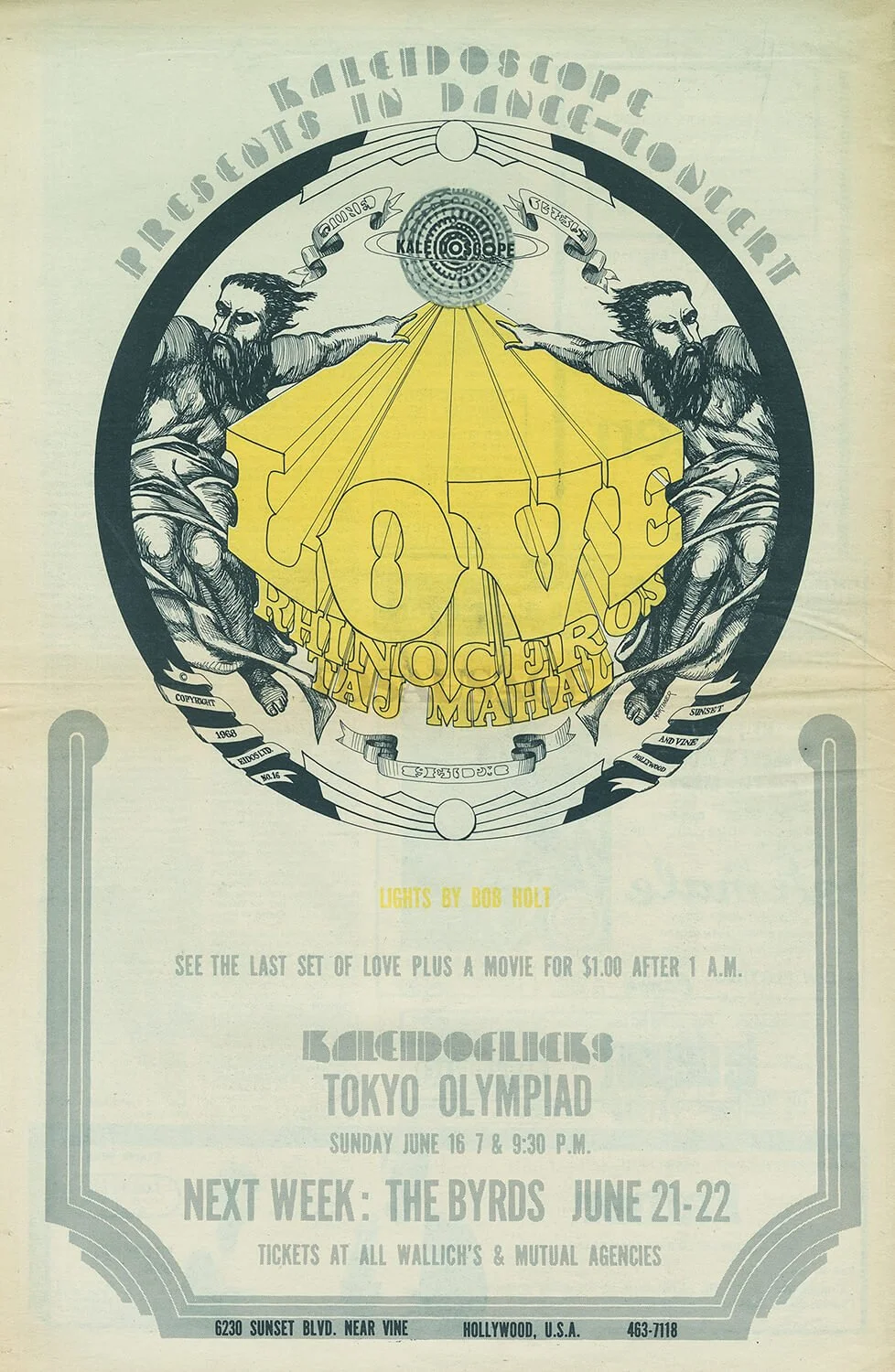
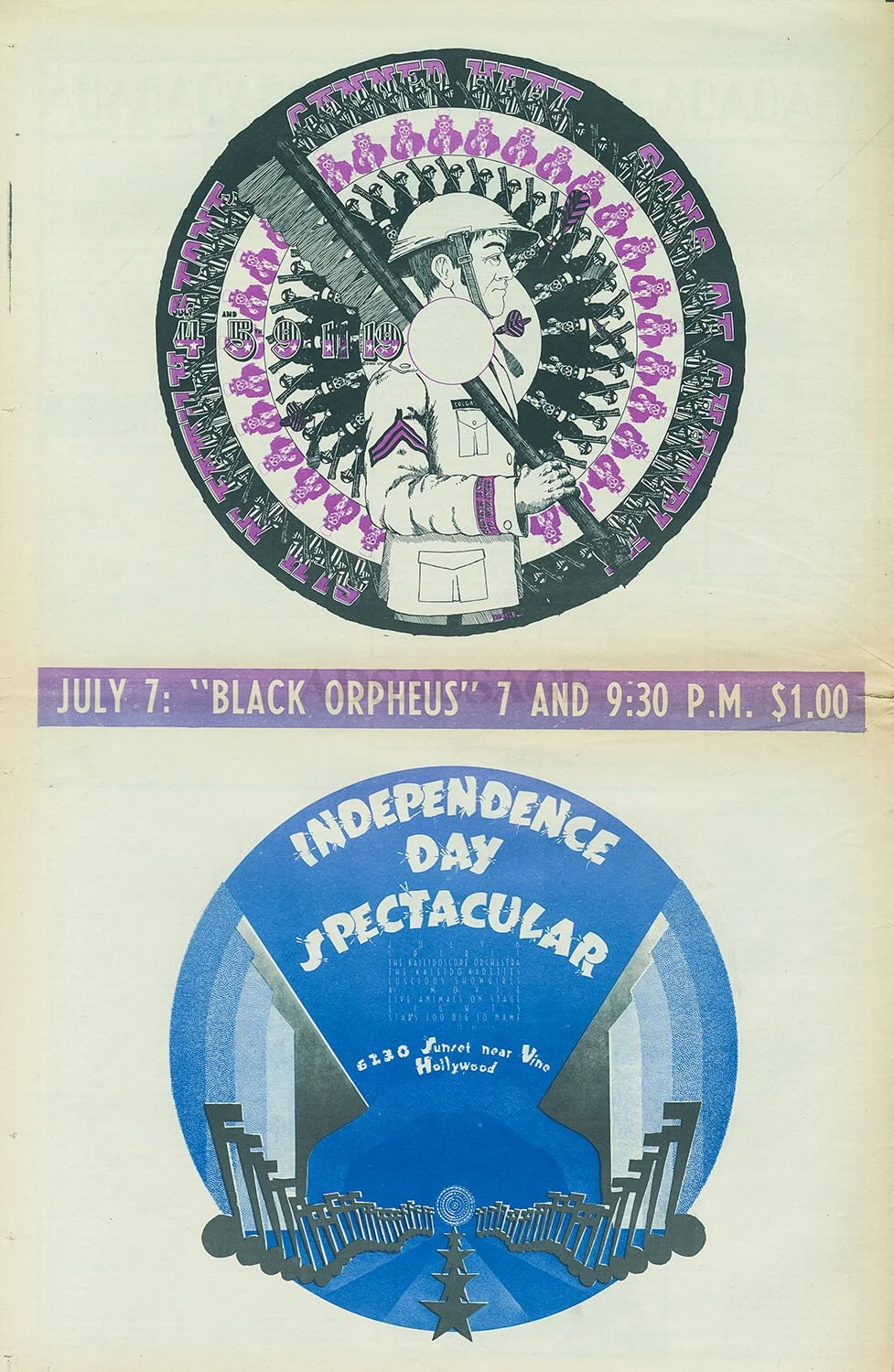
By 1967, Gary Essert’s technical passion brought about a new venture. Working with business partners John Rupert Hartmann, Walter Williams and band manager Skip Taylor (born Lawrence Taylor Statman), they created a new club, The Kaleidoscope. They believed rock music required a better showcase. The papers dubbed it “freak-out dancehall” — strobe lights, far-out films, and floor-shaking rock bands.
The initial site for this total environment was the former Steve Allen Playhouse on Vine Street in Hollywood. Under the formal name International Kaleidoscope, they applied for a cafe-dancing permit in March 1967. However, the building owner, National General Corporation, claimed its own tenants sublet the building — a violation of the lease. Essert and company were denied access.
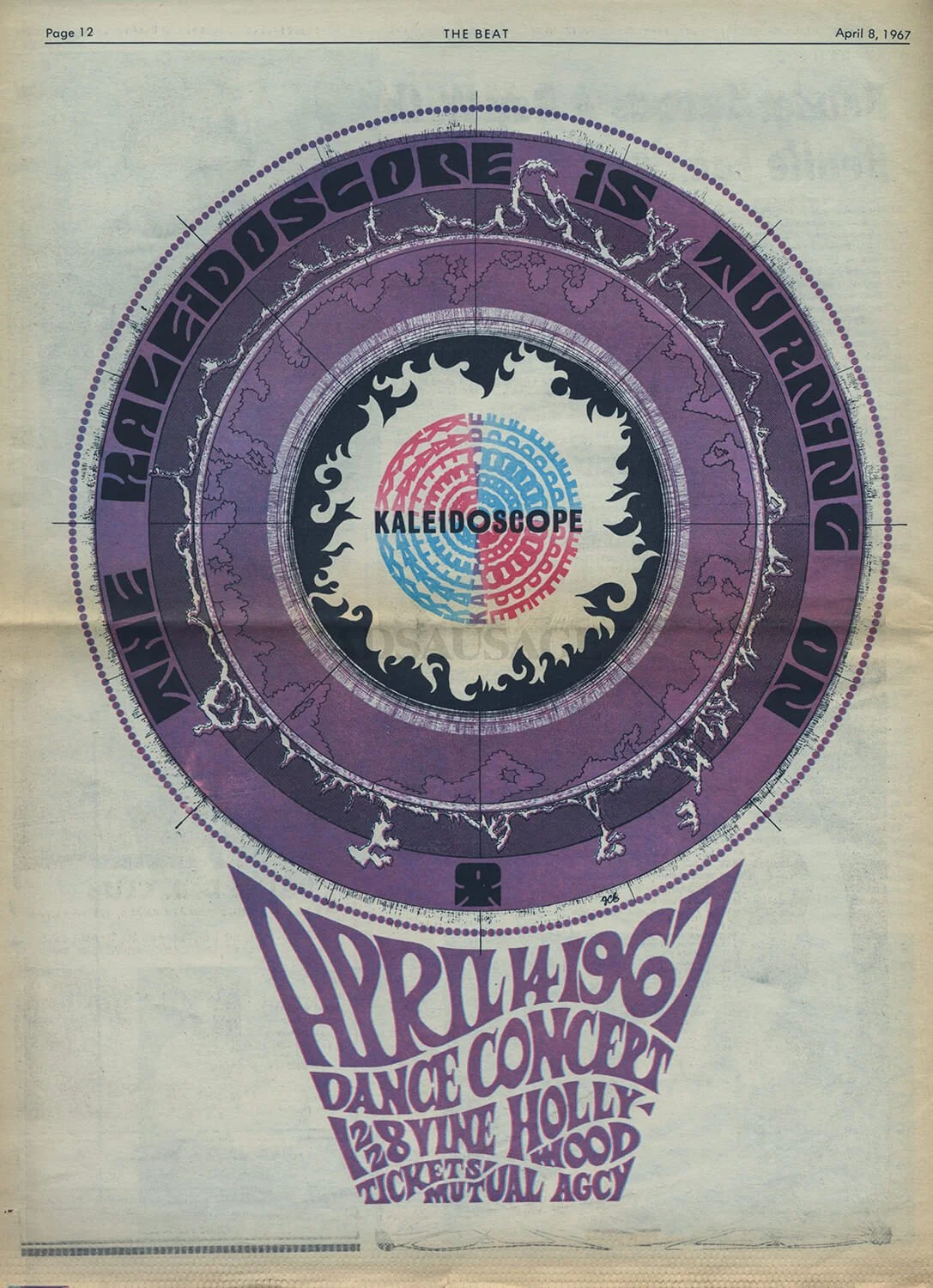
KRLA Beat, April 8, 1967Hartmann, a former agent and promoter, lamented they had already spent more than $75K on equipment and scheduled acts for the opening weekend, inducing another cost. Undeterred by the restraining order, they decamped to Ciro's on Sunset and settled down at the Embassy Room in the Ambassador Hotel. The evening's heavyosity was provided by The Grateful Dead, Jefferson Airplane, and Canned Heat. And while they intended to remain at the Ambassador, the promoters looked elsewhere.
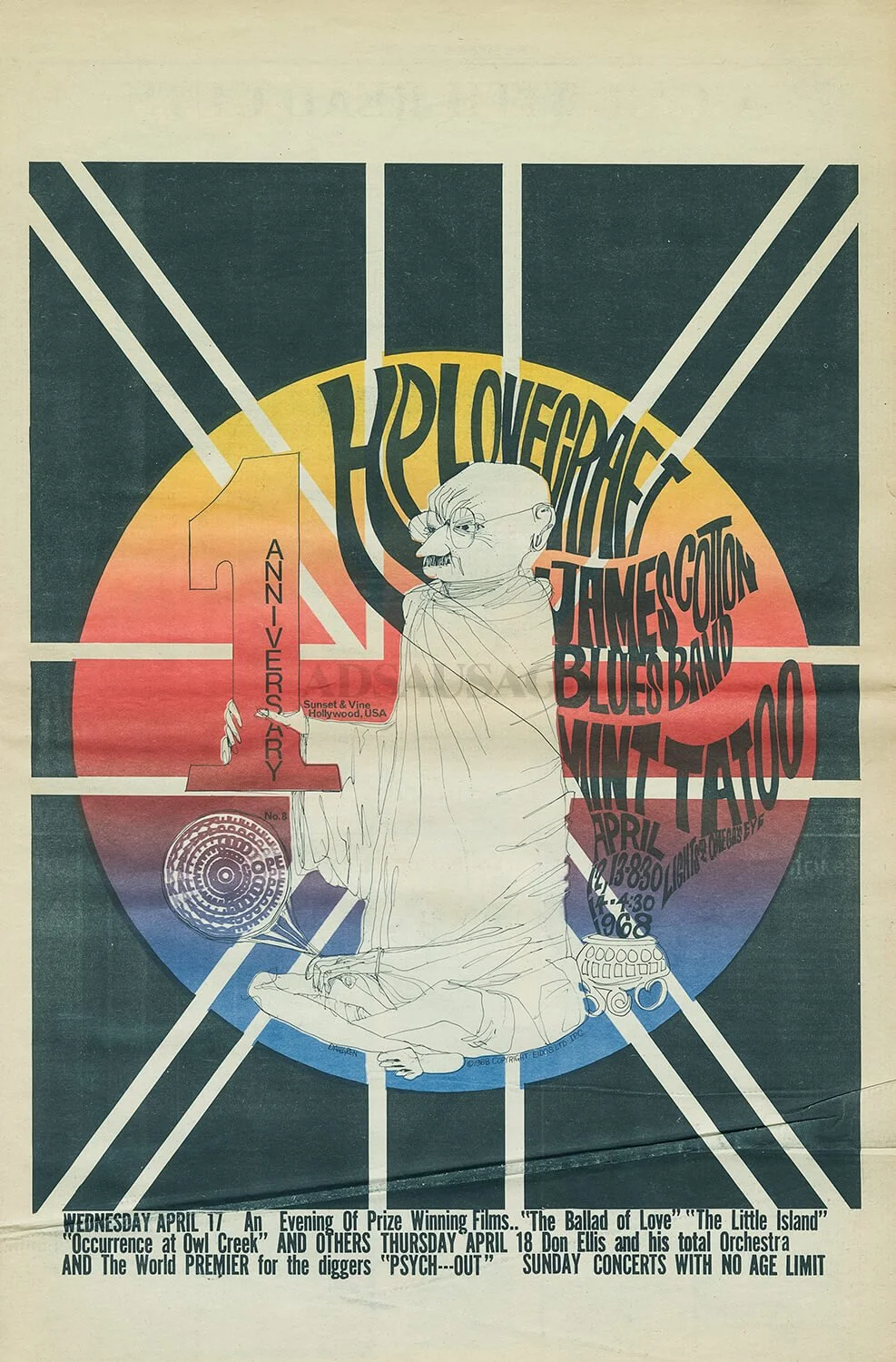
In early 1968, after creating a parent company, EIDOS Ltd., they set about remodeling the venerable Earl Carroll theater on Sunset. The once-fabulous nitespot became Frank Sennes’ Moulin Rouge in 1953, and gamely hung on for a decade. During its last gasp, the club's licence was revoked due to after-hours entertainment issues, and eventually reemerged as teen club Hullabaloo in 1965. For a while, the Sunset Blvd. spot was managed by dodgy bar owners Frank 'Tony' Albanese and George Simone.
Albanese, who previously operated a topless bar in Long Beach, disappeared in 1981. His car was found abandoned at McCarran International Airport in Las Vegas. His severed head was found a month later in San Bernardino.
Rock as Theater
With a nod to San Francisco's psychedelic ballrooms, the venue’s refurbishments included a revolving stage, new sound amplification, and a large-scale 360-degree lighting. They would offer something unprecedented for the time—all-night movie marathons ("orgies") and live rock music. And since The Kaleidoscope was non-alcoholic, hungry patrons had to contend with soft drinks, ice cream, and hot dogs.
Finally, in March 1968, The Kaleidoscope officially bowed at the Moulin Rouge, with lighting from Omega's Eye, and sounds from Jefferson Airplane, Canned Heat, and Texas-based Fever Tree. Opening night festivities included appearances by Mama Cass Elliot, Chet Helms, and a live elephant — billed as the Airplane's "Horn Section".
With the purple glo paint still drying, Nat Freedland for the Los Angeles Free Press reviewed the festivities, commenting “the Big K is what L.A needs, all right, a vitality center with genuine unhyped charisma for the hip community”. Freedland continued “there were no real seats in the room, just a carpeted floor down front and a big dance floor behind.” Security was provided by bouncers “… garbed in karate drag with a K-scope monogram.”
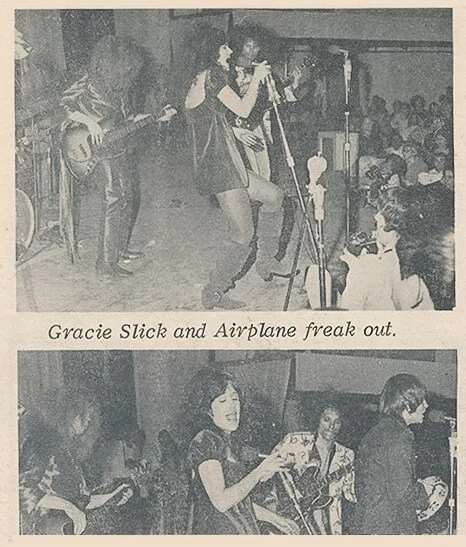
Despite the Hong Kong Phooey-esque muscle for the pimple-and-pills set, Freedland remained upbeat, concluding “the Kaleidoscope comes closer to the Avalon-Fillmore S.F. Hip Tribal Hall environment than anything yet attempted in L.A.”
The following month, the Kaleidoscope hosted a benefit for the local radio station, KPPC. The musical roster was impressive; Buffalo Springfield, Jefferson Airplane, H.P. Lovecraft, Steppenwolf, Sweetwater, the Peanut Butter Conspiracy, and Tiny Tim.
The Los Angeles Times called the event (which ran from 5 PM until 2 AM), a mini pop festival… "the best rock event ever held in Los Angeles."
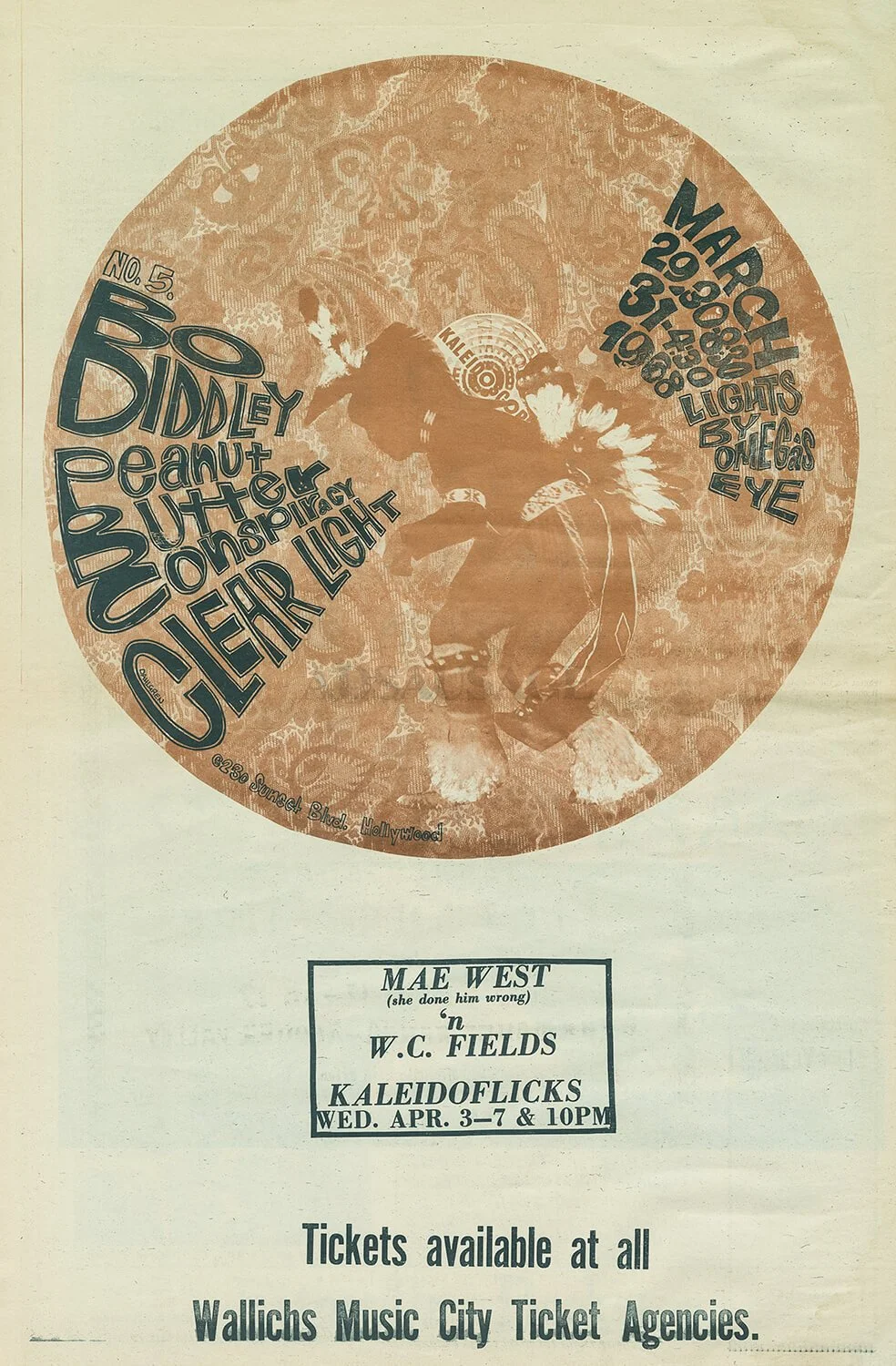
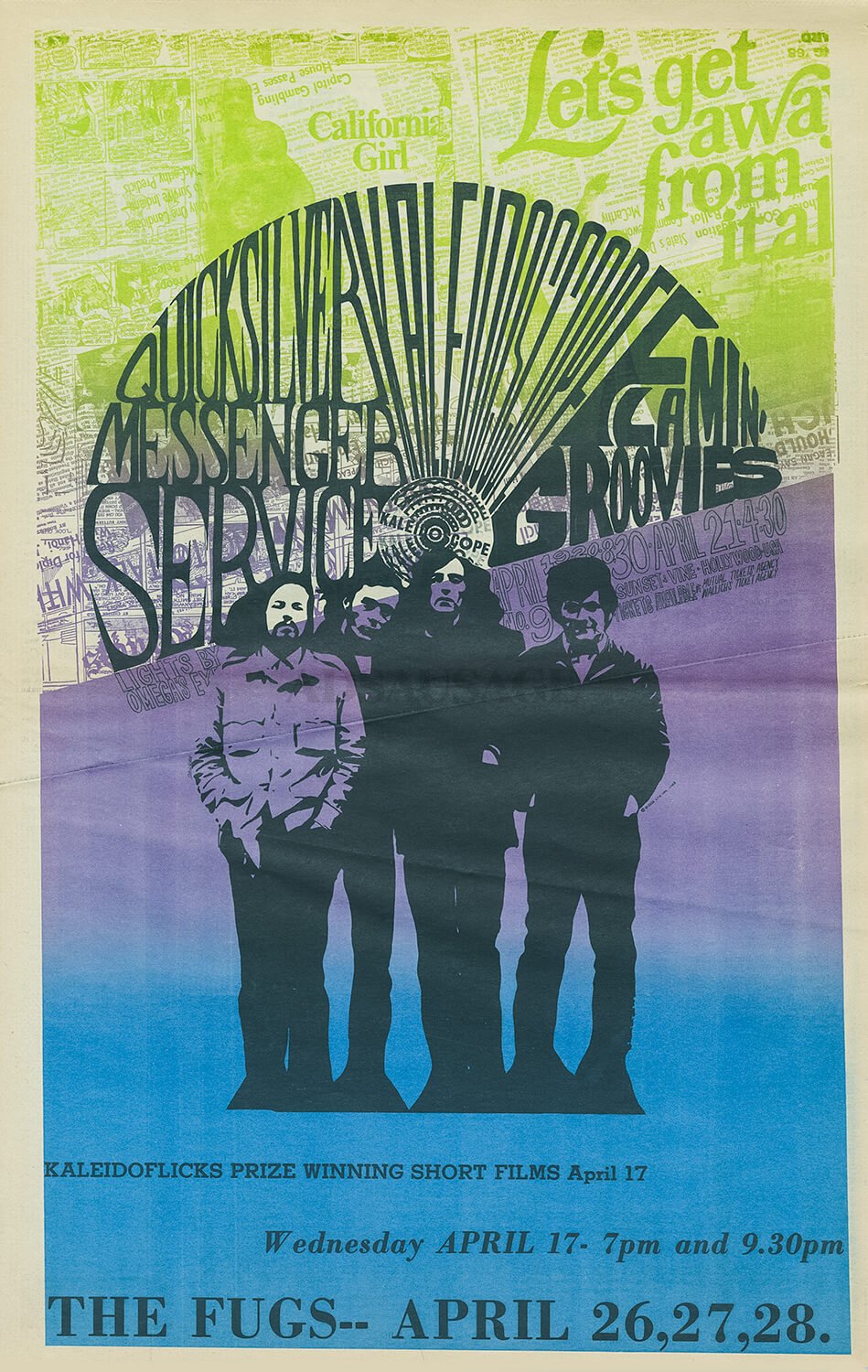
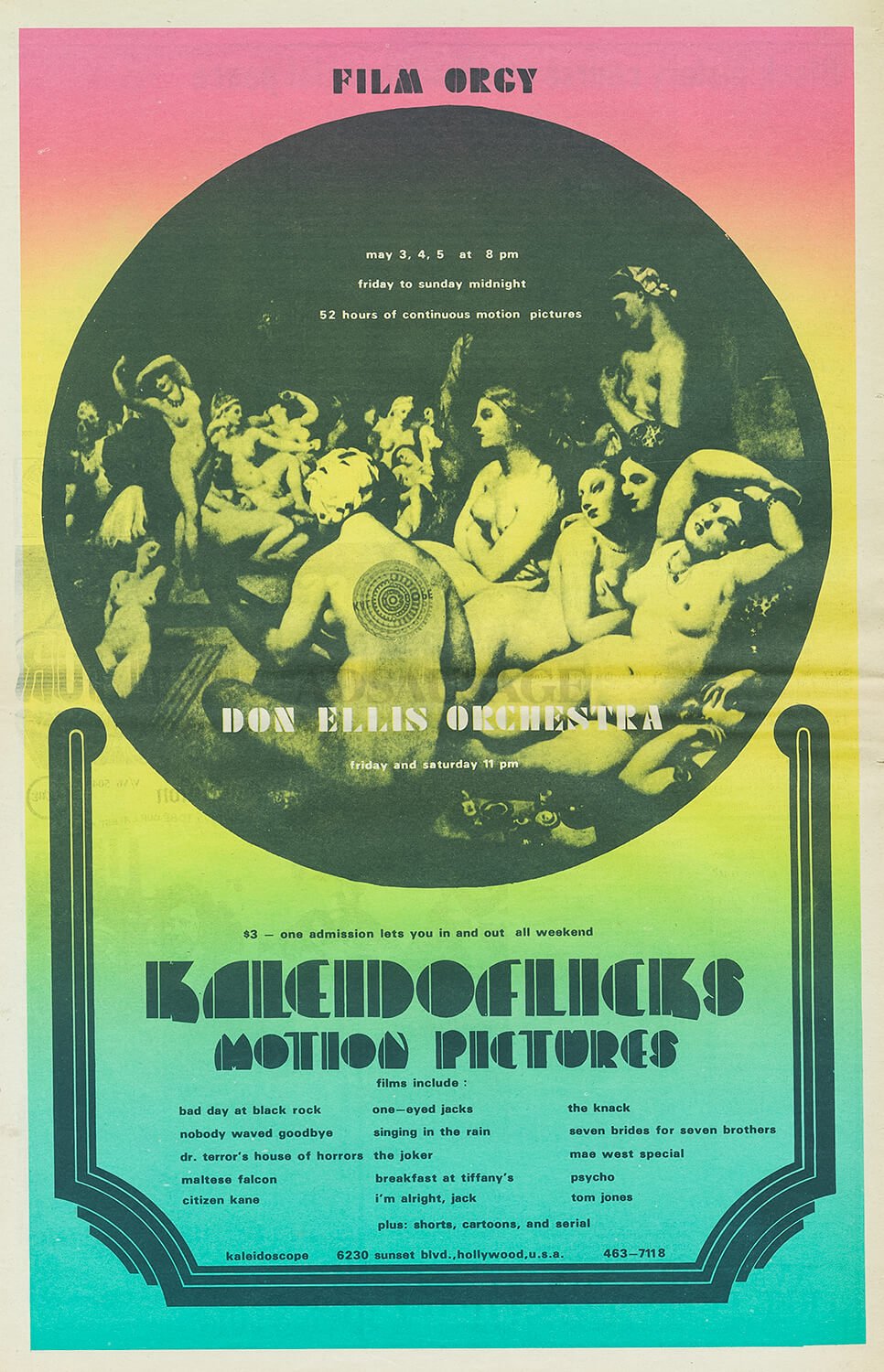
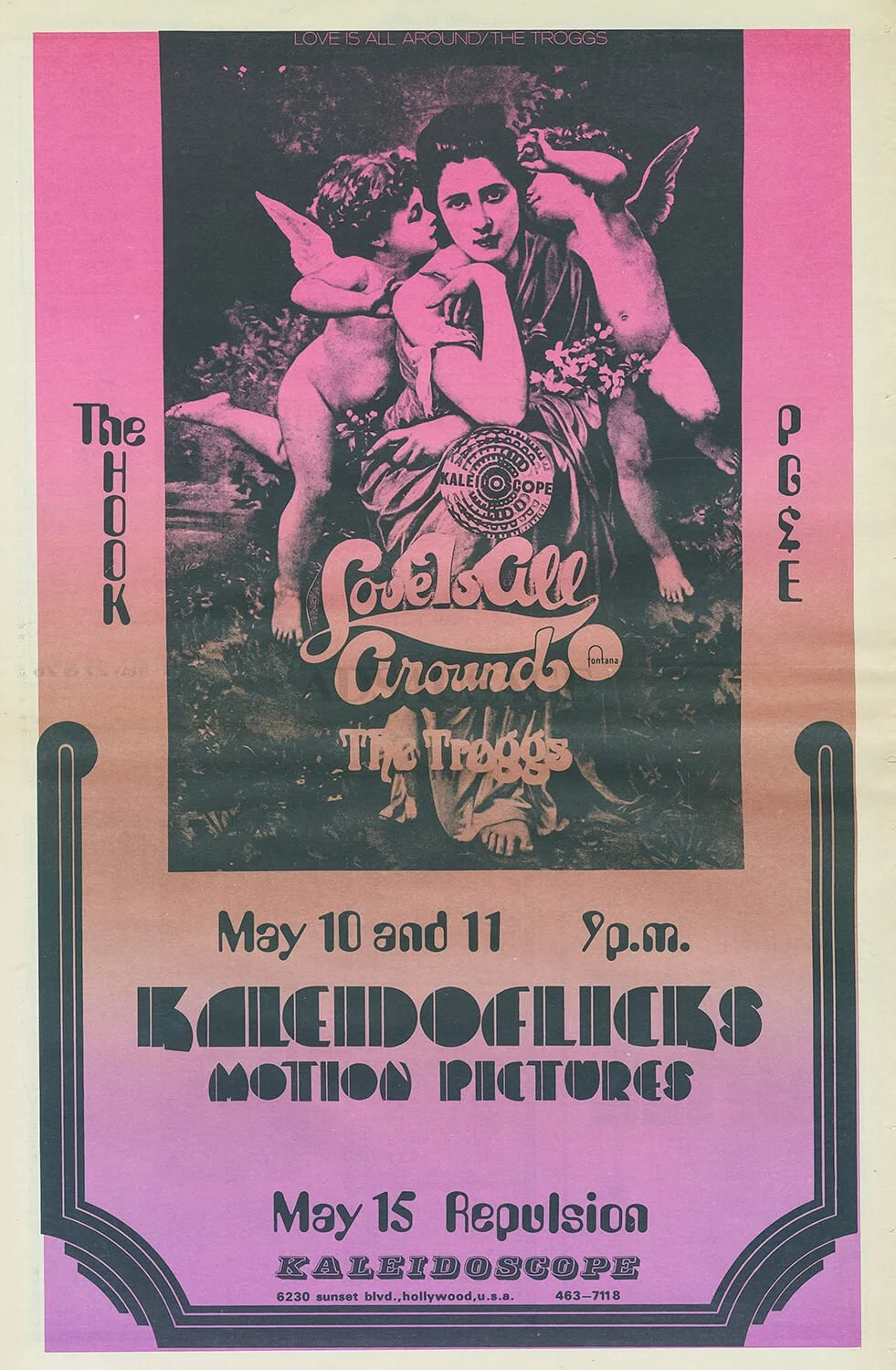

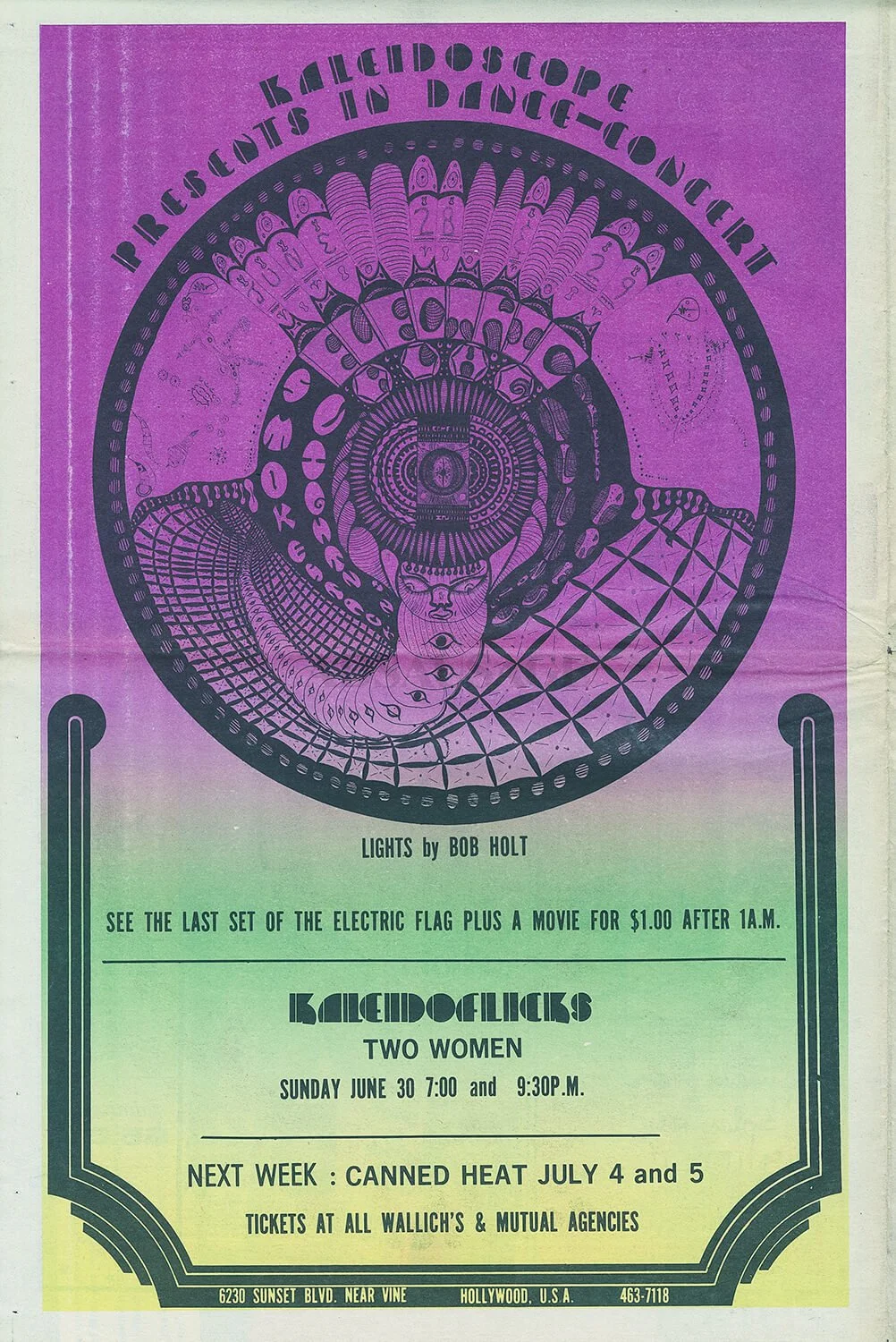
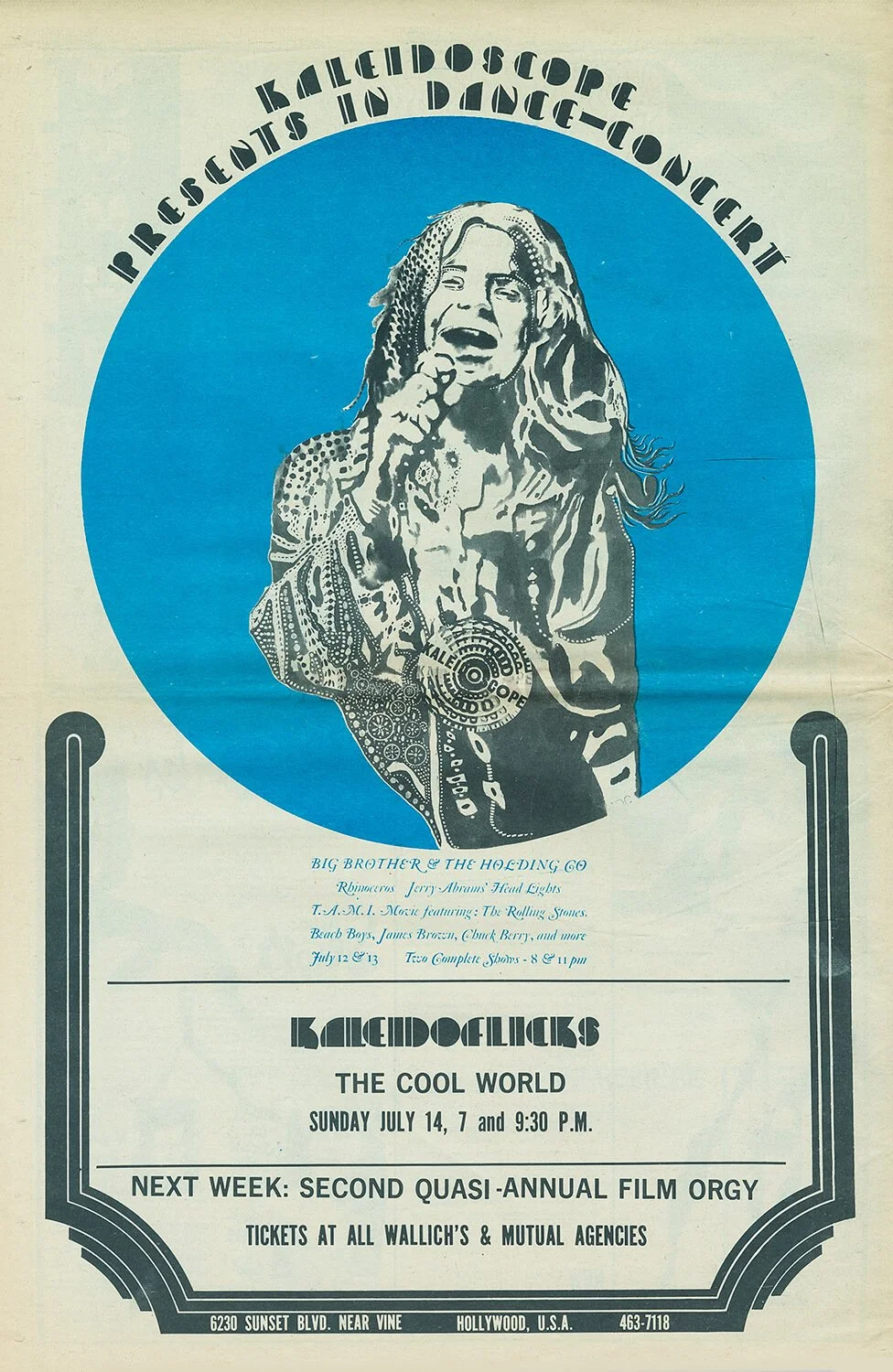
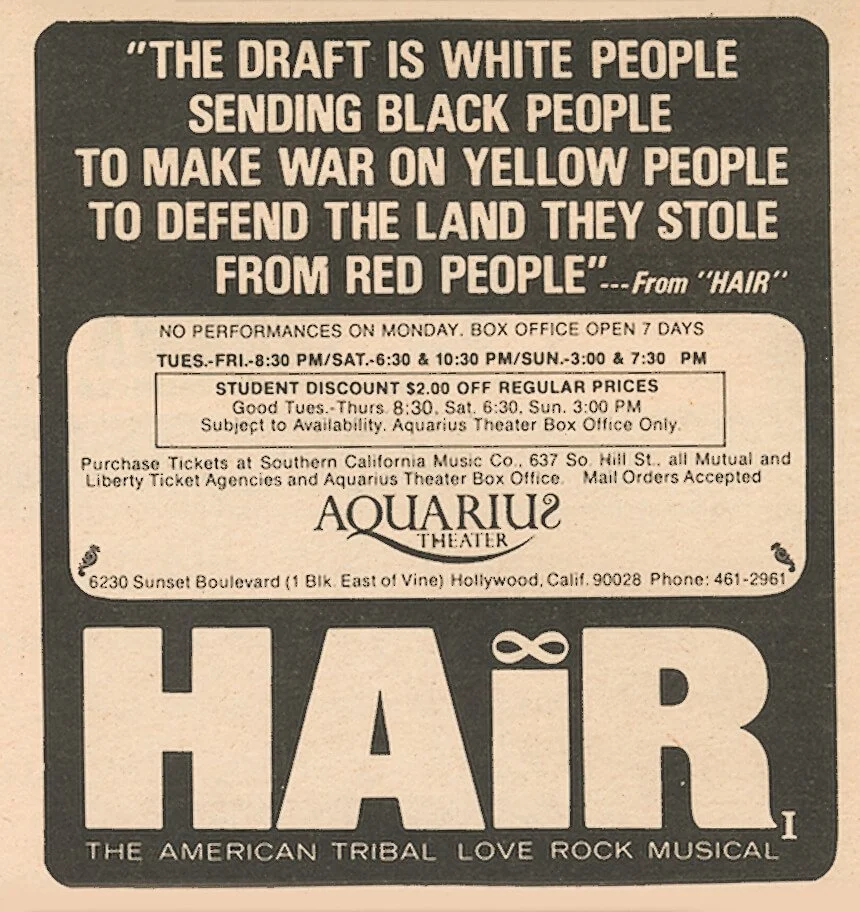
Within ten months, the tulips had wilted, and the Kaleidoscope was over. One possible reason was the failure to payback the startup money, in this case, to people that used too many onions in the sauce.
After a renovation, the venue became The Aquarius Theatre, where the tribal love rock musical Hair debuted in December 1968.
But Essert guided the planets, becoming technical coordinator for the AFI (American Film Institute) in 1969.
A Tradition Since 1971
Under the steam of director George Cukor, traveling on behalf of the Motion Picture Academy, Hollywood was about to get its first international film festival. The 72-year-old Cukor researched how countries submitted their entries for the foreign-language film award. This trip around the world gave Cukor valuable insight into film festivals.
In mid-1971, having worked on a 50th Anniversary fundraiser for the Motion Picture and Television Relief Fund, Cukor, along with film curator Philip Chamberlain, critic Arthur Knight, Gary Abrahams, and Gary Essert, collaborated to organize the town's first International Film Exposition.
In addition to the financial support of founding patron, actress Rosalind Russell, FILMEX was funded by private donors and grants, and was sponsored by several groups including; the Academy of Motion Picture Arts and Sciences, the AFI, the County Museum of Art, the Harold Lloyd Foundation, and film schools at UCLA, USC, and CalArts.
We want to have a place to show representative new films along with the best of the old films… We want to focus attention on Los Angeles, which is still the center of the American film industry.Gary Essert, September 1971
With almost 400 entries, the task of selecting the thirty or so films fell to the selection committee, which included George Cukor, Philip Chamberlin, Arthur Knight, Essert, his assistant, and Gary Abrahams. One notable entry that didn't make the cut was Stanley Kubrick's A Clockwork Orange, which, despite being tied up in the editing process, had a benefit show sponsored by Filmex in December.
Major motion picture studios contributed, with help from Warner Bros., MGM, Columbia, and Paramount, though Universal remained absent.
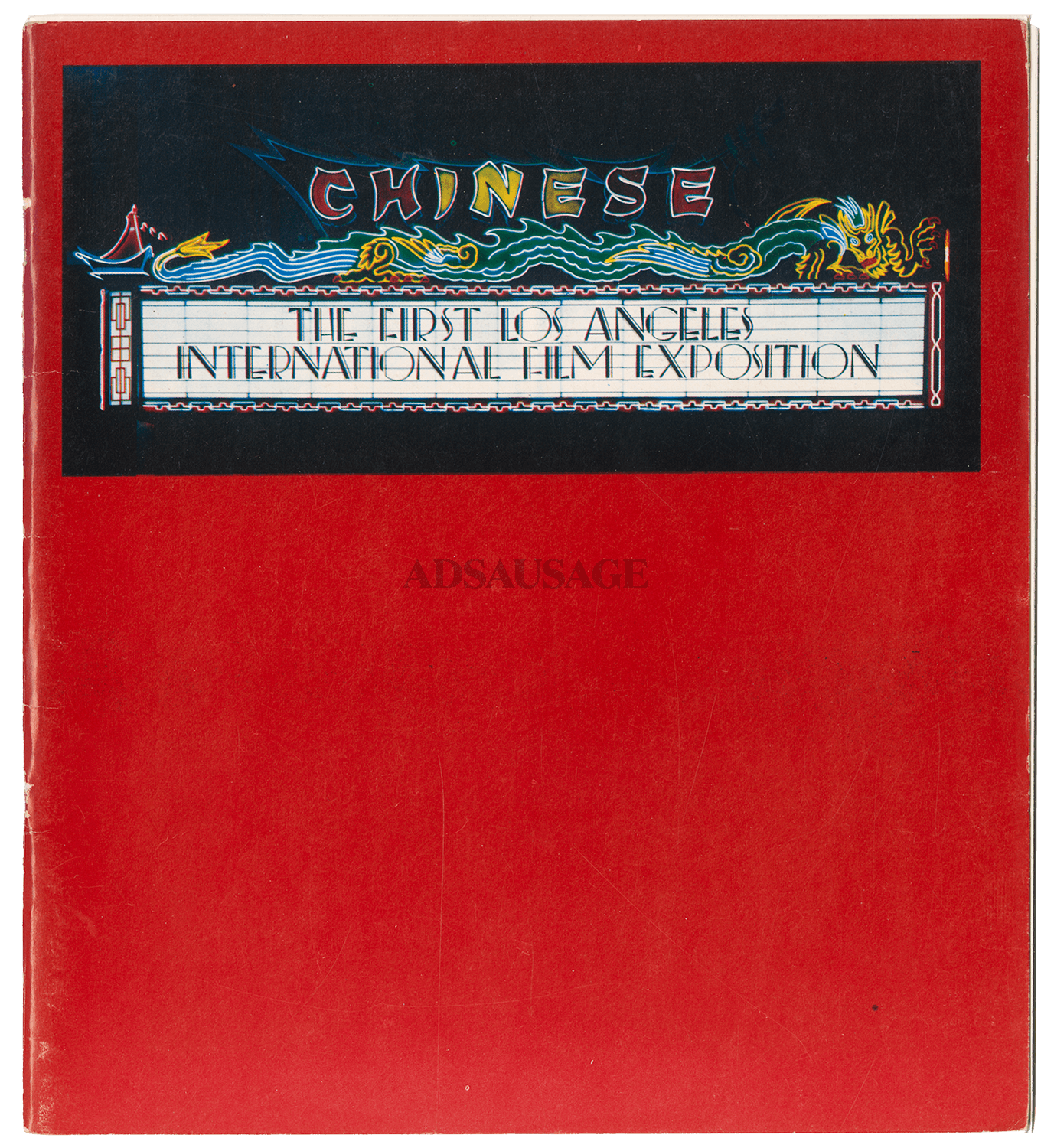
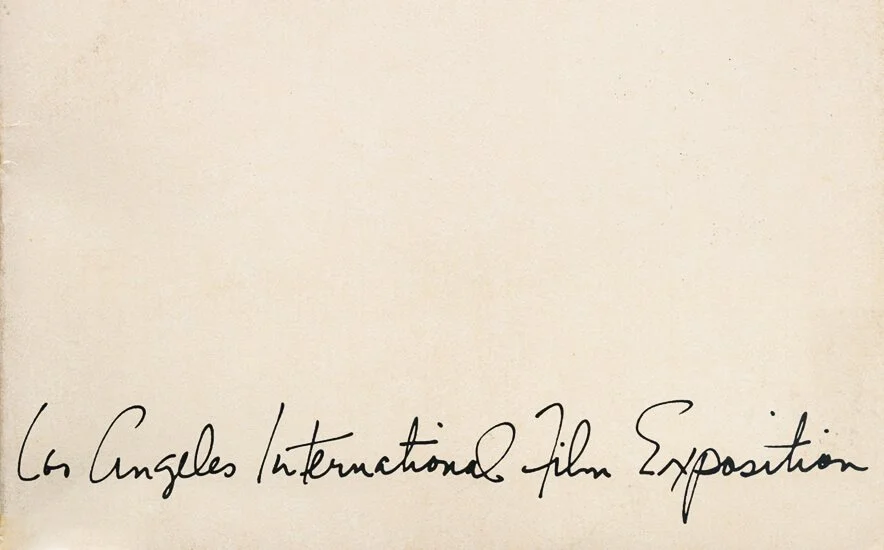
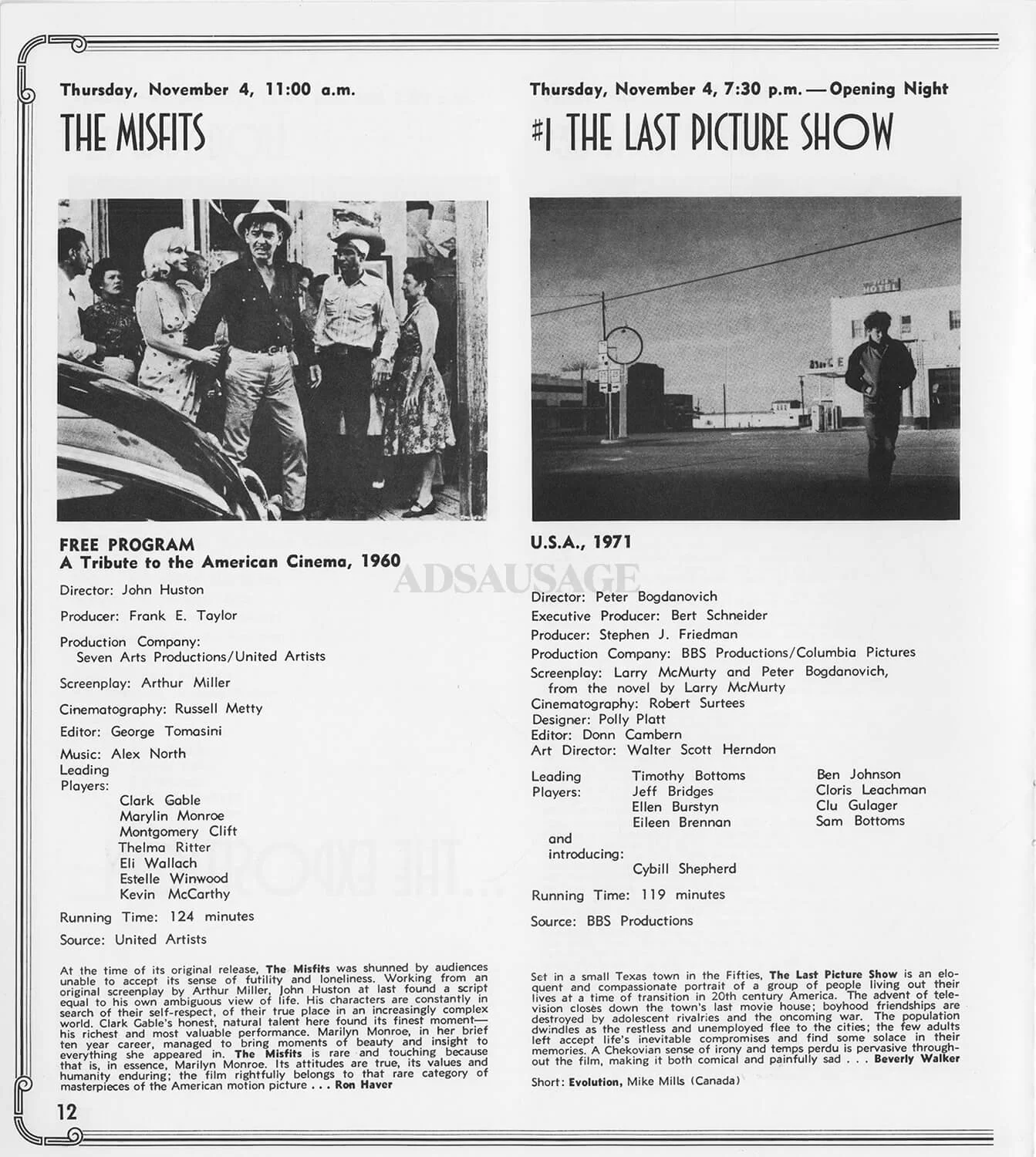
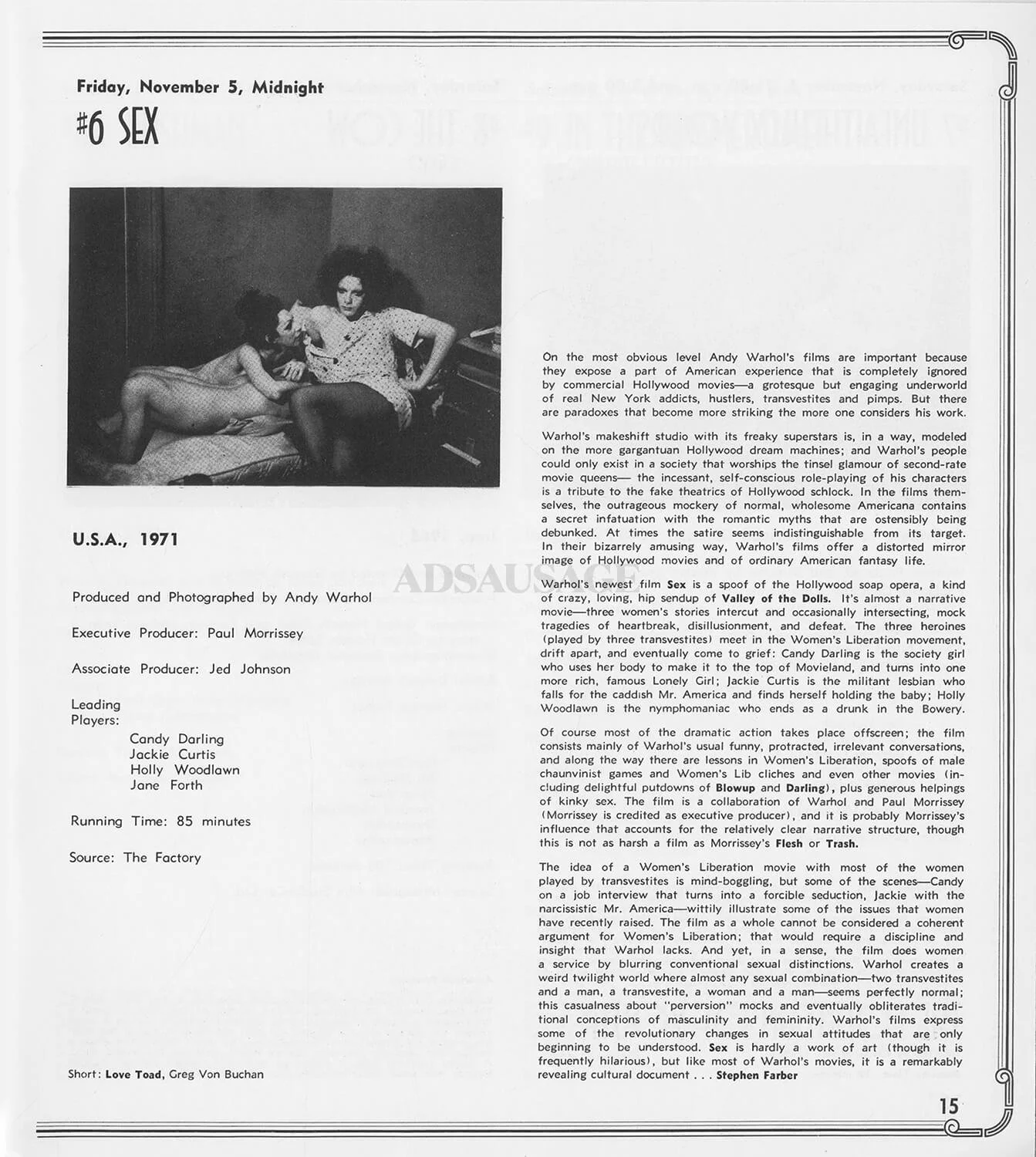
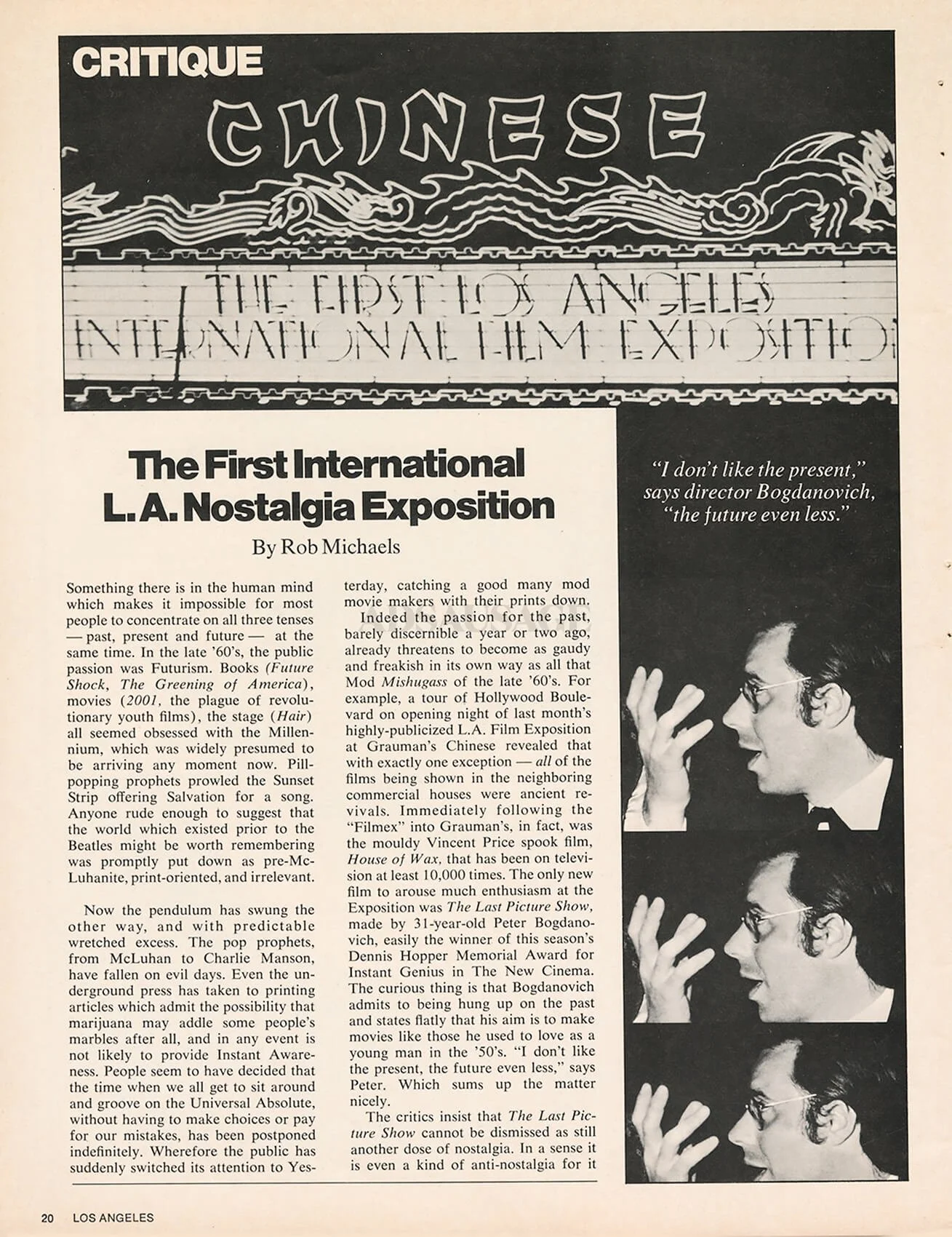
Available to view / Los Angeles Film Exposition program, 1971Bowing in November, the non-competitive Filmex '71 presented its inaugural series at Grauman's Chinese Theatre and the Bing Theatre. Kicking off with the West Coast premiere of "The Last Picture Show", the 10-day event attracted an estimated 30,000 people. The opening night for the town's first official film festival attracted "students, starlets and hippies… while guests made their way past a tightrope walker, a fire-eater, and a baby elephant."
With a budget of around $150,000, the festival would recoup that amount from ticket sales, which ranged from $1 to $3.50. However, opening night and the festival series soared to $75.
Two Thumbs Up
"A valiant and worthy try, no doubt. But one cannot help feeling the effort is doomed towards inconsequence."
Los Angeles Free Press, 11/12/1971.
Valiant or not, FILMEX was considered a success. According to the local press, sellout programs included Pasolini's "The Decameron", Chaplin's "Modern Times", the Alfred Hitchcock marathon, and a midnight showing of Andy Warhol's "Sex" ("Women"). Newspapers noted that while the celebrity contingent was low, Katherine Hepburn and Jack Nicholson were festival regulars.
With continued support, the festival surged ahead. In October 1972, looking to broaden its support base, the Board of Trustees formed the Filmex Society. Membership fees were tax-deductible.
The sophomore year (which doubled in attendance) screened Robert Altman's thriller Images and Brian De Palma's Sisters and brought together industry heavyweights John Ford and Luis Buñuel, whose latest movie, The Discreet Charm of the Bourgeoisie, closed out Filmex '72.
Although initially denied, the City Council granted Filmex $25,000 (half of the requested amount). While Filmex III was scrapped, a number of midnight benefits took place during 1973, including, Pat Garrett & Billy the Kid, O Lucky Man at the Crest in Westwood, and James William Guercio’s Electra Glide in Blue at the National in Westwood.
At the end of 1973, Filmex moved offices to the old Columbia lot in Burbank.
Norwegian Blues
At the request of the International Film Producers Association, Filmex '74 had its calendar moved to the spring; a move that cost them at least one entry to the competing Cannes Film Festival, Ken Russell's Mahler.
Another change was the switch to the Paramount Theatre in Hollywood, which launched with Richard Lester's The Three Musketeers. The film's leading stars, Richard Chamberlain, Charlton Heston, and Raquel Welch, attended the gala night.
Several international entries received their first U.S. exposure, including Jodorowsky's The Holy Mountain, Paul Verhoeven's Turkish Delight, Orson Welles' Fake?, and Paul Morrissey's Flesh for Frankenstein — shown in 3D. To balance the mood, Filmex '74 offered a midnight showing of "100 minutes of British nonsense" with Monty Python's And Now for Something Completely Different.
The organizers reported that the two-week festival raked in approximately $176,000 — though a deficit remained. When the dust settled, the year concluded with entertainment lawyer Thomas Pollock replacing Philip Chamberlain as Filmex board chairman. Other new names added to the board included screenwriter Gary Kurtz and Sybil Brand.
Still operating on its annual $350,000 budget, Filmex '75 received financial backing from grants from the Atlantic Richfield Corporation (Arco) and the Eastman Kodak Company, which underwrote a 5-day conference.
No expense was spared for the star-studded West Coast premiere of Columbia Pictures' Funny Lady — fresh from its Royal Command Performance in London. Among the showbiz cognoscenti arriving at the Century Plaza Hotel were two live elephants.
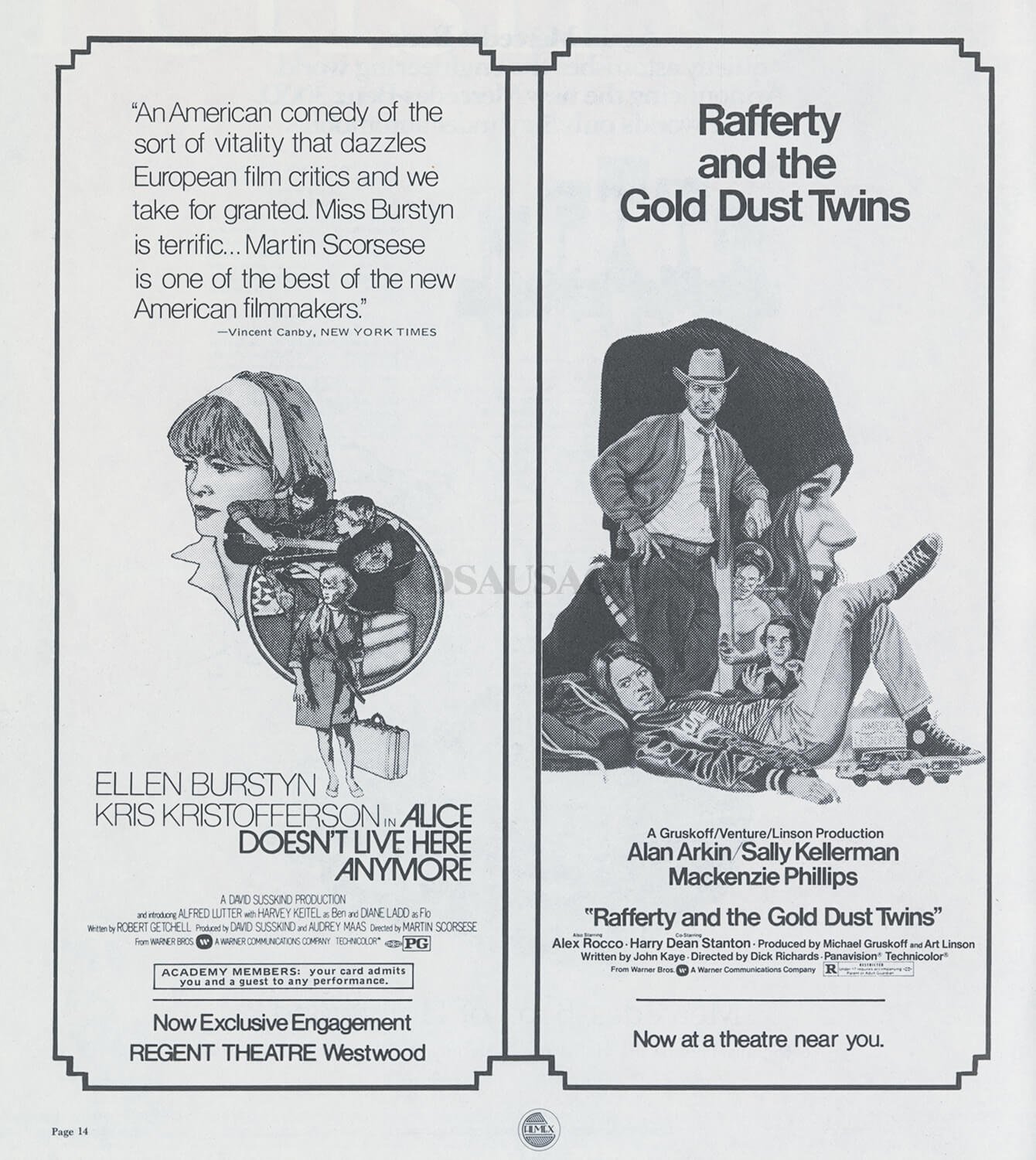
Among the 88 programs, the festival presented several gems, including the documentary Woman to Woman from Donna Deitch, Arthur Penn's Night Moves, Monty Python and the Holy Grail, and a midnight showing of Ciao! Manhattan. The well-received festival gave patrons a sneak preview of The Fortune — attended by the director, Mike Nichols, and Warren Beatty.
Despite its largest attendance to date (reportedly 80,000 people), Gary Essert lamented some people were unhappy with the venue, grumbling that concession prices at the ABC Entertainment Center were too high.
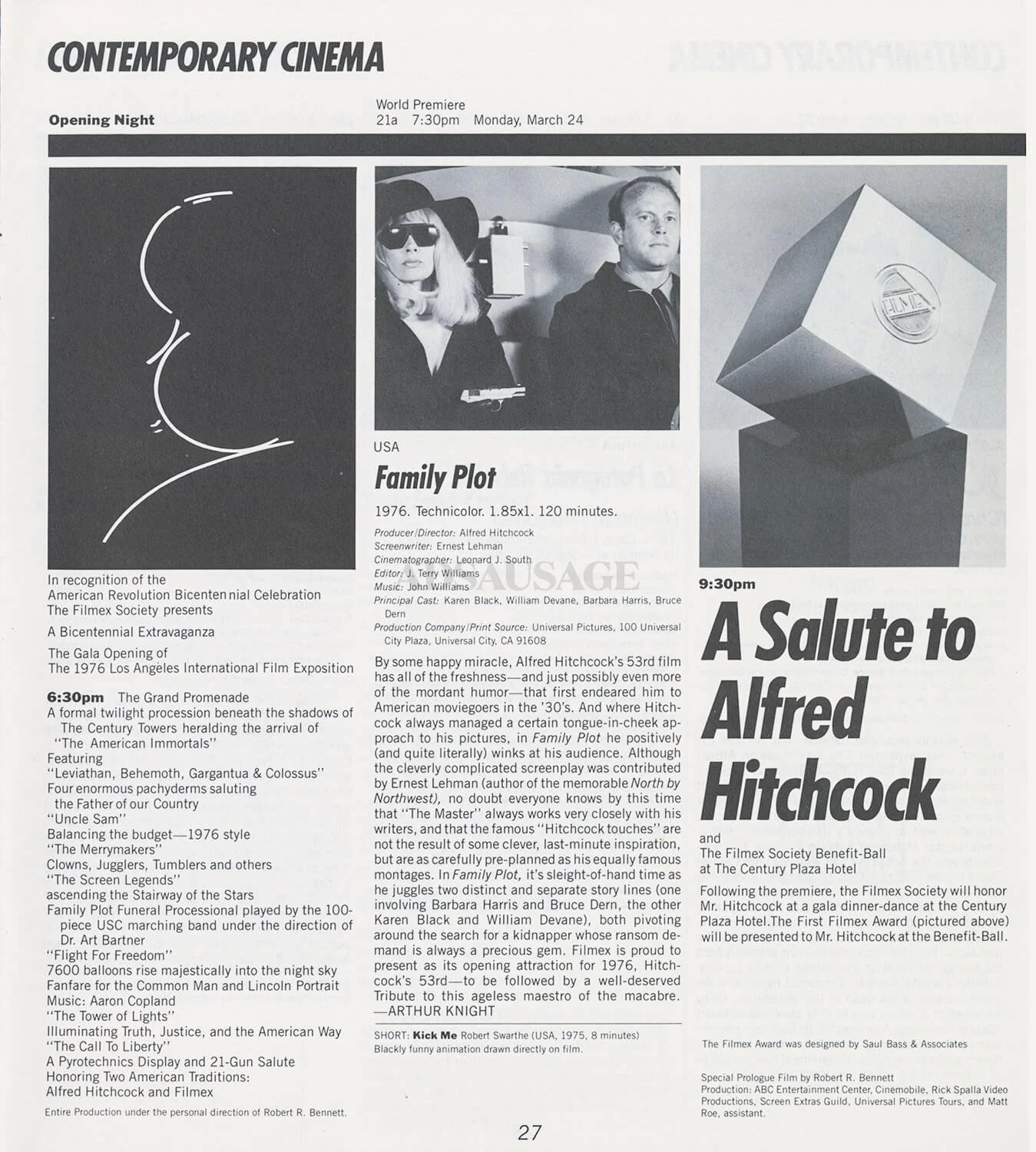
By the year's end, "the world's largest film event" was being prepped. Remaining in Century City, Filmex '76 saluted Alfred Hitchcock, who received the inaugural Filmex Award. One minor change was removing the customary two-day musical marathon, prompted in part by MGM's upcoming dance spectacular That's Entertainment Part II.
Still, the Bicentennial program offered an eclectic lineup including Curt McDowell's Thundercrack!, Michael Ritchie's The Bad News Bears, and retrospectives of Frederick Wiseman and Stan Brakhage.
While still plagued with debt, Filmex '76 was considered a success, having broken even for the first time. Attendance had risen to 100,000 people. Contributing to the increased revenue were several grants, including $40,000 from the City.
The Most Fun You Can Have In Public!
Dedicated to its Founding Trustee, Rosalind Russell, who passed away a year earlier, Filmex '77 had already raised $60,000, thanks to 'A Spectacular Night in White', a previous premiere benefit for Barbra Streisand's A Star is Born.
One movie not featuring Barbra Streisand was Nagisa Oshima's In the Realm of the Senses. The controversial movie, screened as part of the Contemporary Cinema series, had been planned for the earlier New York Film Festival but was denied by U.S. Customs.
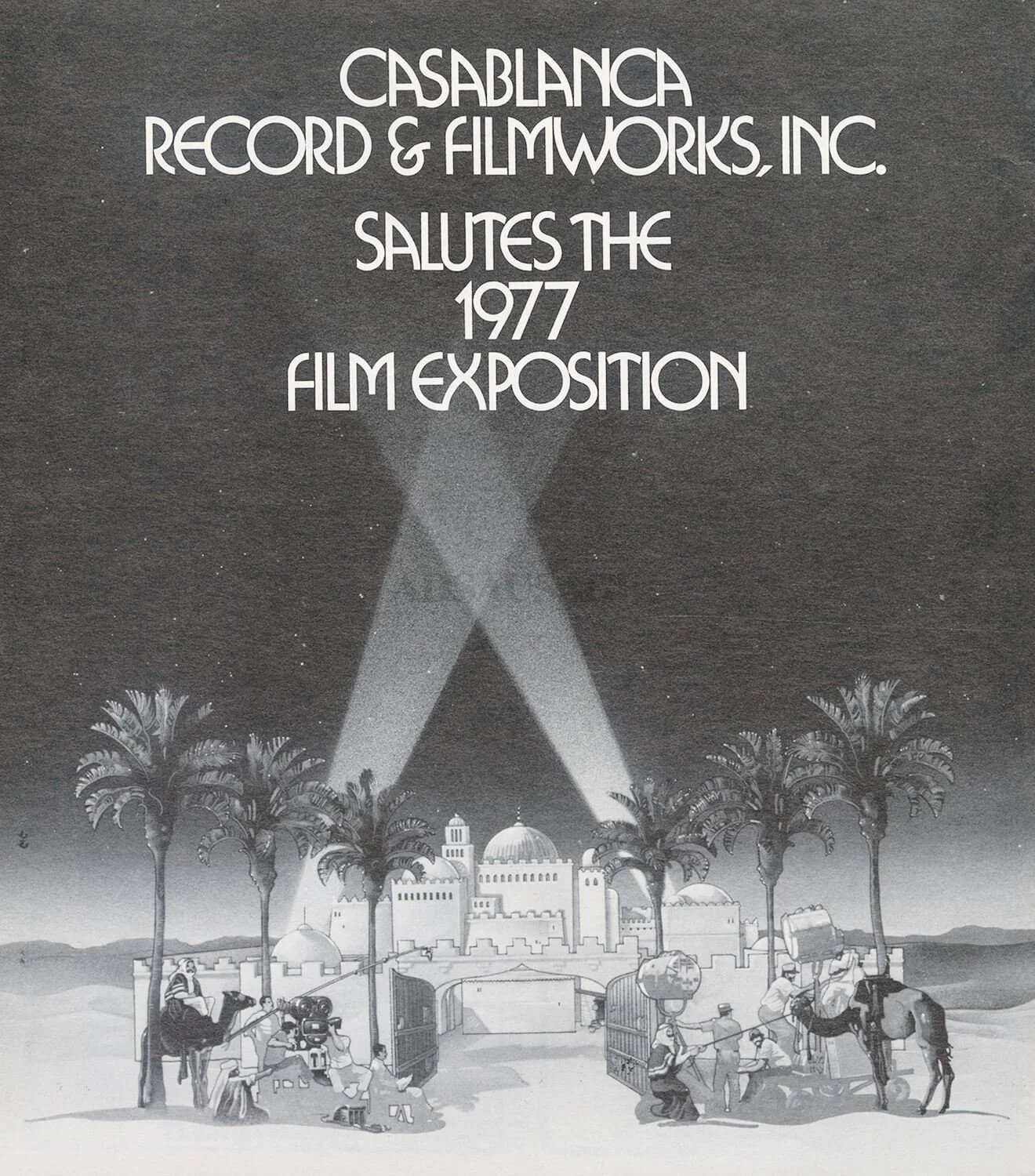
The festival, now running an all-high 19 days, introduced several new programs: Super-8mm films, the AFI Critics' Choice, which featured Harlan County USA, and a 34-minute short from 1970 called The Grandmother by David Lynch.
The opening night bash for Tony Richardson's Joseph Andrews at the Century Plaza Hotel was an extravagant affair. The 18th-century theme of the party included merrymakers, Royal coaches, and a corps of the Queen's Beefeaters holding back the crowds. The festival concluded with Annie Hall, receiving its World Premiere.
Included in Contemporary Cinema, Andy Warhol returned with Andy Warhol's BAD, directed by Jed Johnson, and Robert Downey returned with Moment to Moment — receiving its World Premiere.
Still sitting pretty Century City, Filmex '78 — which marked the 50th anniversary of the Academy — promised two cinematic treats that fell through; Pier Paolo Pasolini's lighthearted romp Salò, or the 120 Days of Sodom, considered but withheld by the distributor, and Godfather IV, an 8 ½-hour version of Francis Ford Coppola's family saga was canceled over technical reasons.
Still, it wasn't all gloomy. Dedicated to Roberto Rossellini, Filmex '78 bowed with Norman Jewison's gritty union drama, F.I.S.T., and closed with Burt Reynolds' The End, which the actor/director called "a black comedy about death".
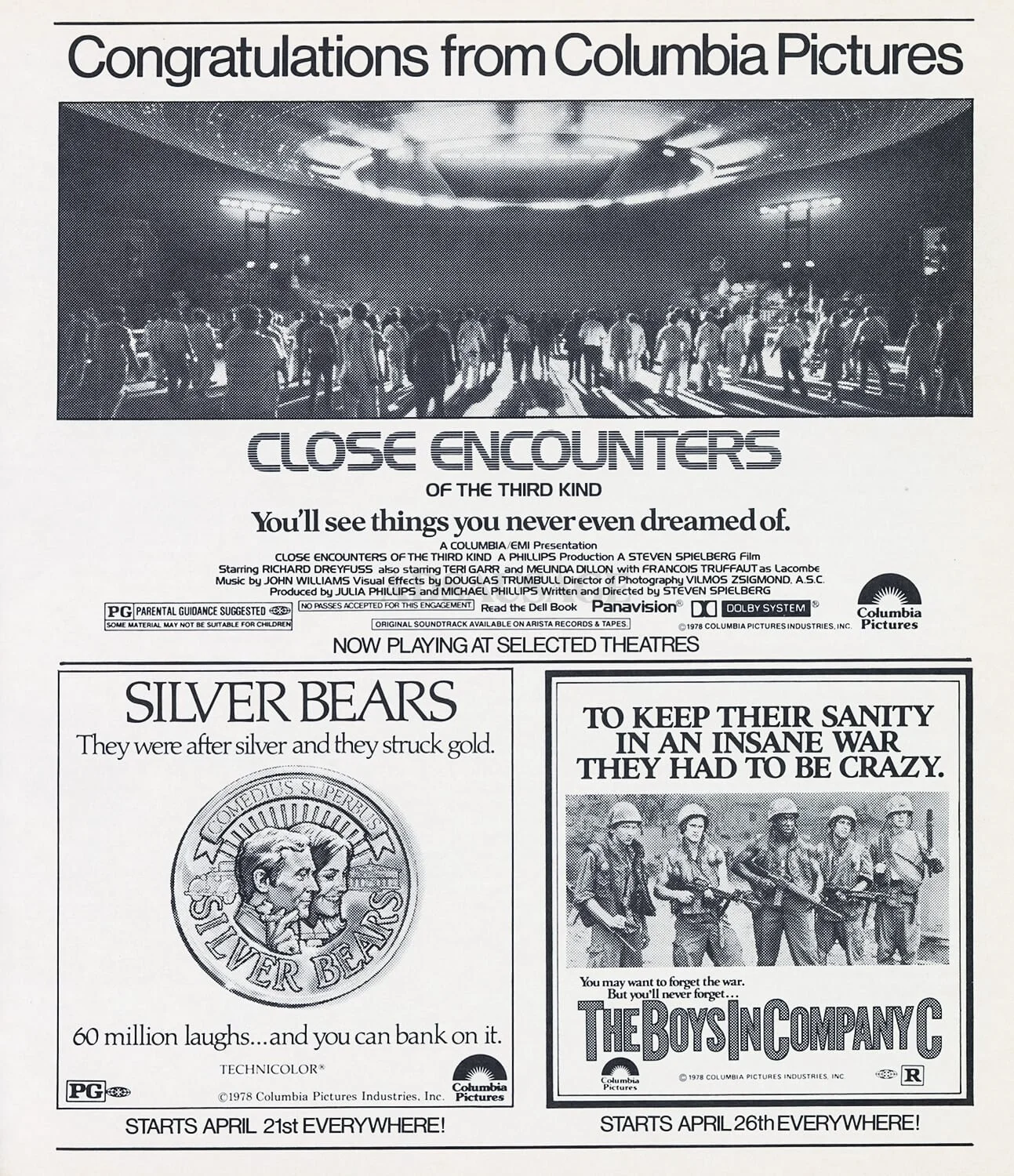
One highlight was the first American showing of Girlfriends, from director Melanie Mayron. And if they were still awake, new wave kids got to see The Blank Generation, a midnight showing of the hour-long 1976 feature from Amos Poe and Ivan Kral.
The following year, Filmex partnered with Playboy, which donated $35,000. The Bunny Mansion hosted a cocktail party where studio executives and industry luminaries, including Stockard Channing, Buck Henry, and Chevy Chase, mingled over fresh lobster and white wine.
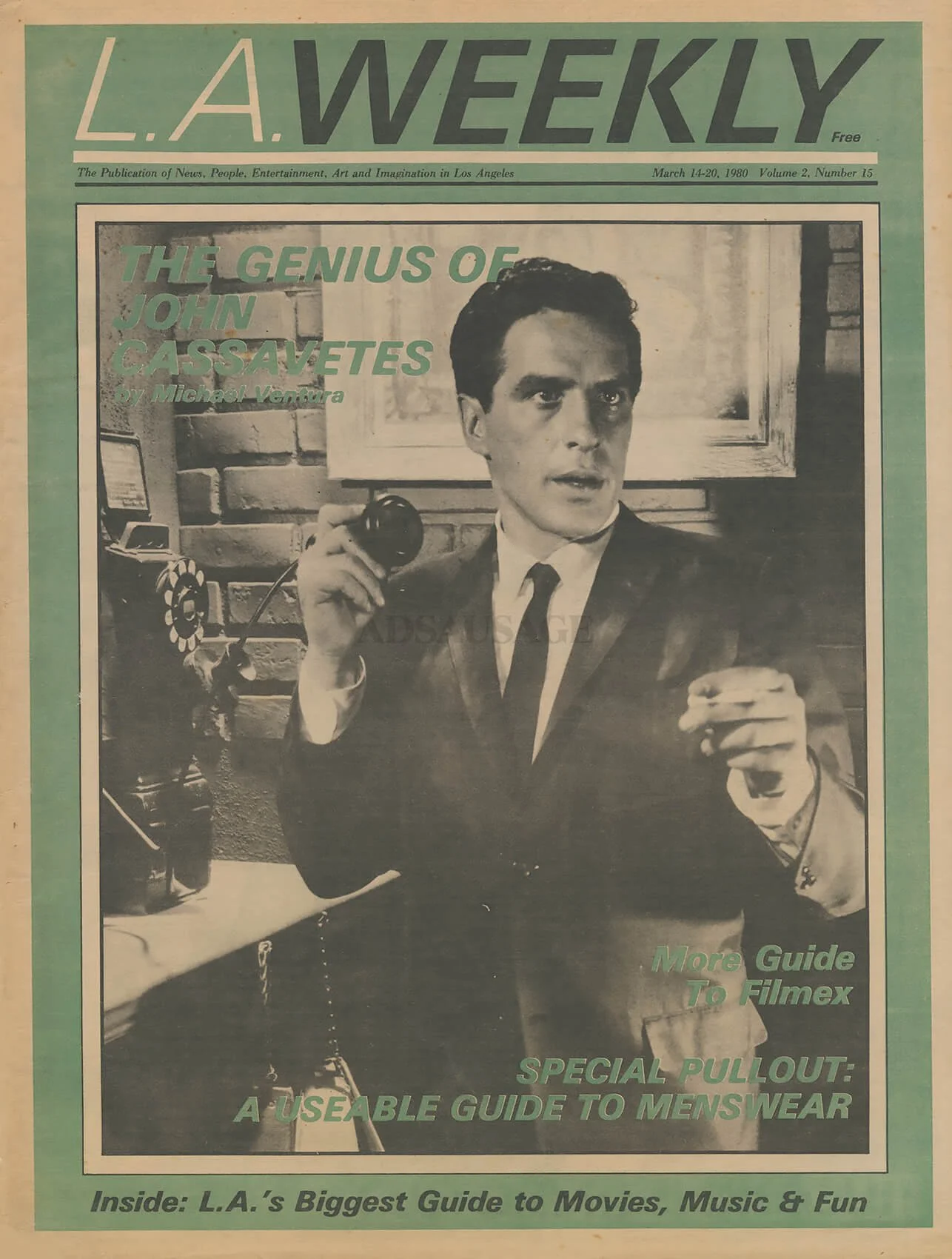
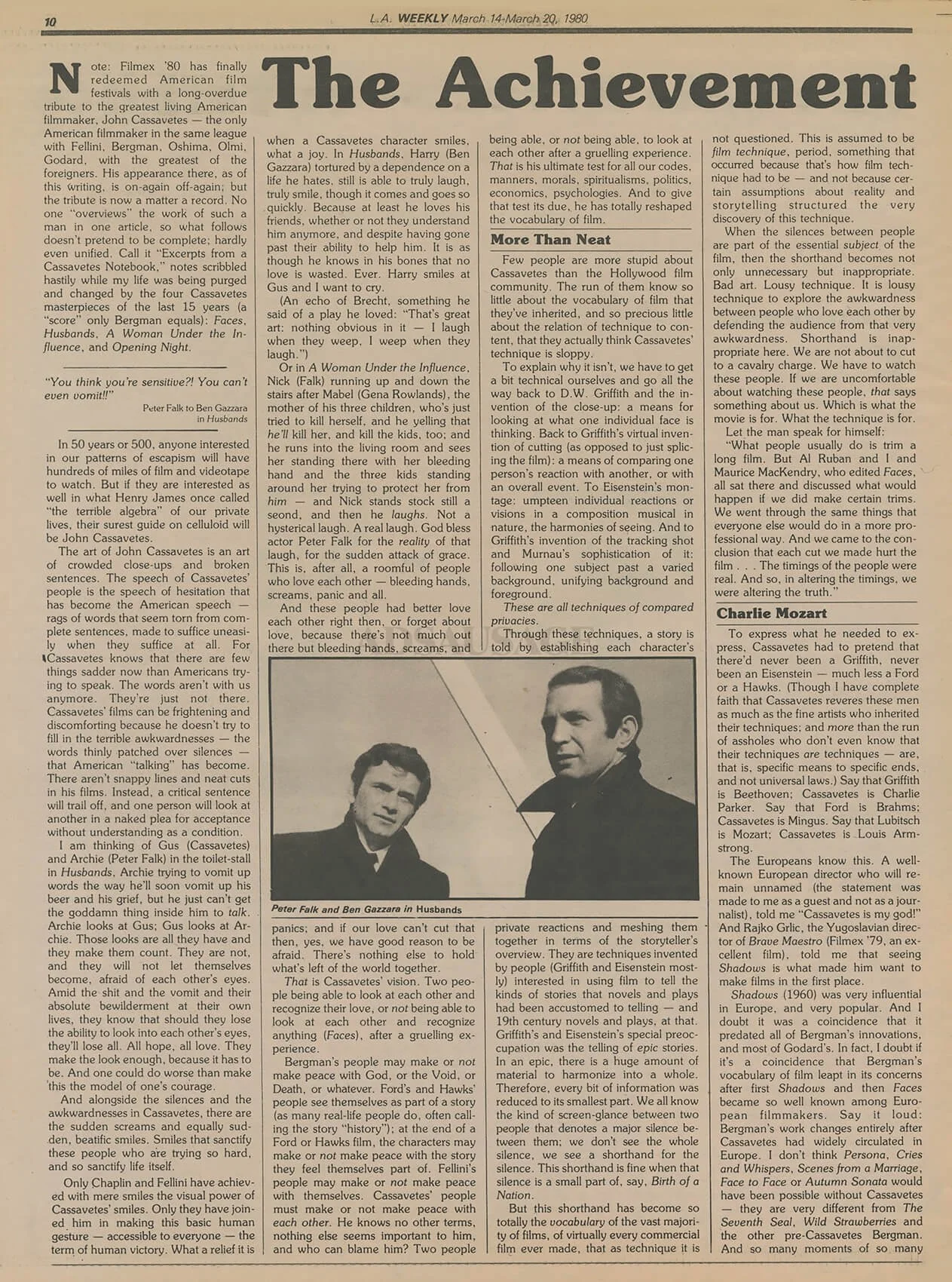
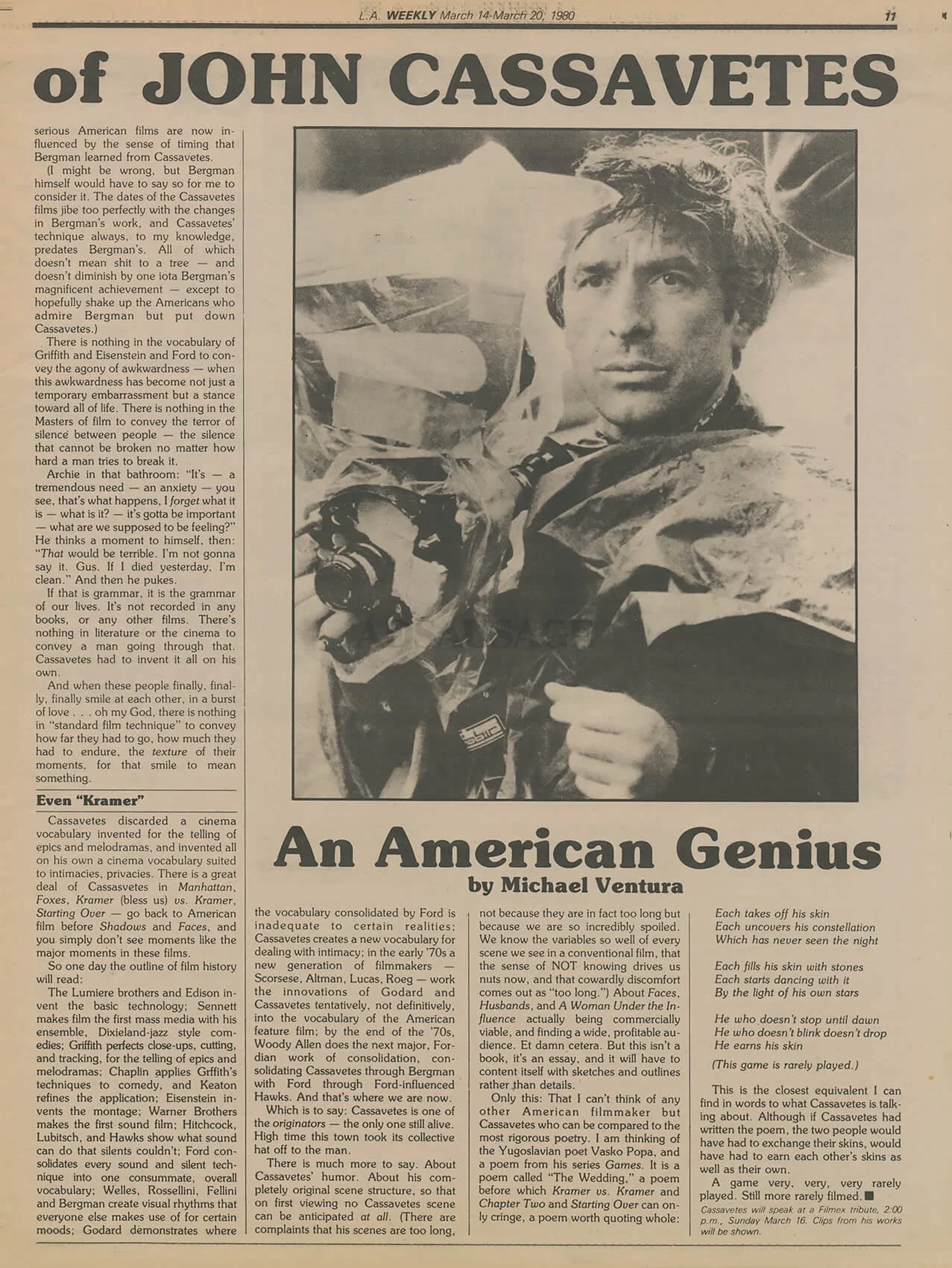
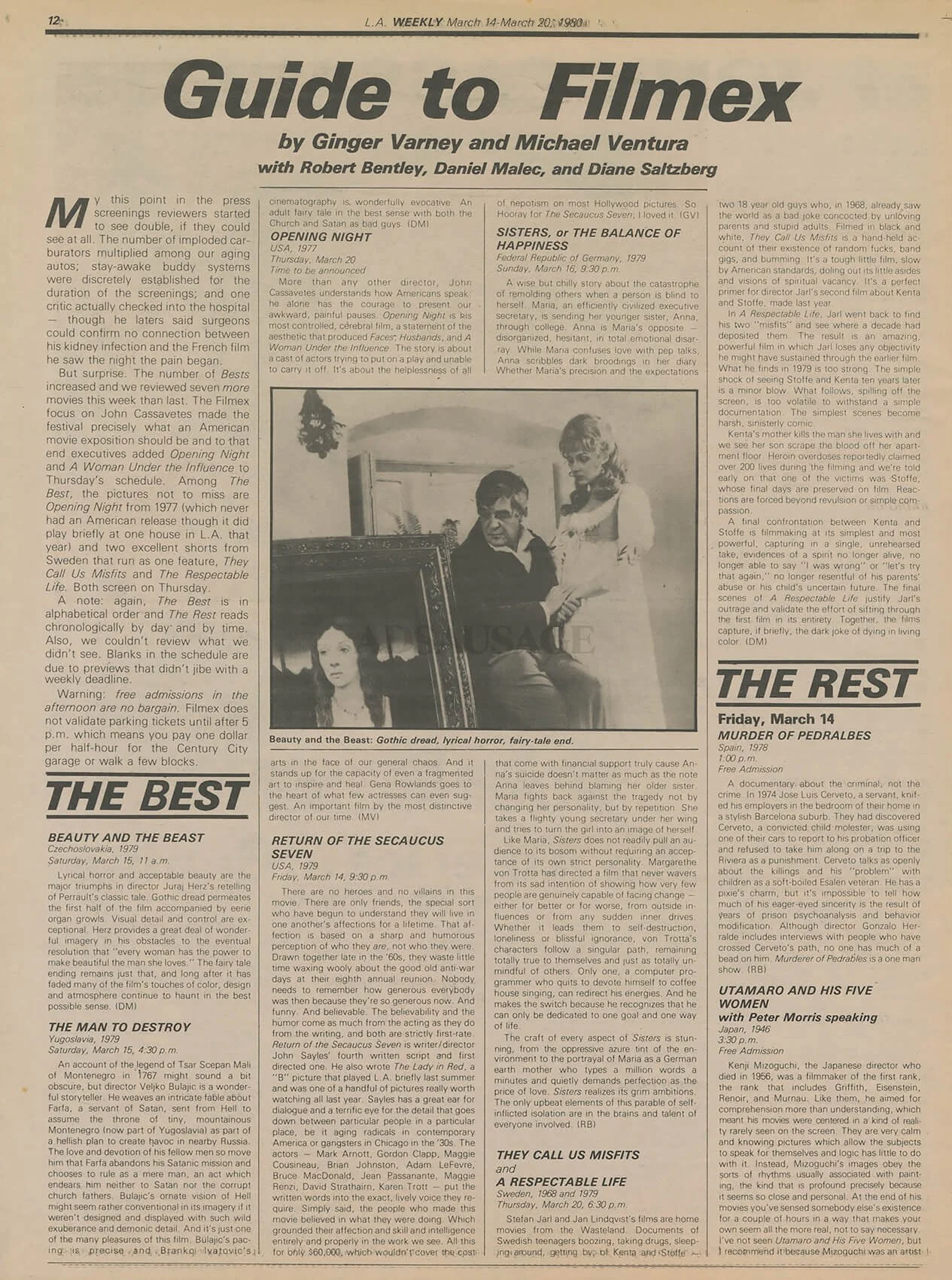
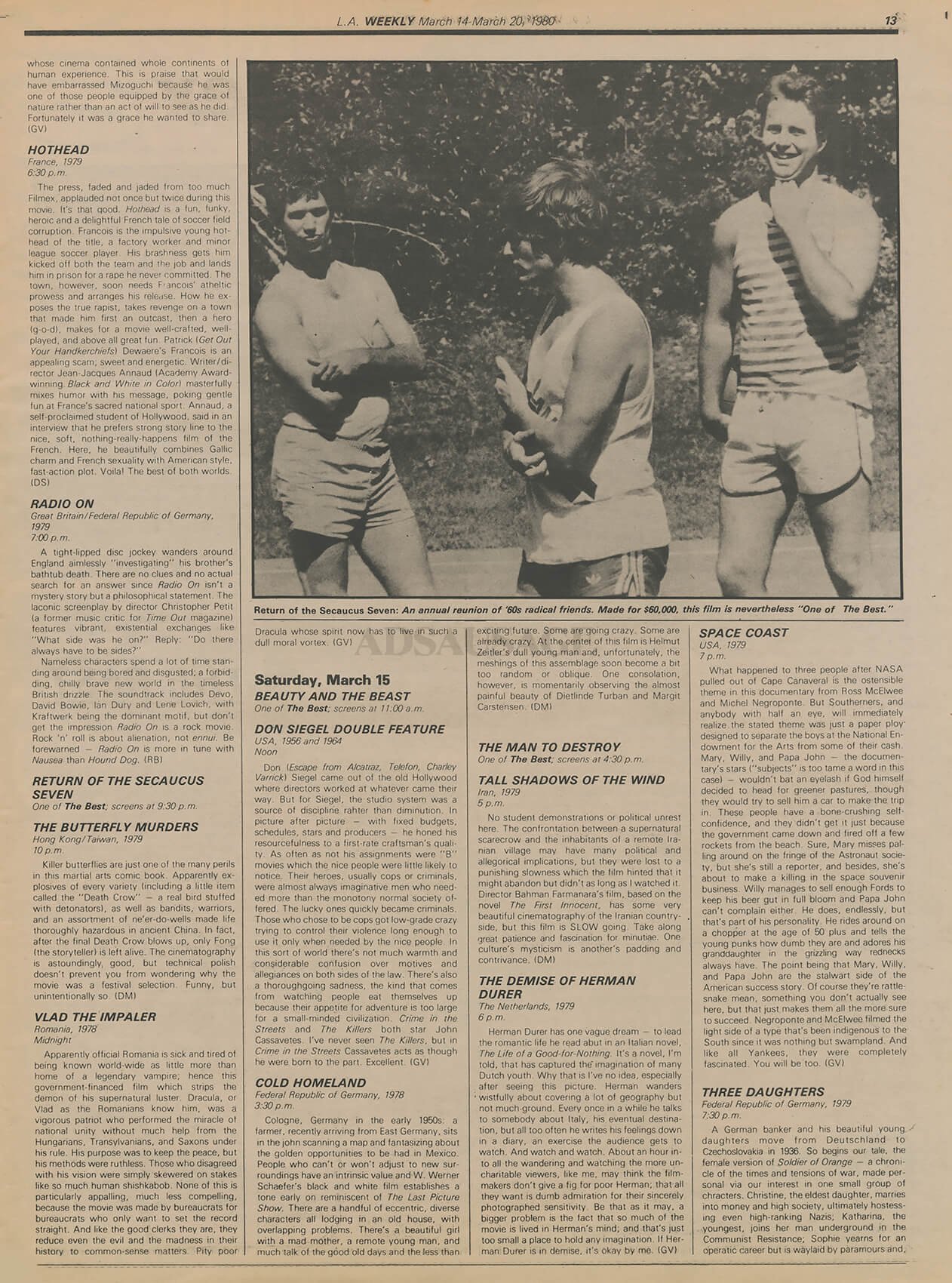
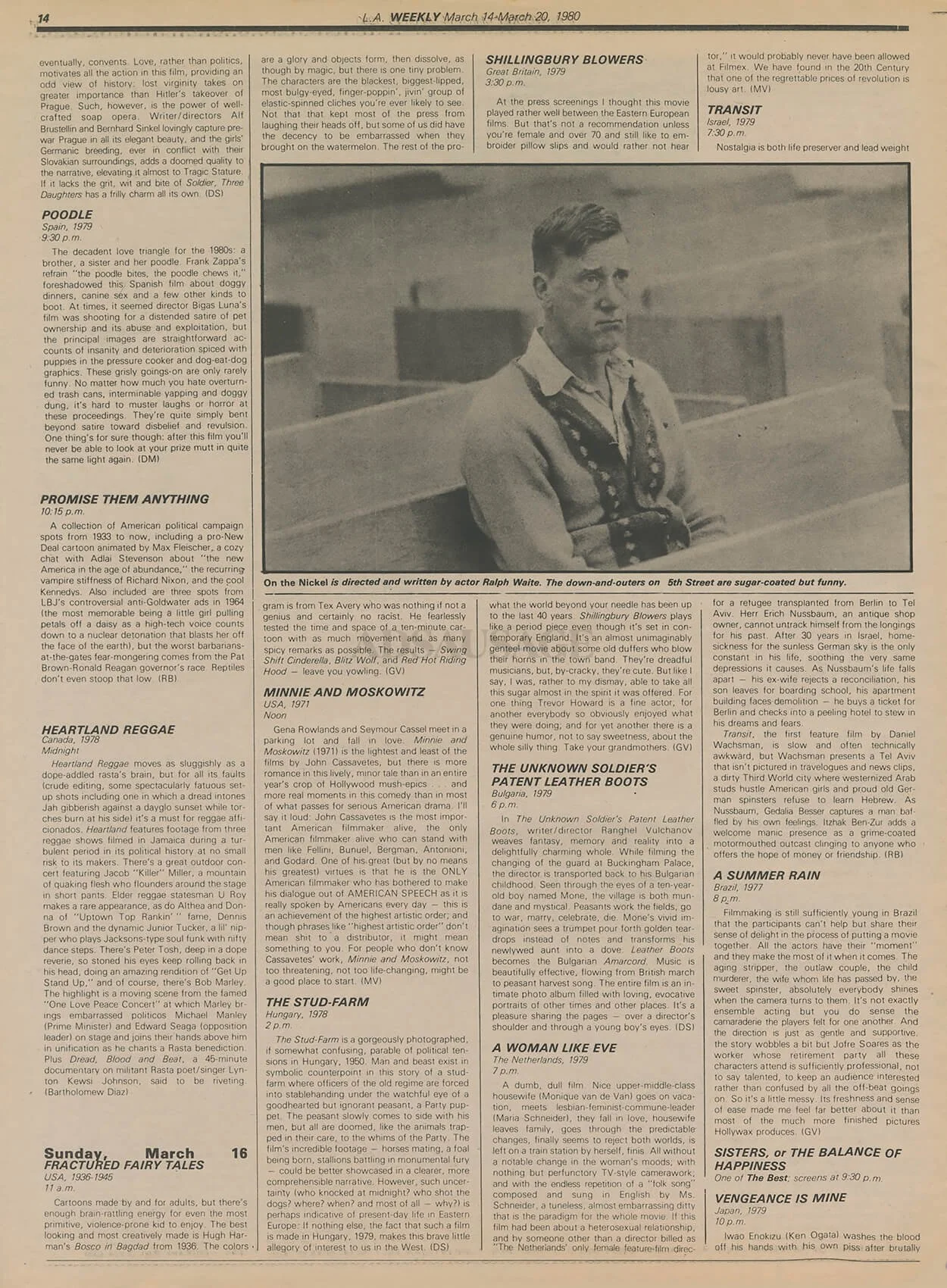
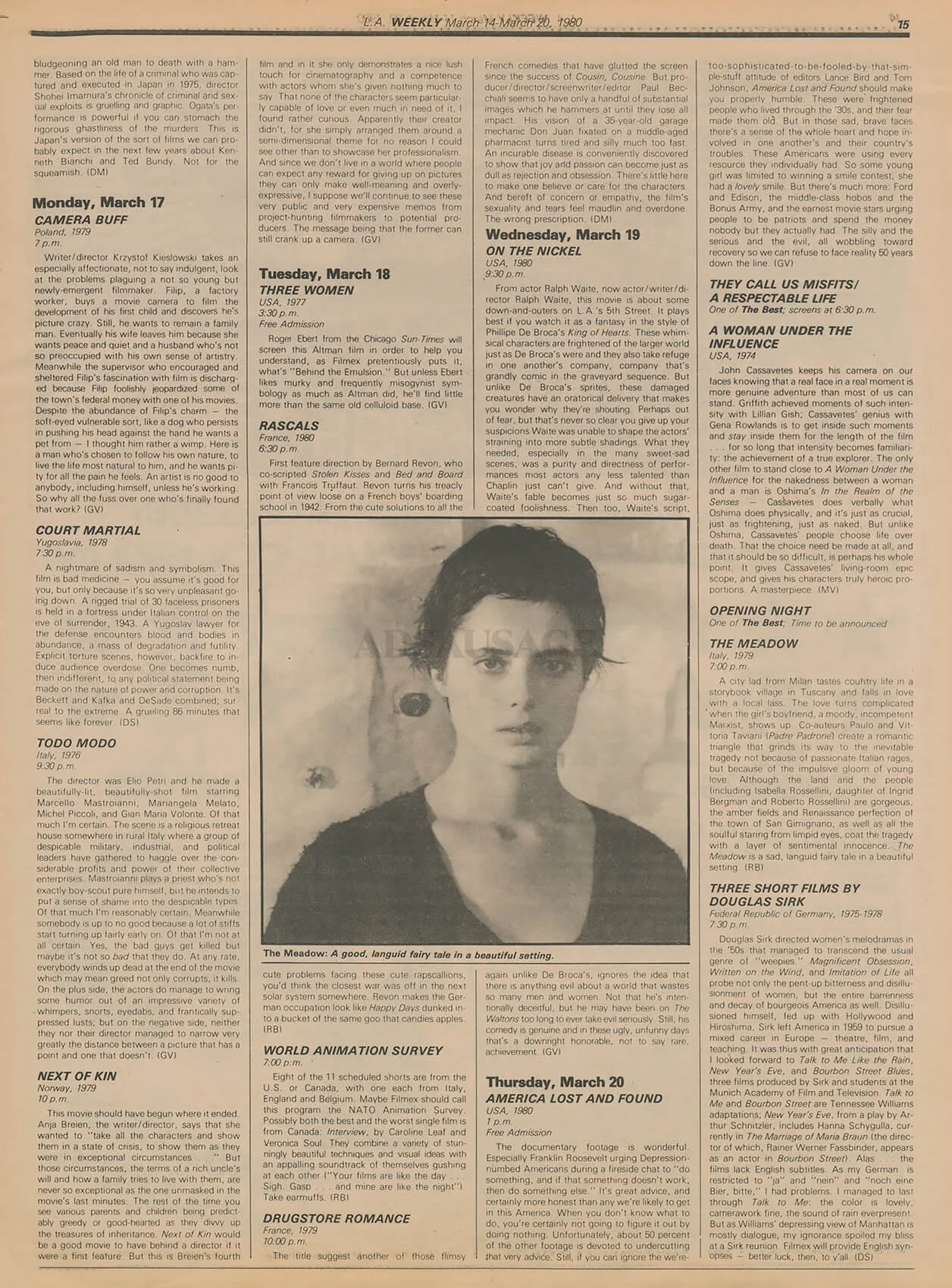
It's More Than Just Going To The Movies
Despite cost-cutting, the cash-strapped Filmex lost considerably in 1980; unable to secure a major studio picture for the big ticket opening, they screened Volker Schlöndorff's The Tin Drum. Although well-received, it lacked the requisite "premiere" vibes. Chairman Thom Pollock reduced ticket prices from $150 to $25 — a regrettable move that cost Filmex $100,000.
As he had three years earlier, Gary Essert pledged for the upcoming Los Angeles Film Center — "a public, non-profit cultural facility". The joint project with the AFI would begin construction the following year.
With over 150 films, the 18-day festival had several debuts: Peter Weir's The Plumber, Julian Temple's The Great Rock 'n' Roll Swindle, and Richard Elfman's Forbidden Zone, which both screened at midnight.
At the festival's conclusion, Essert was preparing for the 10th edition, namely, where to call home. Filmex was losing its donated office space at the ABC Entertainment Center, soon to be taken over by ABC Films. And Plitt Theater was unhappy, since Filmex '80 interrupted their profitable run of The Black Stallion.
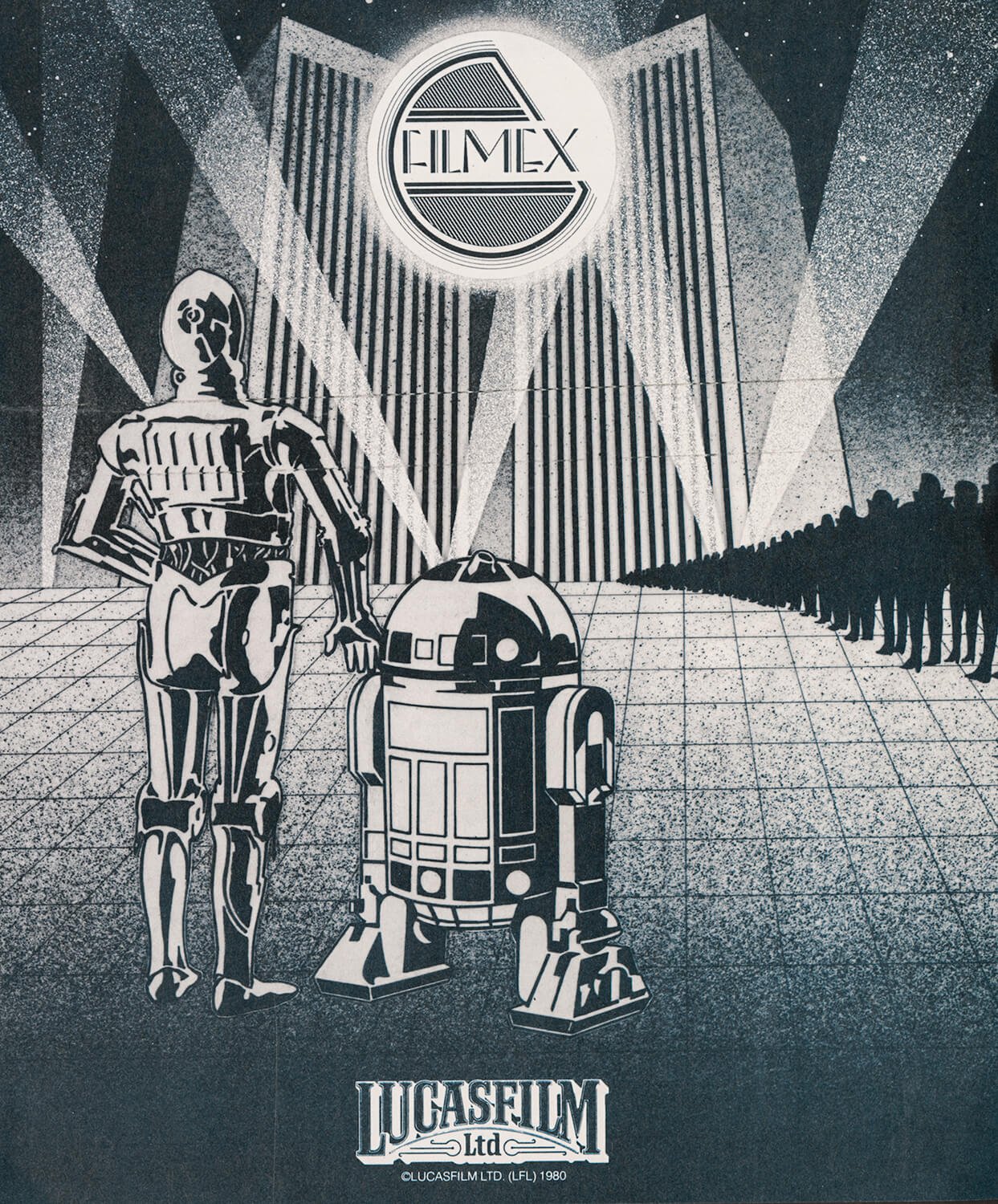
Unhappy with Century City's costly parking and food situation, Essert wasn't too concerned, telling the Los Angeles Times, "Our audience is not Beverly Hills matrons. They don't care if you run films in beanfields."
Filmex ended up moving the programming to the under-renovation Aquarius Theater in Hollywood — although six "satellite theatres" were also used. Essert explained the decision was down to "pressures of time and finding theatres that can accommodate our special technical facilities."
From its new home in Hollywood, Filmex '81 opened with Louis Malle's Atlantic City — a winner at the Venice Film Festival. Closing out was Michael Cimino's re-edited Heaven's Gate, shown in 70mm and running 138 minutes. Across town at USC, Arthur Knight screened the full 220-minute version for students.
Notable entries included Pixote, Breaking Glass, Prostitute, and George Romero's Knightriders.
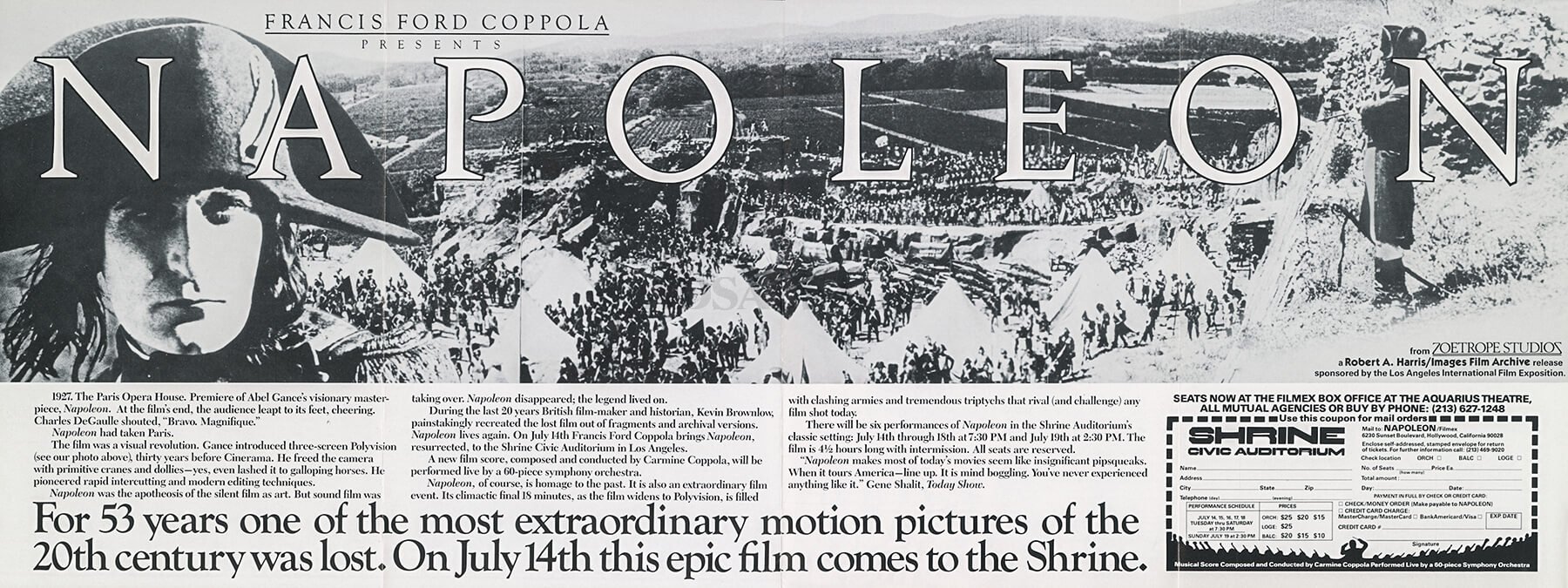
In addition to the 50-hour movie marathon, the biggest draw was a post-exposition event at the Shrine Auditorium featuring a screening of the 1927 epic Napoleon. The venue's management said it was the first time a commercial movie had been shown there.
Co-sponsored by Francis Ford Coppola's Zoetrope Studio, which split the costs with Filmex for two new 35mm projectors and the renovation of the projection booth.
Once considered too expensive for its lineup, Filmex '82 (dedicated to the late Natalie Wood) relocated back to Century City/ABC Entertainment Plaza. Ironically, the lavish Century Plaza Hotel (home of the opening night) sued Filmex a year earlier over unpaid bills, to the tune of $11,000. The money was repaid with interest, but the hotel was adamant that they would not accommodate Filmex again.
Amid perpetual financial woes, Essert also decided to limit the free weekday events to what was already a scaled-down expo. Essert, conceding to the LA Weekly ("Funding Filmex"), stated that the company needed $100,000 to keep creditors at bay. After raising $20,000, they were matched with a contribution from actor and director Tom Laughlin and his wife, Dolores Taylor.
It wasn't all gloomy; the 11th annual exposition kicked off with a sold-out premiere of Blake Edwards’ Victor/Victoria, debuted a 15-minute short from Diane Keaton, and closed out with Paul Schrader's Cat People. And in December, the Los Angeles Times reported ("Filmex Finally Out Of The Red") that due to renewed financial help from several donors and successful fundraising drives, the organization was debt-free for the first time.
Board chairman Thom Pollock was quoted as saying, "We are finally free of the burdens of the past."
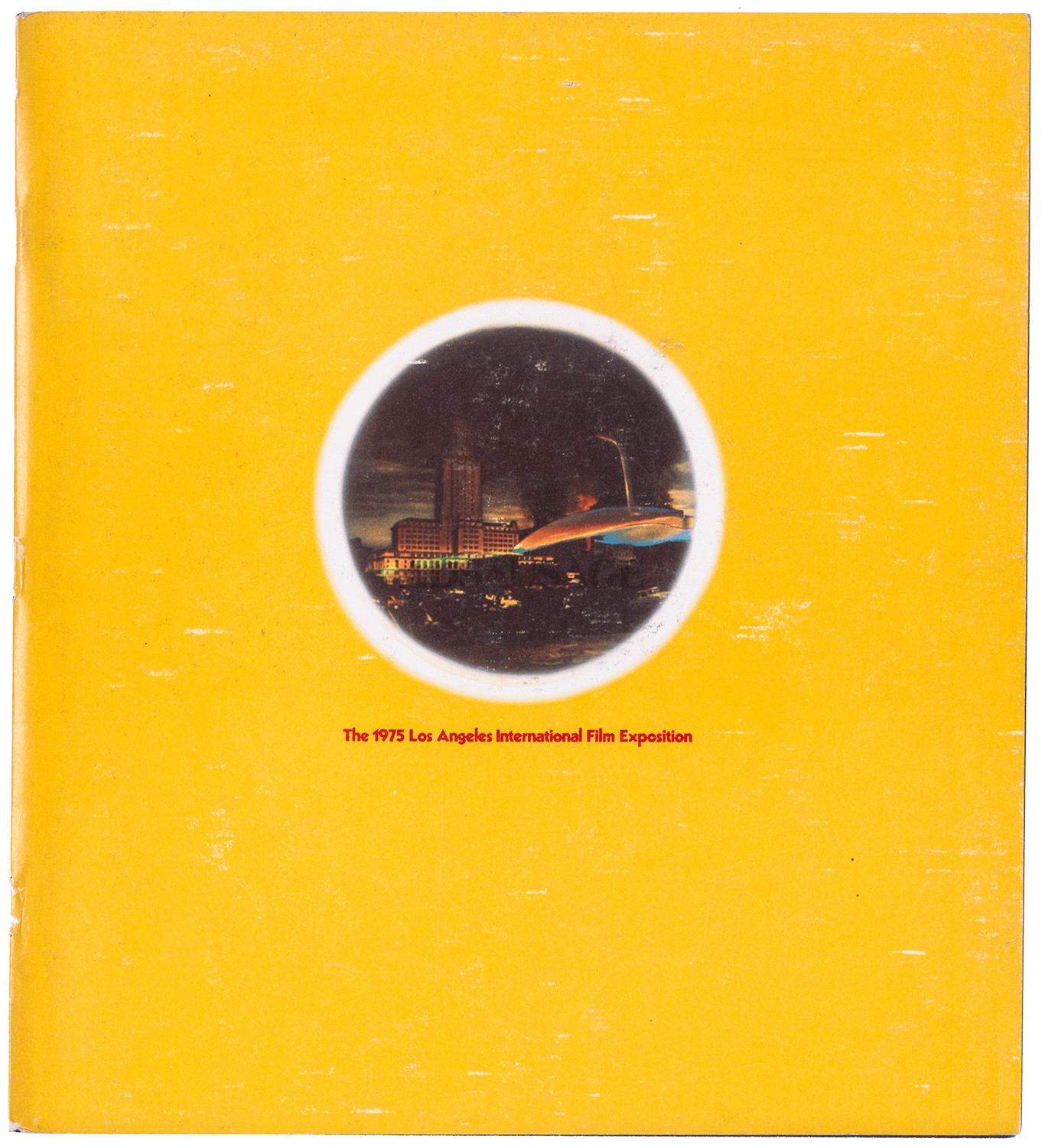
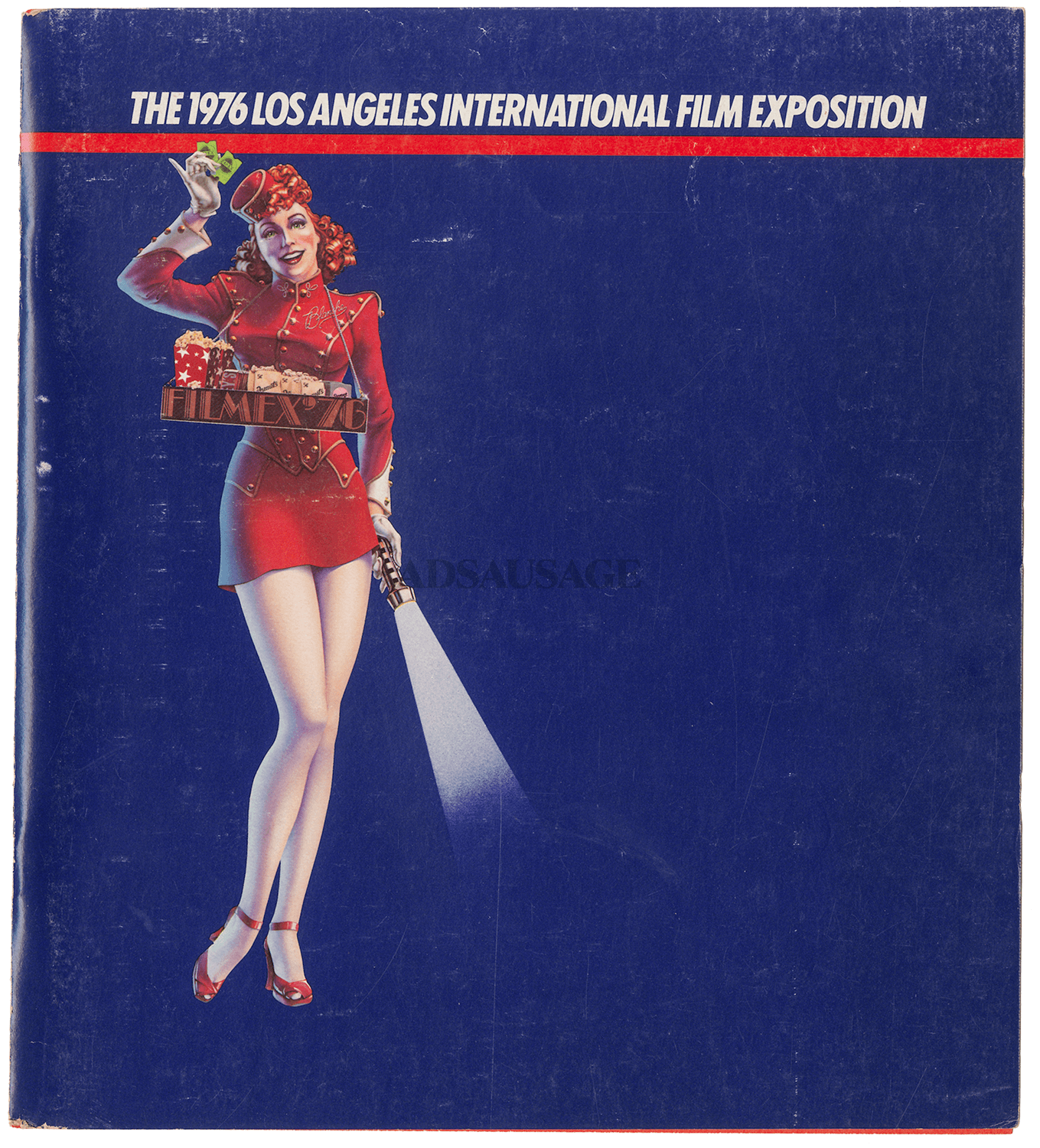
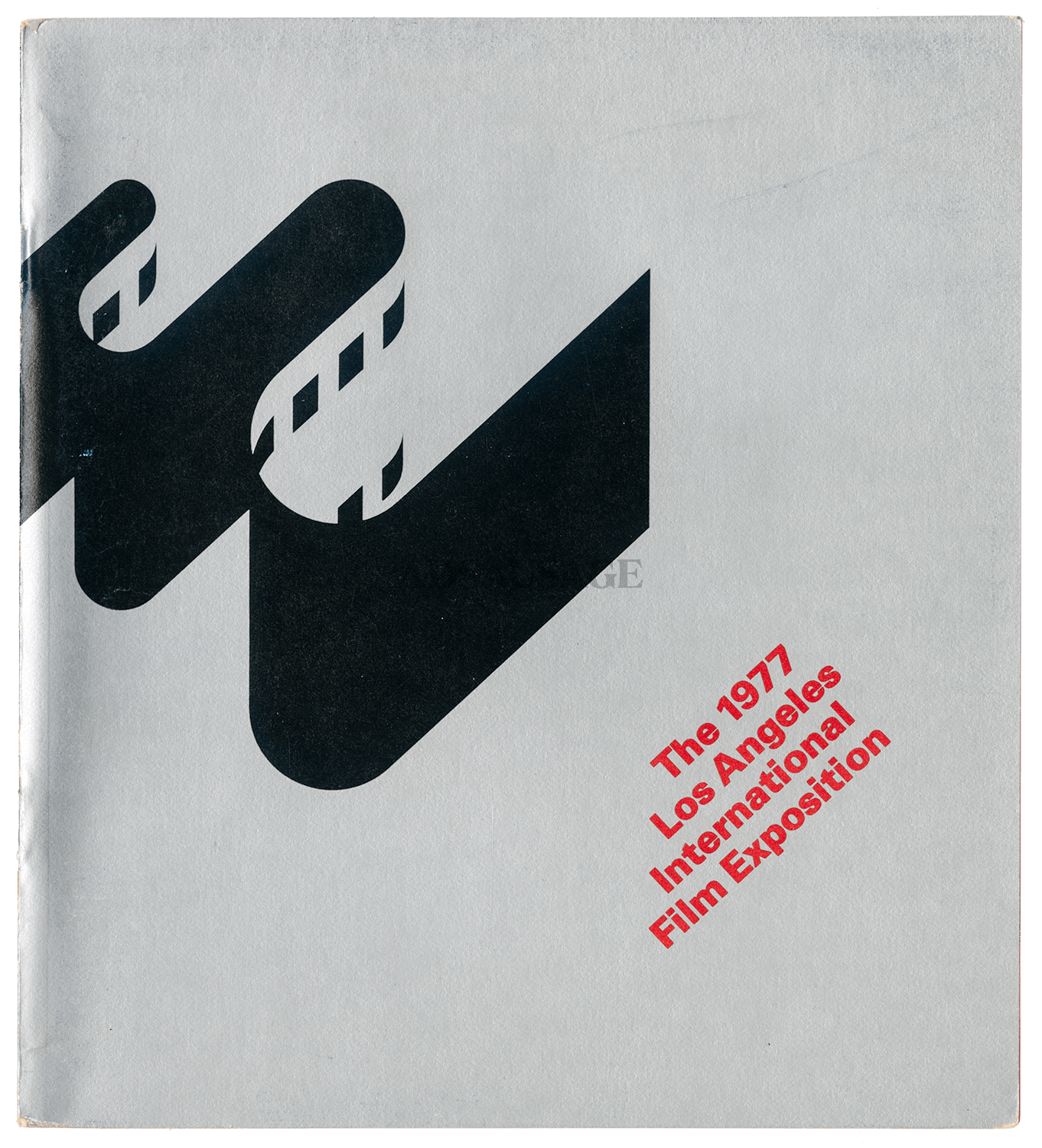
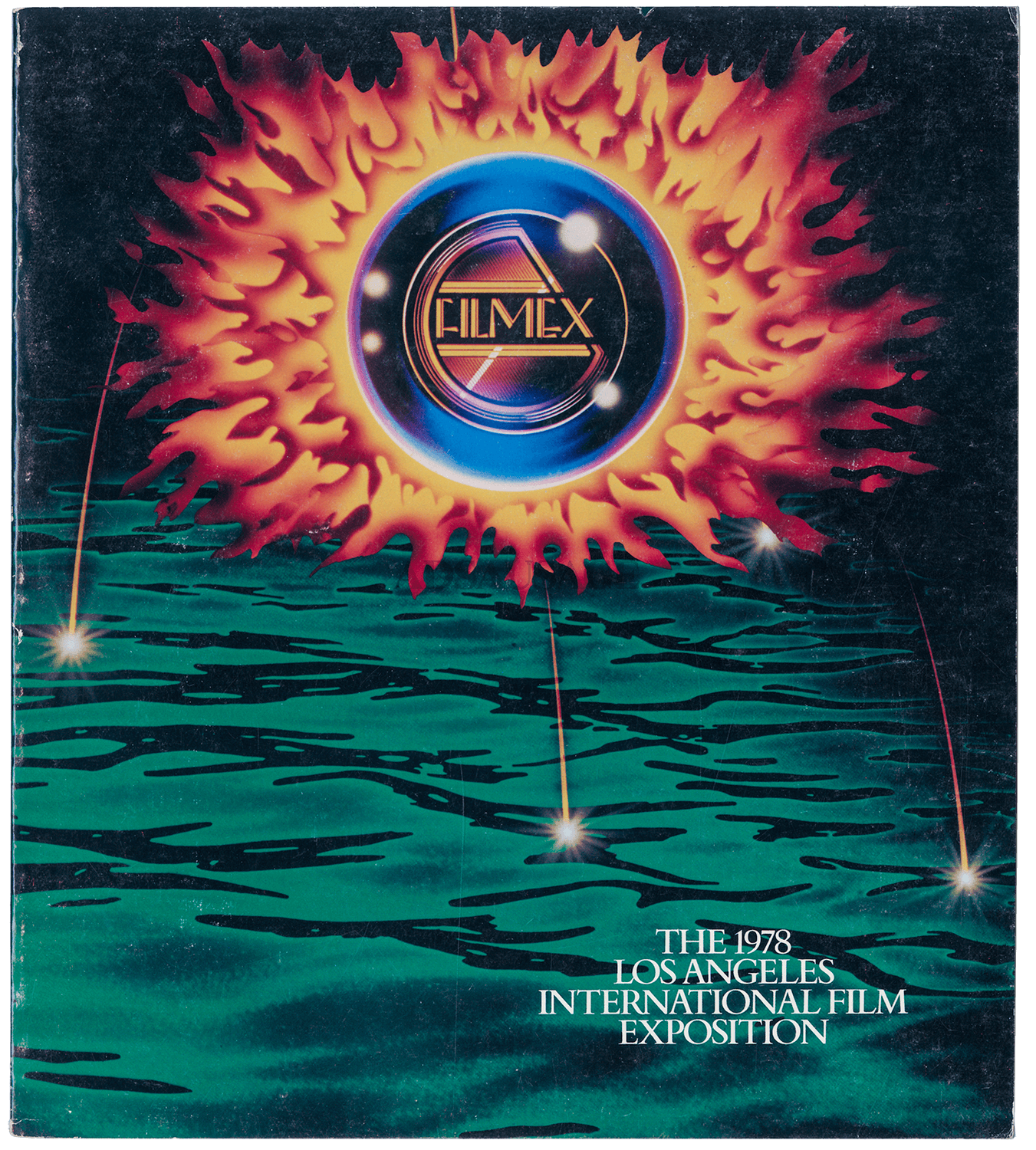
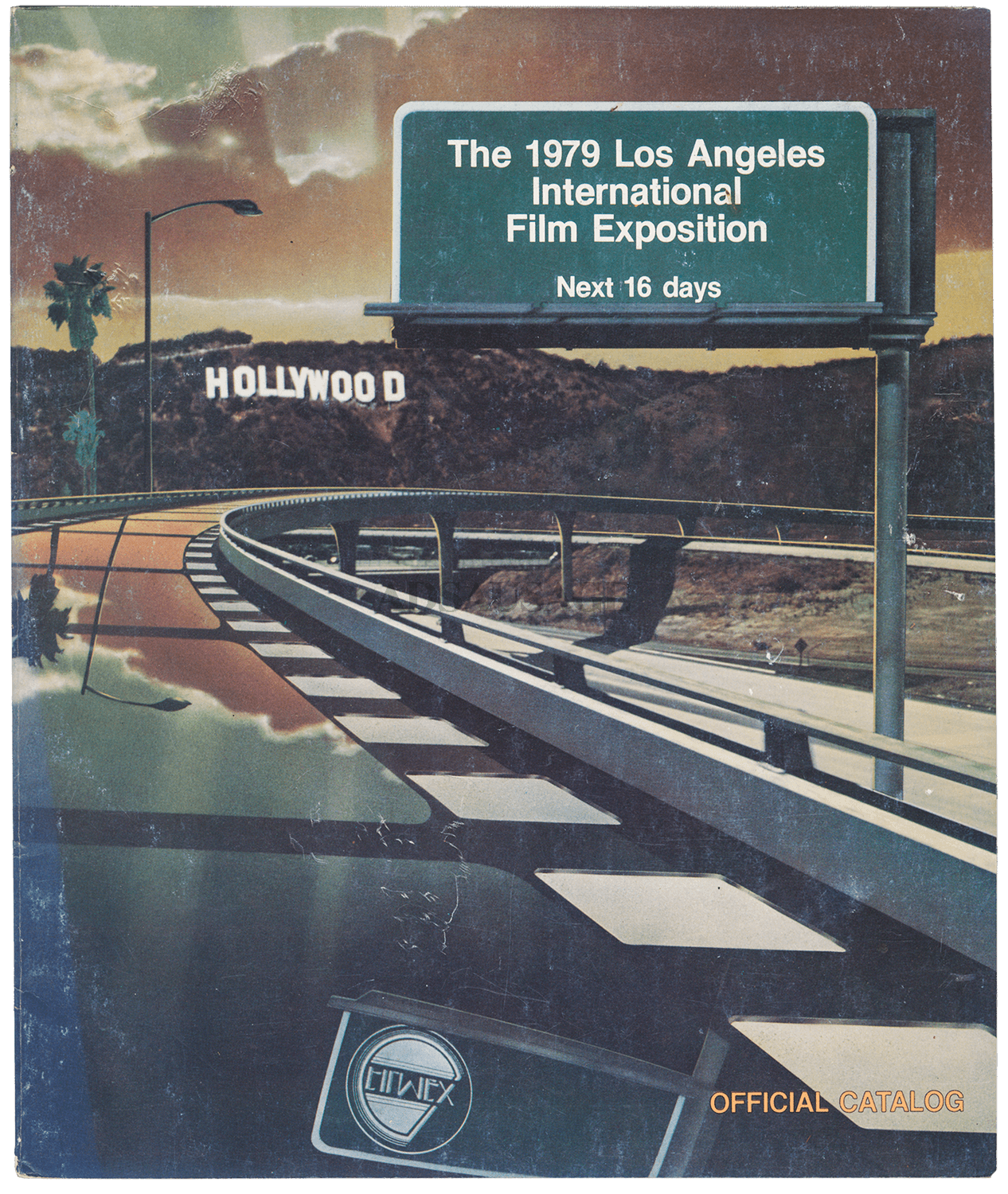
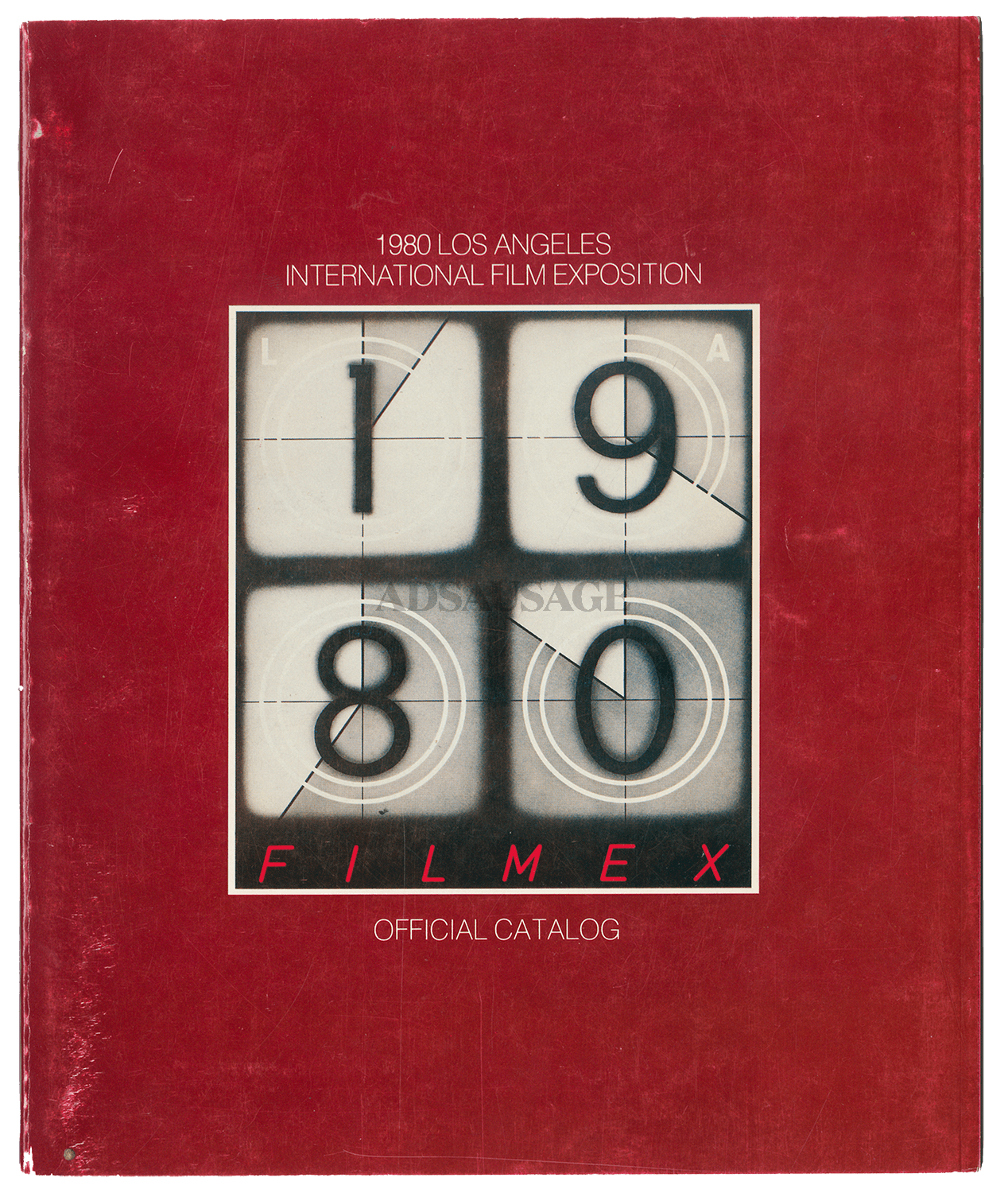
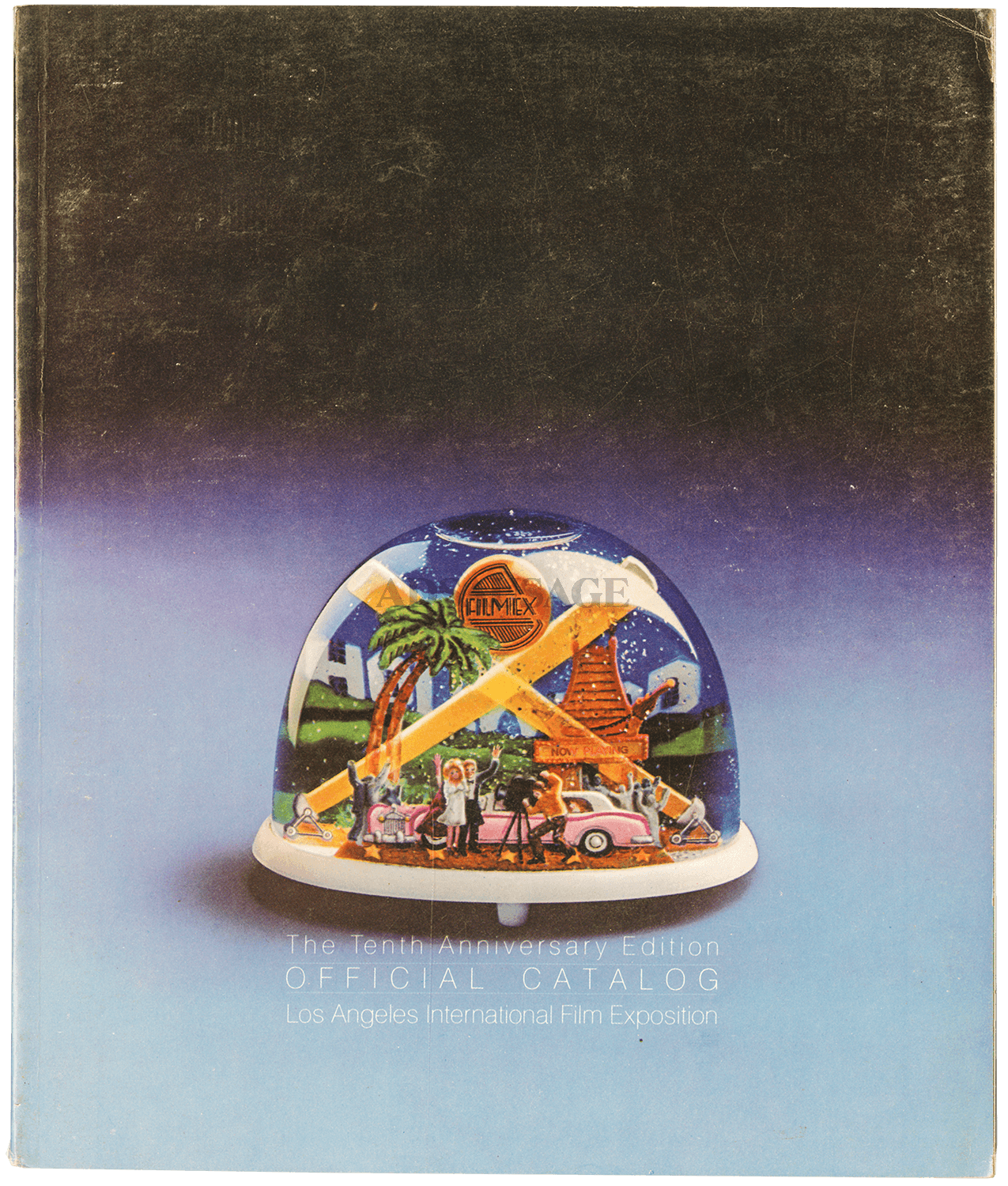
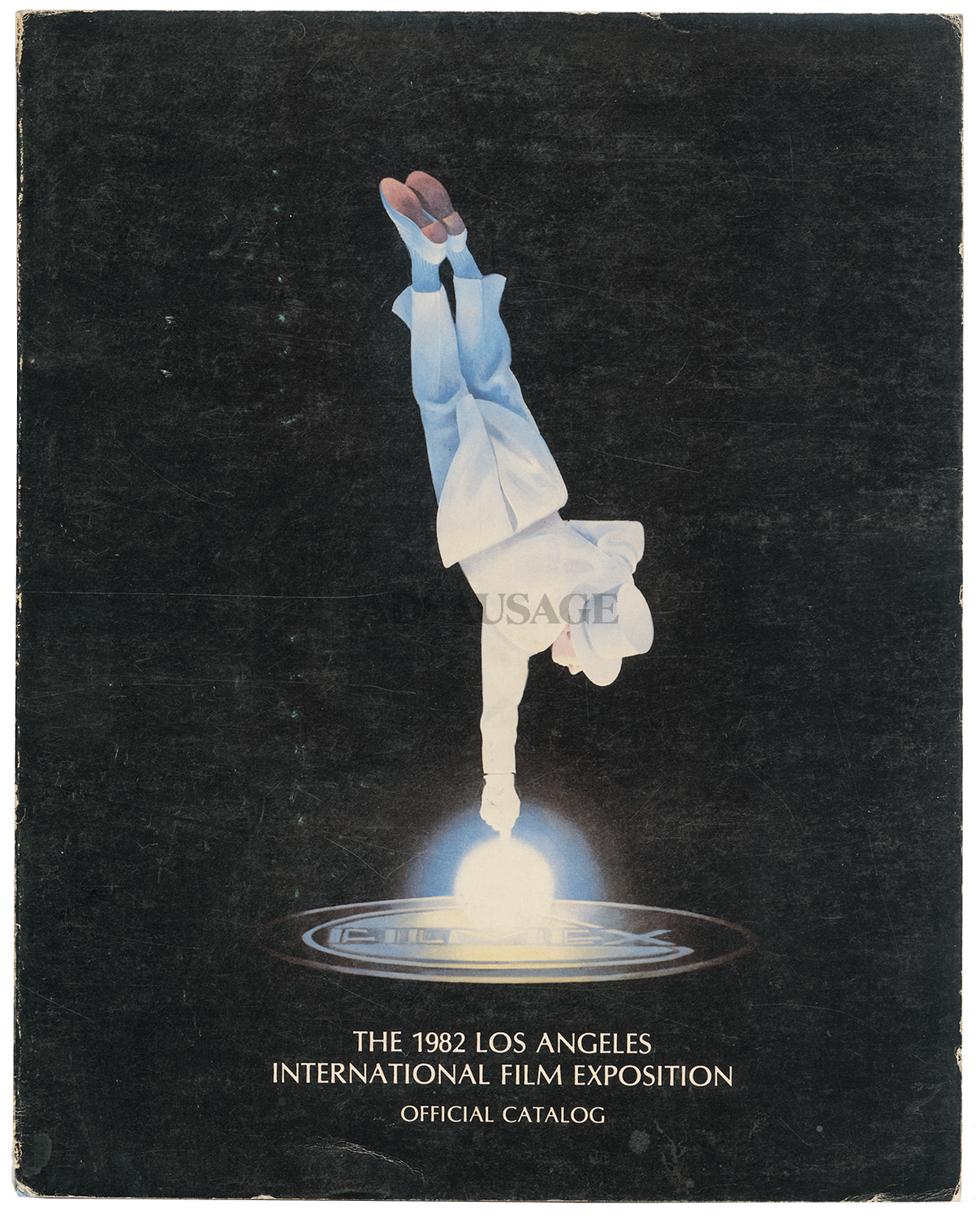
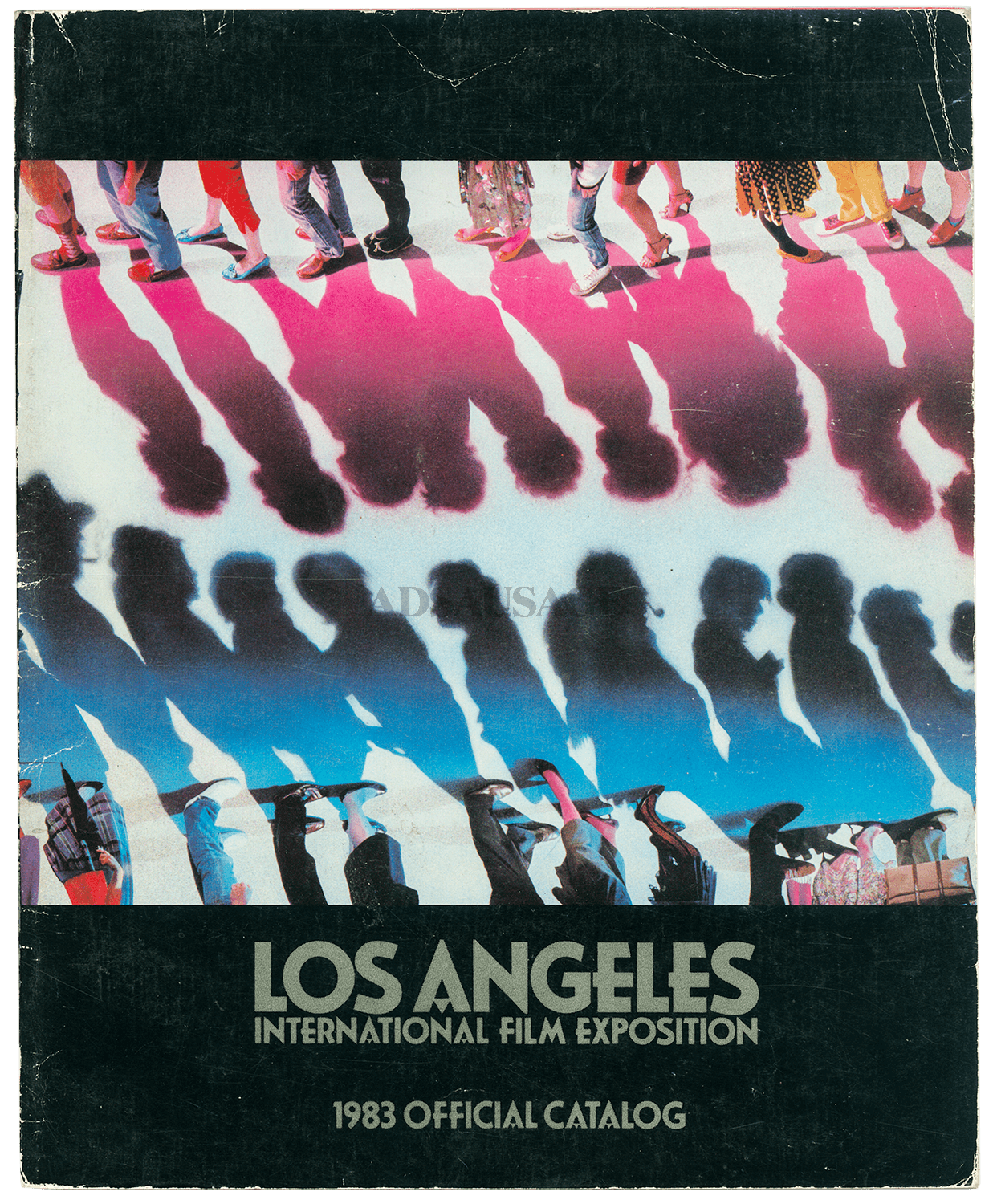
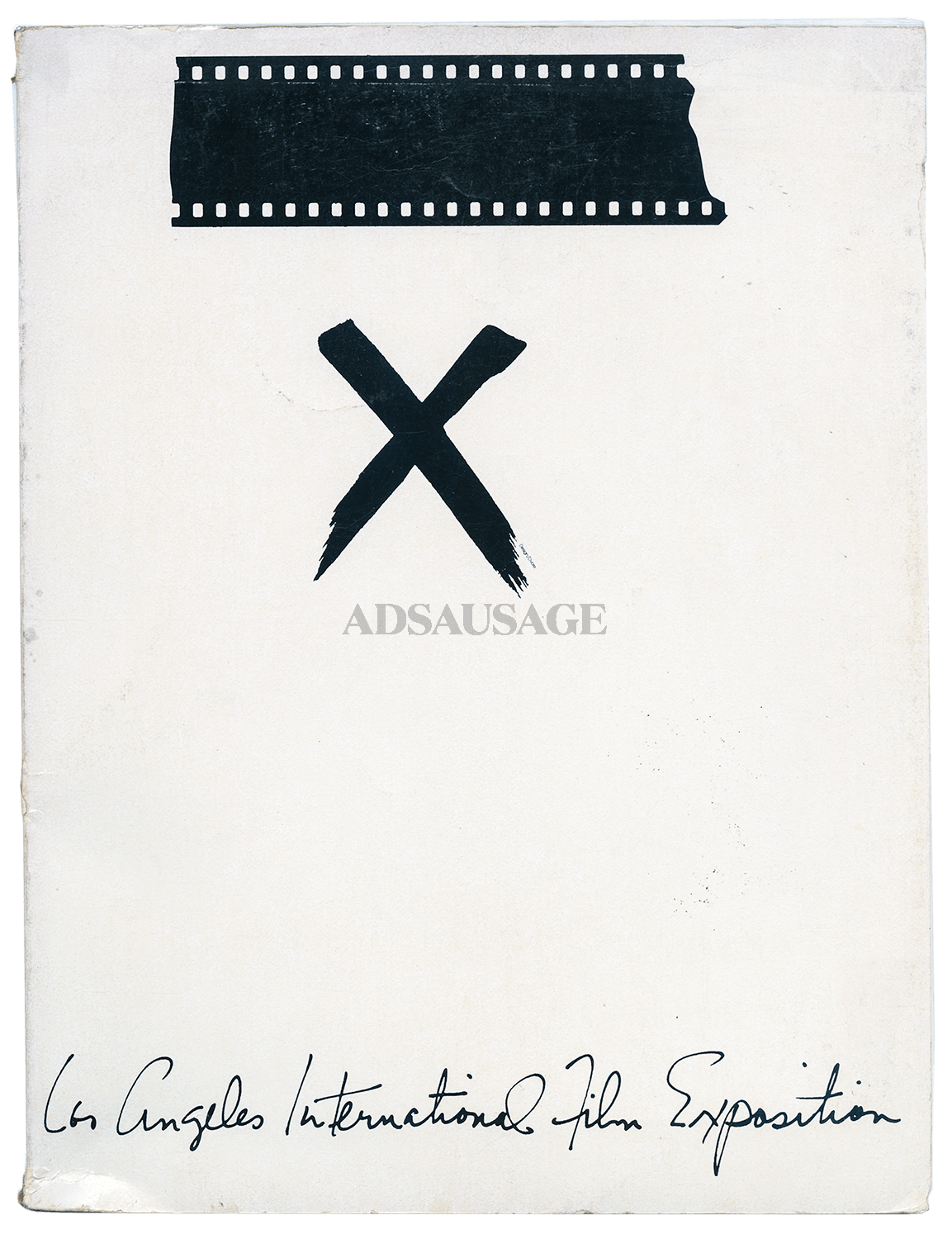

Filmex '83 hired moving vans once again and relocated its lineup to the Miracle Mile. Increased ticket sales for Richard Attenborough's Gandhi at the former Plitt Century Plaza caused a scheduling conflict; Filmex looked elsewhere. Without losing faith in humanity, Essert picked three Wilshire Blvd. cinemas: the El Rey, the Four Star, and the Fine Arts. The opening night’s razzle dazzle was held at the Avco in Westwood, where the stars turned out for John Badham's Blue Thunder.
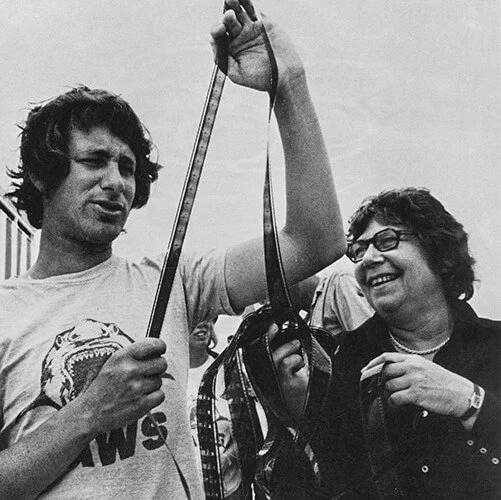
Dedicated to Verna Fields, Filmex '83 made its essential film calendar widely available through print ads in the LA Weekly and Reader, as well as participation from am/pm mini markets, MP&G Tune Up Centers, and Arco Service Stations.
With over 130 movies, mechanics and cineastes had much to look forward to, including the anti-nuke entry If You Love This Planet, the British prison drama Scrubbers, and a James Mason tribute. However, among the festival highlights were Koyaanisqatsi, Liquid Sky, Wild Style, and Querelle.
Nevertheless, critics chimed in, calling Filmex '83 “lukewarm", "tepid," and "lackluster". The LA Weekly labeled it "The Big Sleep". Despite the extra effort to spread the word, Gary Essert's time with Filmex ended months later, when the board of trustees removed him. Citing budget overruns with Filmex '83 (which ended up $20,000 in the red), a press release stated Essert "will now devote full time to the creative and artistic direction…".
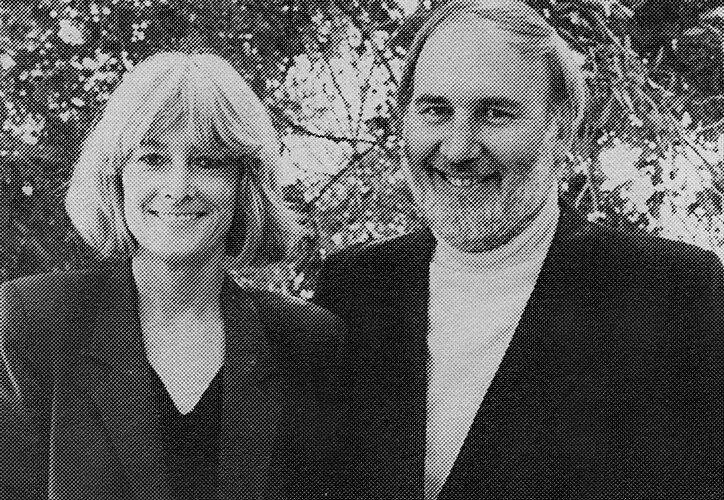
Already looking to reorganize Filmex, which Essert felt was getting too big to run with one person, he told one interviewer, "I'll be the first to admit that budgeting is not my forte." Gary Essert's role was reduced to "co-founder".
In late-1983, under Chairman William Magee, two former film festival alumni were brought in; Ken Wlaschin and Suzanne McCormick. The first woman to run a major film festival in Los Angeles, McCormick’s focus was overseeing the troubled finances.
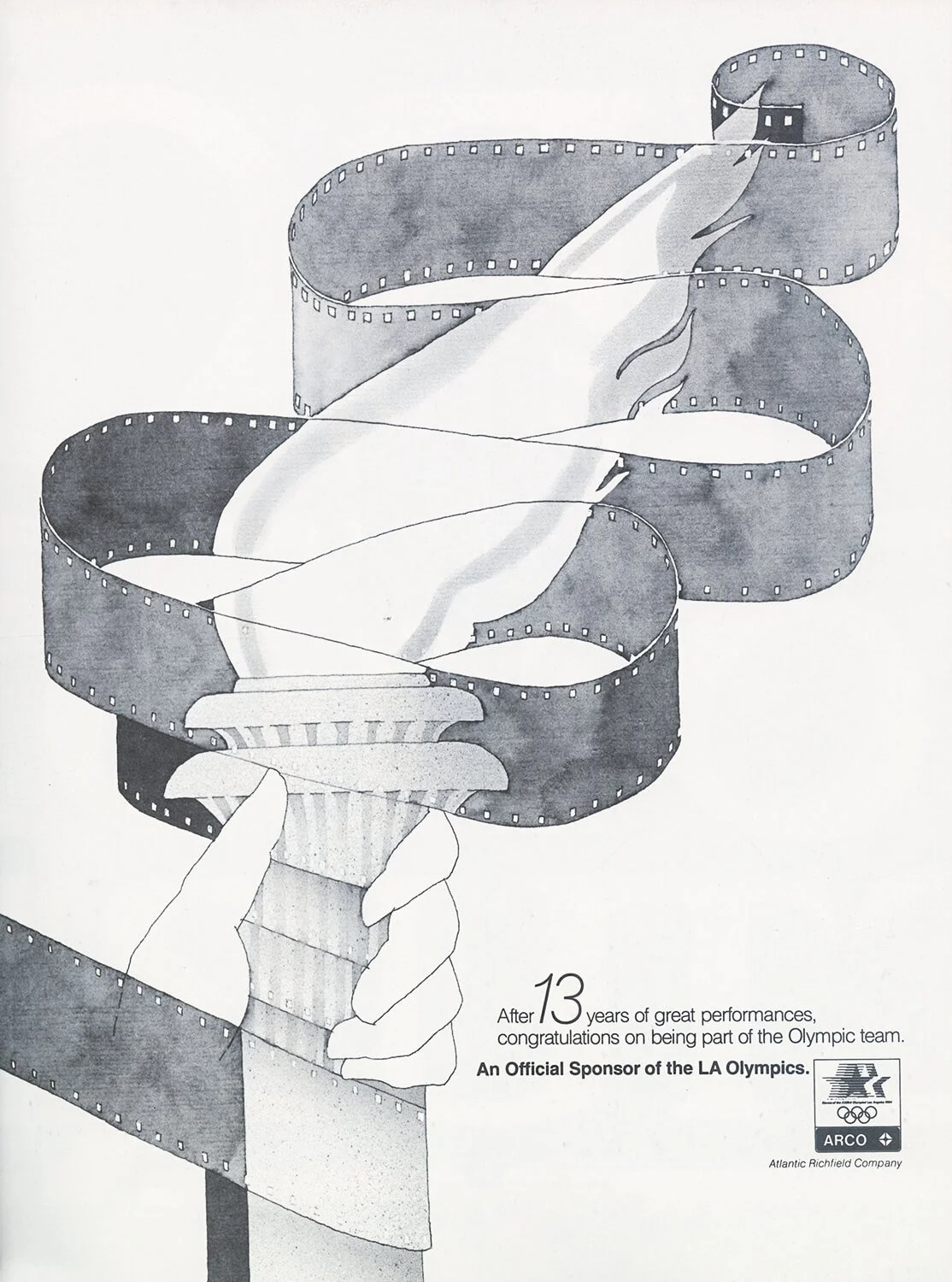
Based out of the American Film Institute (AFI) campus, Filmex '84 arrived with minor changes; the calendar was moved up to July, as the Exposition coincided with the Olympic Arts Festival. Two new theatres were added, the Nuart and the Picwood.
The new wave festival got underway with John Huston's Under the Volcano, and finished things nicely with Stop Making Sense, from Jonathan Demme. Naturally, sports were in effect with a 50 Hour Sports Movie Marathon. Thankfully, Great Britain was able to offer some notable entries, including Stephen Frears' The Hit, Meantime, from Mike Leigh, and Neil Jordan's The Company of Wolves.
Still guided by McCormick and Wlaschin, Filmex '85 opened at Mann’s Chinese with the delightful British caper A Private Function, and topped off with the romantic comedy Almost You.
Down from 180 to 130 films, the new team brought about other changes, including increased ticket prices ($6 for an evening show) and moving the festival to Westwood — a decision referred to by the LA Weekly as the "yuppification of Filmex". And unlike previous years, the lineup would occupy one location: the recently refurbished Mann Triplex.
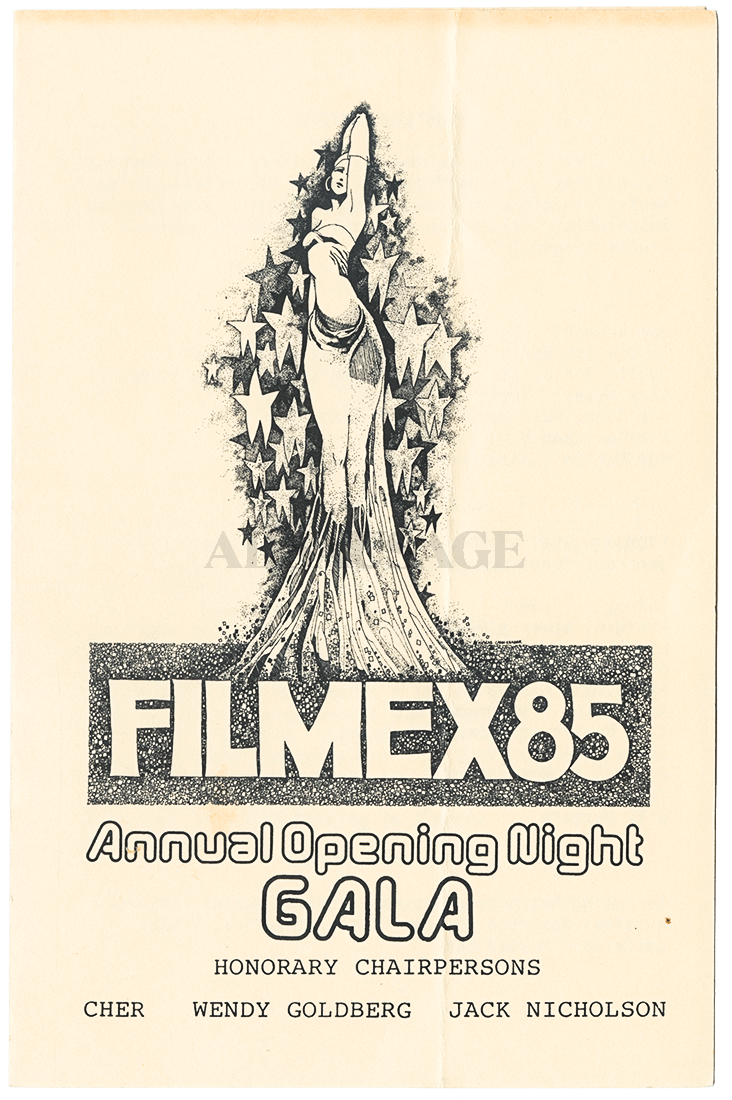
For those willing to sit or sleep a while, Filmex '85 offered two special events: the West German movie Heimat, which ran for 15 ½ hours (eleven parts shown over two days), and a Fantasy Marathon, clocking in at 50 hours. Both epics were shown at the Four Star Theatre.
Filmex is Dead!
By early 1986, power player Jerry Weintraub become Chairman, though his tenure was not fruitful. The veteran producer, busy with his role at United Artists, hoped to turn the debt-ridden Filmex into a mainstream event and align the festival with the 50th anniversary of the Directors Guild of America.
After the board initially agreed to merge with the American Cinematheque (contingent on Filmex debt), Weintraub resigned. With the future of Filmex in the balance, staff departures were rampant: executive director Suzanne McCormick, Thom Pollock resigned as chairman, and Orion Pictures executive Mike Medavoy was replaced by director Tom Laughlin, who briefly served as Filmex president before stepping down himself.
By September 1986, the Cinematheque merger was over, and Filmex '86, originally postponed until the fall, was ultimately shelved. Out of the ashes, the American Film Institute took over the ailing film festival, and AFI Fest Los Angeles was launched in January 1987. The festival launched at several theaters, including the Los Feliz Theatre.
Paradise Found
After being deposed, Gary Essert became director of the American Cinematheque. His goal was a new facility, and according to the plan, the Cinematheque's new home would be ready for 1987 and housed in the lavishly restored 1935 Pan Pacific Auditorium. Papers reported that the Cinematheque needed to raise $9M in upfront costs. The new modern facility on Beverly Blvd. would include two theatres, a video theatre, a multimedia performance lab, a cafe, a bookstore, and a gallery space.
During this period, along with programming director Charles Lippincott, they worked on the American Cinematheque's latest offering, a tribute to rock and roll. The 18-day festival screened at The Wiltern on Wilshire Blvd., and concluded with a sneak preview of John Waters' Hairspray.
Since the Pan Pacific project collapsed (the building was in serious decline), Essert set his sights on a new home — the Hollywood Promenade. At a cost of roughly $300M, the massive development from film producer and commercial developer Melvin Simon would be located adjacent to Mann's Chinese Theatre. Jon Jerde and Hodgetts & Fung would design the complex. The due date was 1991.
With the privately financed Hollywood Promenade project underway, the nomadic American Cinematheque utilized space at various sites, including the Wiltern Theatre on Wilshire and the new headquarters of the Directors Guild of America on Sunset. In late 1992, the search for a home continued; battered by the recession and messy city subsidies, financing for the Hollywood Promenade project fell through.
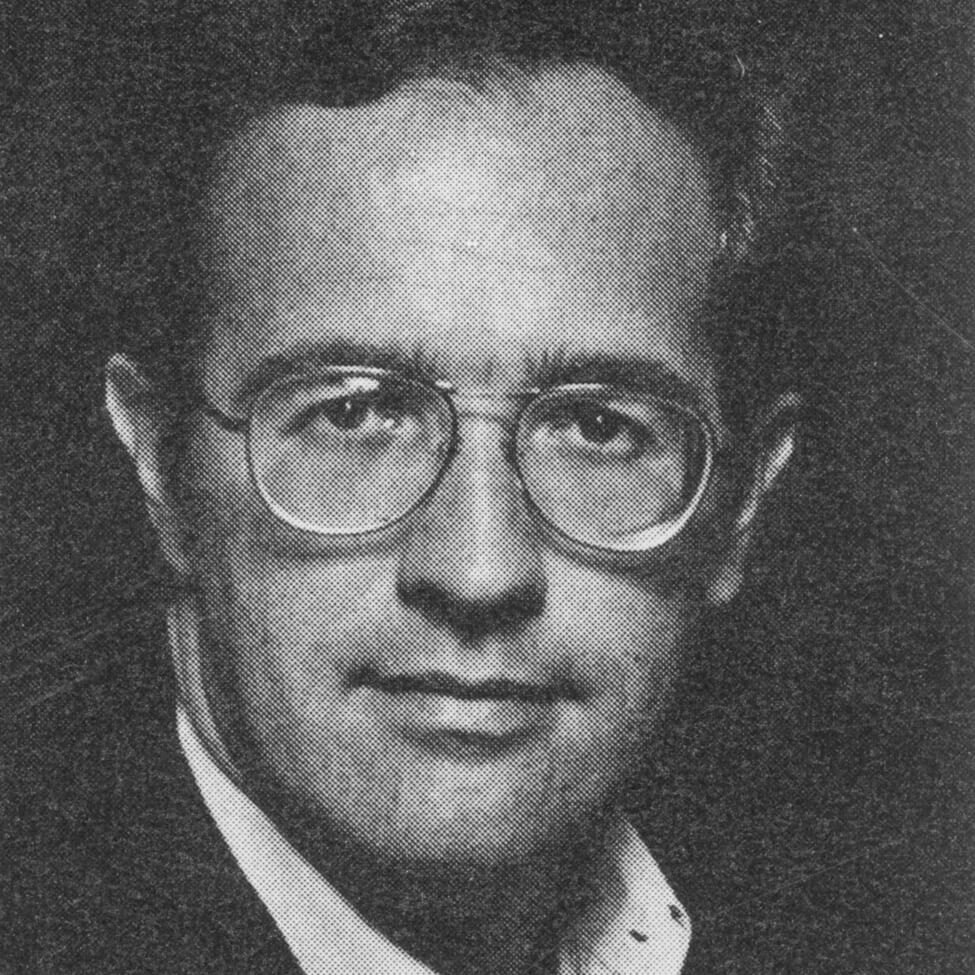
Sadly, in December 1992, Gary Essert (left) passed away from AIDS complications, six weeks after the passing of FILMEX co-founder, Gary Abrahams.
Four years later, the American Cinematheque — then working out of the Roosevelt Hotel- found its forever home, the Egyptian Theatre in Hollywood. The cinema was purchased by the Los Angeles Community Redevelopment Agency (CRA) from United Artists, and after a multi-million-dollar renovation by Hodgetts & Fung, the Cinematheque's new permanent home opened in December 1998.
The Cinematheque honored Filmex's founders with a tribute in 1993.
In March 1986, Gary Essert listed some of his favorite movies to the Los Angeles Times ("Sunday Best"), the four he picked were; Singin' in the Rain, 2001: A Space Odyssey, Orphee, and Citizen Kane.